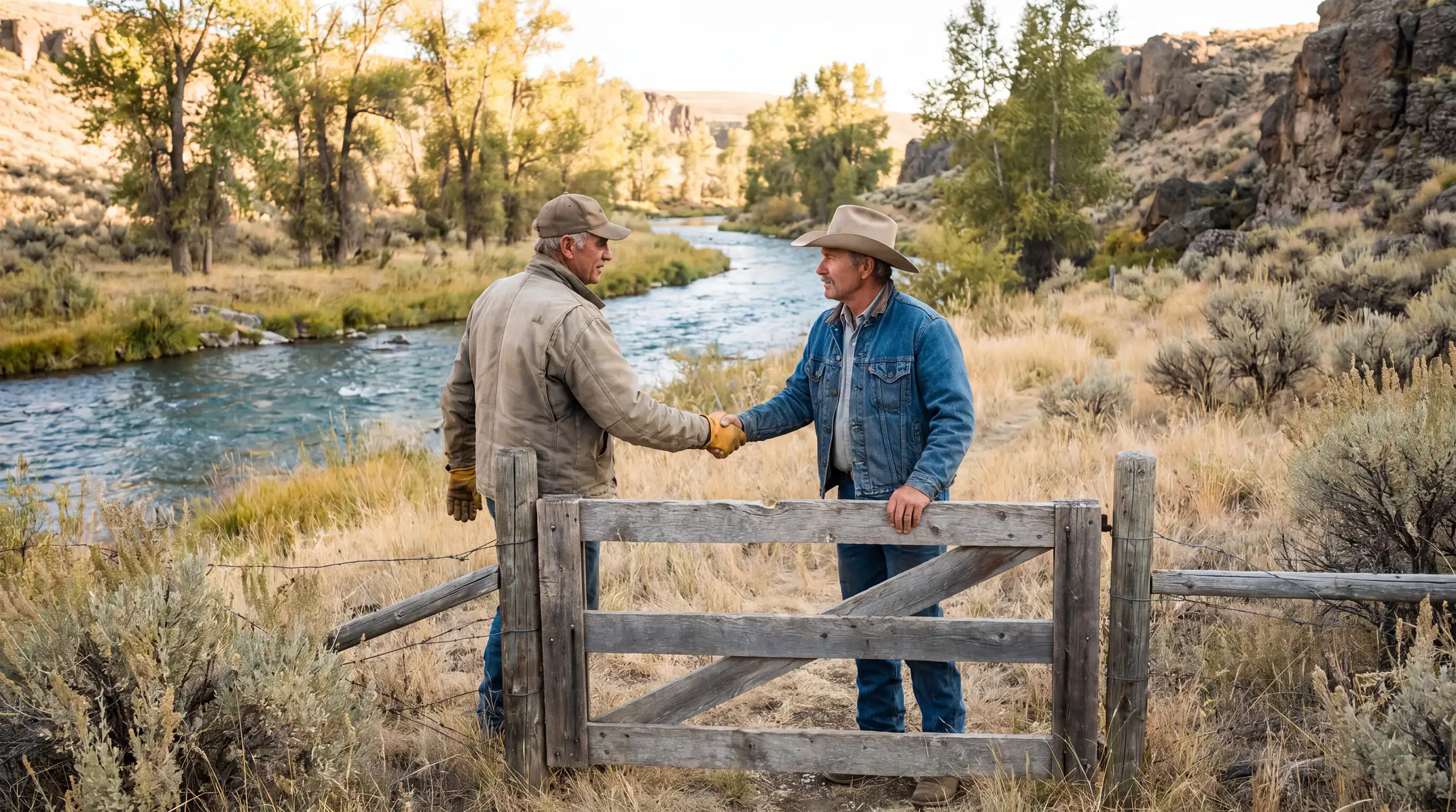
The Problem with Individual Agreements
Many landowners who open their water to fishing start the same way: a neighbor asks permission, then a friend of that neighbor, then a friend of a friend. Before long, the landowner is managing a dozen informal arrangements with people they barely know, each with a different understanding of where they can go, when they can fish, and what the rules are.
This approach works until it does not. Someone leaves a gate open. Someone brings an uninvited guest. Someone parks on the hay field. Someone posts a photo with the ranch name visible on social media, and suddenly strangers are showing up at the gate asking to fish.
The landowner's choices at that point are to shut everything down — losing the income and the relationships that were working — or to find a better structure. That better structure is club-based access.
One Relationship Instead of Thirty
The most immediate benefit of working through a club is communication simplicity. Instead of fielding calls and texts from individual anglers about scheduling, access instructions, gate codes, and water conditions, the landowner deals with one person: the club manager.
The club manager is the single point of contact for everything. They handle member questions, coordinate the booking calendar, communicate property rules, and relay any concerns from the landowner to the membership. If a gate needs to stay closed during calving season, one call to the club manager takes care of it. Without a club, that same message has to reach every individual with access — and someone will inevitably miss it.
This simplification compounds over time. As the number of anglers using the property grows, the operational burden on the landowner stays flat. Whether the club has 20 members or 80, the landowner's communication overhead remains a single relationship.
Liability Protection That Actually Works
Liability is the concern that keeps many landowners from offering fishing access at all. The fear of a lawsuit from an injured visitor is rational, even in states with strong recreational use statutes that limit landowner liability.
Club-based access addresses liability in layers. First, the club carries its own general liability insurance policy, typically with a minimum of one million dollars in coverage. Second, the club names the landowner as an additional insured on that policy, extending the club's coverage to claims arising from angler activity on the property. Third, the club requires every member to sign a liability waiver before fishing, which adds another layer of legal protection.
Individual arrangements rarely include any of this. An informal handshake agreement with a neighbor provides no insurance coverage, no waiver, and no legal structure to fall back on if something goes wrong. Even a written individual access agreement, unless drafted by an attorney and backed by insurance, leaves the landowner more exposed than a club partnership does.
Platforms like AnglerPass add a digital layer to this protection. Every booking generates a digital waiver, creating a documented record of each angler's acknowledgment of risk and acceptance of property rules.
Vetted Anglers, Enforced Rules
When a landowner manages individual access, they are personally responsible for assessing whether each angler is trustworthy. That assessment usually comes down to social connection — "I know this person" or "this person was recommended by someone I trust." It is better than nothing, but it does not scale, and it provides no recourse when a trusted angler behaves badly.
Clubs formalize the vetting process. Most clubs review applications, check references, require new members to fish with established members during a probationary period, and maintain a code of conduct with real consequences for violations. A member who leaves a gate open, litters, or violates catch-and-release rules faces suspension or expulsion. That enforcement power exists because the club controls something the member values: access to the water.
Individual anglers with informal permission face no comparable accountability. The landowner's only enforcement option is to revoke access, which means an uncomfortable personal conversation and the loss of whatever income that angler provided. Clubs absorb that enforcement function entirely, shielding the landowner from interpersonal conflict while maintaining higher standards than informal arrangements typically achieve.
Scheduling Without the Headaches
Managing who fishes when is tedious, error-prone work. Without a system, scheduling typically happens through text messages and phone calls, with the landowner or a designated contact trying to keep track of who is coming on which day and whether the property is already at capacity.
Double bookings happen. Anglers show up on days they were not expected. The property hosts more rods than intended because nobody was tracking the total. The landowner's quiet Tuesday afternoon is interrupted by four anglers they did not know were coming.
Clubs solve this with booking systems. A properly run club maintains a calendar — either digital or manual — that enforces rod limits, prevents overbooking, and gives the landowner visibility into who will be on the property and when. On AnglerPass, the booking calendar is automated. Rod limits are enforced by the platform, anglers receive access instructions and GPS coordinates only after booking, and the landowner can check the calendar at any time to see the schedule.
This visibility matters for practical ranch operations. If a landowner needs to move cattle through a field that borders the fishing access, they can check the calendar and coordinate with the club rather than hoping no one shows up unexpectedly.
Consistent Revenue, Less Chasing
Individual access arrangements often involve cash payments, Venmo transfers, or — in some cases — no payment at all beyond a vague promise to "take care of you at the end of the season." Collecting money from individual anglers is awkward, inconsistent, and creates an informal economy that is difficult to track for tax purposes.
Clubs provide structured, reliable revenue. Whether the arrangement is an annual lease, per-rod fees, or a hybrid, the payment comes from one entity — the club — on a predictable schedule. The club handles the upstream work of collecting dues and booking fees from its members. The landowner receives their compensation cleanly and consistently.
On AnglerPass, payments are processed through the platform, providing both the landowner and the club with clear financial records. The landowner does not need to invoice anyone or follow up on late payments. The money flows automatically based on the agreed terms.
Property Standards and Stewardship
Clubs have a vested interest in maintaining the quality of the properties they manage, because the quality of the water is what drives membership and revenue. This creates a natural alignment between the club's goals and the landowner's interest in property care.
Well-run clubs organize annual work days where members contribute labor to fence repair, riparian planting, trash cleanup, and other property maintenance. Some clubs fund habitat improvement projects — installing log structures, managing invasive vegetation, or improving fish passage — that increase both the quality of the fishery and the value of the property.
Individual anglers rarely offer this kind of stewardship. They fish, they leave, and the property is the same or slightly worse for their visit. The club model turns anglers into stakeholders who are invested in the long-term health of the land and the water because their access depends on it.
What to Look for in a Club Partner
Not all clubs are equal, and landowners should evaluate potential partners carefully. Key questions to ask:
- How long has the club been operating, and how many properties do they currently manage?
- What does their liability insurance policy cover, and will they name you as an additional insured?
- How do they vet new members, and what is their process for handling rule violations?
- What booking system do they use, and how will you know who is on your property?
- How is compensation structured, and what is the payment schedule?
- What conservation or property improvement work do they do on managed properties?
- How do they handle social media and location privacy for their properties?
A club that can answer these questions clearly and specifically is a club that takes its landowner relationships seriously. A club that is vague or dismissive about any of them is not ready to manage access on your property.
Getting Started
If you are a landowner currently managing individual fishing access and feeling the strain, transitioning to a club model does not have to be disruptive. You can maintain existing relationships — many of your current anglers may become members of the club — while adding the structure, insurance, and accountability that informal arrangements lack.
AnglerPass can connect you with established clubs in your area or help you work with your existing group of anglers to formalize into a club structure. The platform handles the operational complexity of booking, payment, waivers, and property management, so the transition from informal to structured access is as smooth as possible.
The goal is not to make fishing access more complicated. It is to make it sustainable. Landowners who route access through a club protect their property, simplify their operations, and ensure that the income and relationships they value can continue for years rather than ending the day someone leaves a gate open.