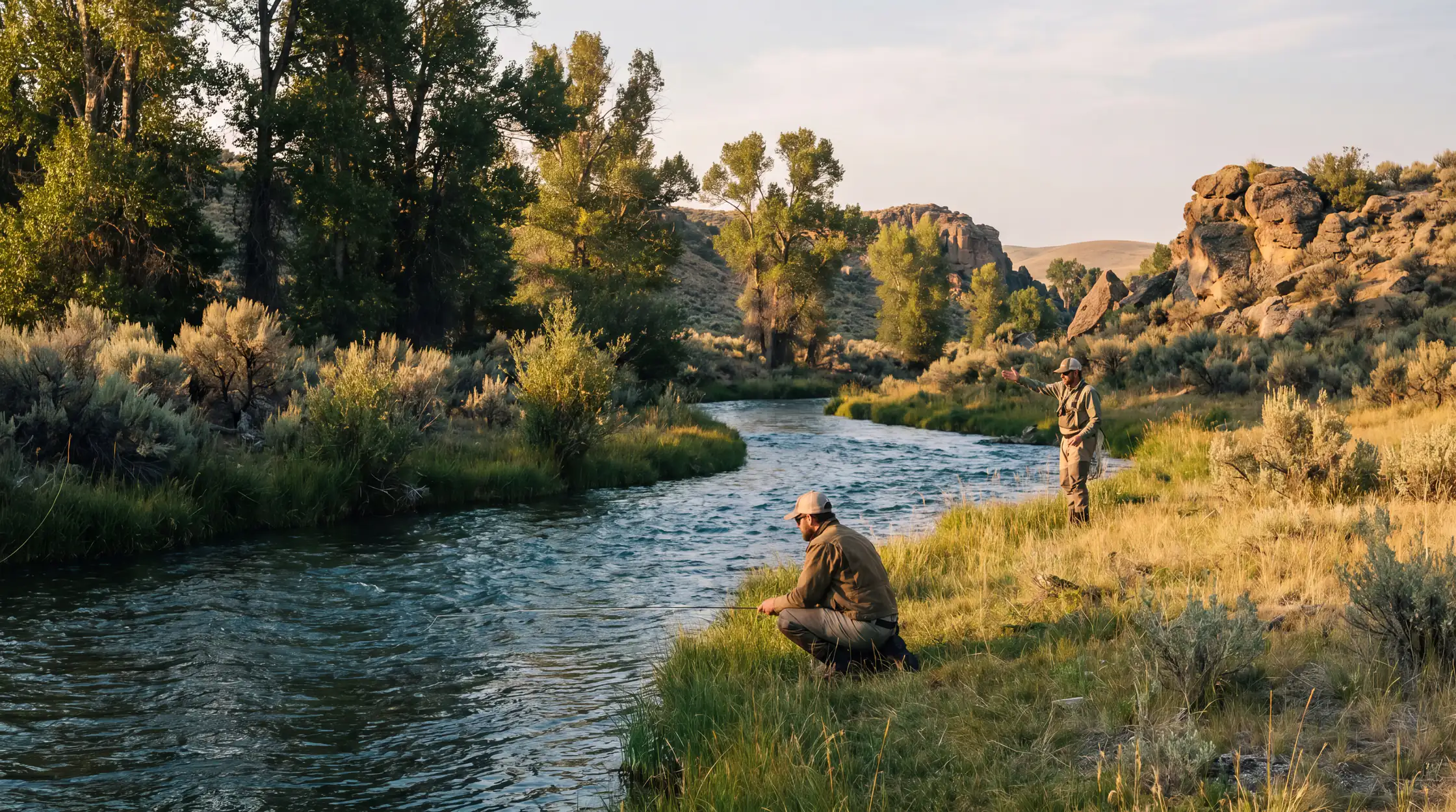
The Social Contract of Private Water
Fishing private water is a privilege, not a right. Unlike public rivers where access is guaranteed by law, private water access exists because a landowner has chosen to open their property to anglers — usually through a club or managed access platform. That access can be revoked at any time, and it often takes just one bad experience for a landowner to close their gates permanently.
Every angler who steps onto private water is representing the club, the platform, and every other angler who wants to fish there in the future. Understanding and following the etiquette of private water is not about being overly formal. It is about honoring an agreement that benefits everyone involved.
Know the Rules Before You Go
Every private water property has its own specific rules, and they vary more than most anglers expect. Some properties allow wading only in certain sections. Others restrict fishing to specific hours. Many require barbless hooks, single-fly rigs, or catch-and-release for all species.
Before your trip, read every rule the property or club has published. If something is unclear, ask. Clubs and landowners would far rather answer a question in advance than deal with a violation on the water. On platforms like AnglerPass, property rules are listed on the booking page so there are no surprises.
Common private water rules include:
- Barbless hooks only (single or crushed barb)
- Catch-and-release for all trout species
- No wading in spawning areas during specified months
- Maximum rod count per day (typically two to four anglers)
- Specific access points and parking areas
- Quiet hours near the main residence
- No dogs unless explicitly permitted
Gate Protocols and Property Access
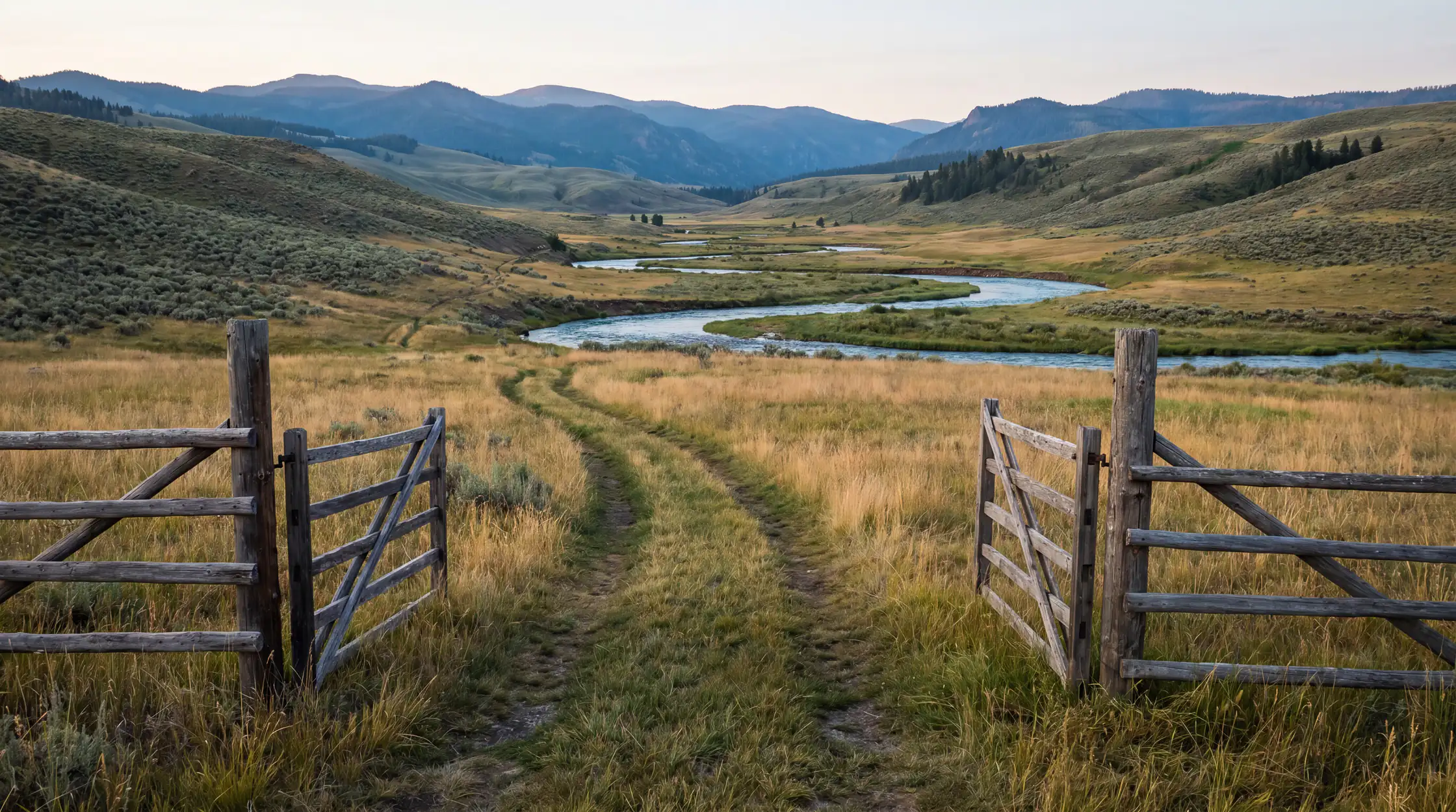
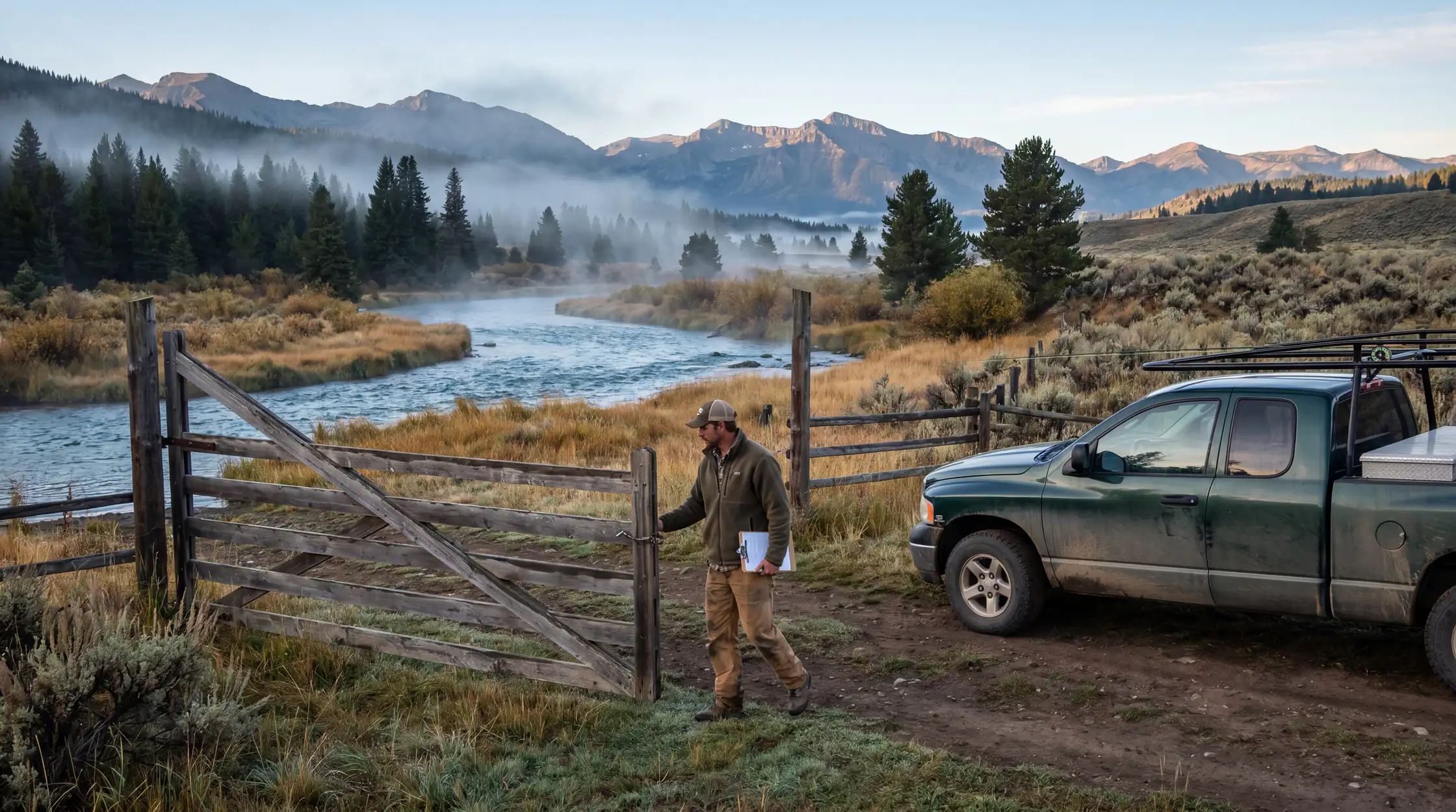
Gates are the most common source of friction between anglers and landowners. The rule is simple: leave every gate exactly as you found it. If it was closed when you arrived, close it behind you. If it was open, leave it open. Livestock management depends on gate positions, and a gate left in the wrong state can mean hours of work for the landowner rounding up cattle or horses.
Arrive and depart through designated access points only. Do not take shortcuts through fields, cross fences at unmarked points, or park in areas that are not designated for angler use. Stay on established roads and paths. If you are unsure where to go, contact the property manager or club before your trip rather than improvising on arrival.
Many properties provide access codes or keys. These should never be shared with anyone who is not authorized to fish the property. Treat access credentials with the same care you would treat a key to someone's home — because that is essentially what they are.
Respect the Landowner's Property
You are a guest on someone's land. That mindset should guide every decision you make on the property.
Pack out everything you bring in, including tippet ends, fly packaging, food wrappers, and leader material. Monofilament left streamside is not just litter — it is a hazard for wildlife and livestock. Many experienced anglers carry a small zip-lock bag specifically for tippet waste.
Do not disturb livestock, farm equipment, or outbuildings. Stay out of barns, equipment sheds, and any structures that are not part of the designated fishing access. If you encounter livestock on the path to the water, give them a wide berth and move slowly.
If you notice something that needs attention — a downed fence, a broken gate latch, a tree blocking the access road — report it to the club or property manager. Landowners genuinely appreciate anglers who treat the property as if it were their own.
Catch-and-Release Best Practices
Most private water operates under strict catch-and-release policies, and the expectation is that you handle fish with care that goes well beyond the legal minimum. On managed water, every fish matters. The population is the product, and mishandled releases undermine the fishery that everyone is paying to enjoy.
Keep the fish in the water as much as possible. Wet your hands before handling. Use barbless hooks for faster, less damaging removal. If you want a photo, have your camera ready before you lift the fish and limit air exposure to a few seconds. Support the fish gently in the current until it swims away under its own power.
Avoid playing fish to exhaustion, especially in warm water conditions. If a trout is deeply hooked, cut the tippet rather than digging for the hook. The fish has a much better chance of survival with a dissolving hook in its jaw than with the tissue damage caused by forceps work in the throat.
The Discretion Rule
This is perhaps the most important and least obvious rule of private water etiquette: do not share specific location information publicly.
Do not post GPS coordinates, property names, or identifiable landmarks on social media. Do not tag specific locations on Instagram or fishing forums. Do not tell people outside the club exactly where the property is. A single viral social media post can bring trespassers, create pressure from uninvited anglers, and damage the landowner relationship that took years to build.
If you want to share photos from a private water trip, keep the location vague. "Great day on a spring creek in Montana" is fine. A geotagged photo with the ranch name visible in the background is not. Many clubs have explicit social media policies, and violating them can result in loss of membership.
This is not about gatekeeping or elitism. It is about protecting the landowner's privacy and maintaining the low-pressure conditions that make private water worth fishing in the first place.
Be a Good Fishing Neighbor
Even on private water with limited rod counts, you may share the property with other anglers on the same day. Give them space. If someone is working a run, do not walk in above or below them. The general rule on private water is even more generous than on public water — if you can see another angler, you are probably too close.
If you encounter another angler on the stream, a brief conversation about who is fishing which direction can prevent conflicts. Most private water anglers are happy to coordinate. Communication takes thirty seconds and prevents an entire day of stepping on each other's water.
Leave It Better Than You Found It
The best private water anglers go beyond leaving no trace. They pick up any litter they find, even if it is not theirs. They report maintenance issues. They send a thank-you note to the landowner after their visit. These small gestures compound over time and are a significant reason why some clubs maintain landowner relationships that span decades.
Many long-standing fly fishing clubs organize annual cleanup days, fence repair projects, or riparian restoration work on the properties they fish. Contributing to these efforts — even if it is not required — demonstrates that your relationship with the land goes beyond extraction.
Why Etiquette Matters for the Future of Access
The private water access model depends entirely on trust. Landowners trust clubs to vet their members. Clubs trust anglers to follow the rules. Anglers trust that the water will be well-managed and worth the investment.
When that trust breaks down — when an angler leaves a gate open, shares a location on social media, or mishandles fish — the consequences ripple outward. The landowner restricts access. The club loses water. Every member suffers.
Platforms like AnglerPass formalize some of these expectations through digital waivers, property rules on booking pages, and accountability through membership profiles. But no platform can replace the fundamental responsibility that rests with each individual angler. Private water access is a community resource. Treating it with the respect it deserves is what keeps the gates open for everyone.