Before Anything Else: Confirm Your Access
The most important thing about your first private water trip is making sure you actually have permission to be there. This sounds obvious, but the logistics of private water access are different from showing up at a public river with a fishing license.
If you are fishing through a club, confirm that your booking is locked in. Check the platform or contact the club manager to verify your date, the specific water you are assigned to, and the number of rods included in your reservation. If you are fishing through a platform like AnglerPass, your booking confirmation will include this information along with access instructions.
If you were invited by a member as a guest, confirm that your host has completed whatever guest registration the club requires. Many clubs need guest names in advance for liability waiver purposes. Showing up as an unregistered guest puts your host in an awkward position and may result in being turned away.
Do this a week before your trip, not the night before. If there is a scheduling conflict or a misunderstanding, you want time to resolve it.
Read the Property Rules
Every private water property has rules, and they vary more than you might expect. Some properties allow wading everywhere. Others restrict wading to specific sections or prohibit it entirely. Some allow dogs. Most do not. Some require barbless hooks. Some require single-fly rigs. Some have quiet hours near the main residence.
Read every rule before you go. If you are fishing through a club or platform, the rules are typically listed on the property page or included in your booking confirmation. If anything is unclear, ask. Nobody will think less of you for asking a question in advance. They will think less of you for violating a rule you should have known.
Pay particular attention to:
- Catch-and-release requirements and handling expectations
- Hook restrictions (barbless, single hook, fly-only)
- Wading restrictions or prohibited areas
- Access points and designated parking areas
- Gate protocols (leave open or closed, combination codes)
- Guest policies and whether your booking includes guests
- Social media policies about posting photos or location information
Plan Your Gear
Private water does not require specialized equipment, but it does reward thoughtful preparation. You want to arrive ready to fish, not spending the first hour sorting through a disorganized gear bag.
Rod and Reel For most trout water, a 5-weight rod in the 8.5 to 9-foot range is the standard choice. It handles nymphing, dry fly fishing, and small streamers across the conditions you are likely to encounter. If you know the water holds larger fish or involves bigger water, a 6-weight gives you more control. If the property is a small spring creek with delicate presentations, a 4-weight is a better fit.
Bring a spare rod if you have one. A broken rod tip on a remote private property with no fly shop nearby can end your day early.
Leaders and Tippet Carry a range of tippet sizes. For most trout water, 4X through 6X covers the majority of situations. If the property rules require barbless hooks, check your fly boxes before you go — it is easier to debarb at home than streamside.
Fly Selection Resist the urge to bring every fly you own. A modest selection covering the basics is better than three overstuffed boxes. For most trout water, a reasonable starting kit includes:
- A few attractor dry flies in sizes 12 through 16
- Caddis and mayfly imitations to match common hatches
- A selection of nymphs including several bead-head patterns in sizes 14 through 18
- A handful of small streamers if the property allows them
If you can get fishing reports from the club or other members who have fished the property recently, use that information to narrow your fly selection. The hatch that is happening this week is more useful than the hatch that was happening three months ago on a different river.
Net Bring a rubber mesh landing net. Most private water requires catch-and-release, and rubber mesh nets are significantly less damaging to fish than nylon. If you do not own one, this is a worthwhile investment before your first private water trip.
Other Essentials
- Polarized sunglasses for reading the water and eye protection
- Sun protection (hat, sunscreen, long sleeves)
- Rain gear — weather on remote properties can change quickly
- Water and food, since private properties rarely have nearby services
- A small bag for carrying out trash, including tippet ends and fly packaging
- A stream thermometer if you are fishing during warmer months
- Your fishing license — private water does not exempt you from state licensing requirements
Communicate with Your Host or Club
Good communication before your trip prevents problems on the water. Reach out to the club manager or your host a few days before your visit to cover a few practical items.
Access logistics. Confirm where to park, which gate to use, and whether you need a code or key. On platforms like AnglerPass, this information is provided digitally after booking, but confirming never hurts.
Current conditions. Ask about recent water conditions, active hatches, and any areas that are temporarily off-limits due to construction, livestock, or seasonal closures. Club managers and experienced members are usually happy to share this information — it helps you have a better day, which reflects well on the property.
Timing. Confirm what time you are expected to arrive and when you should be off the property. Some properties have specific windows. Others are flexible. Knowing the expectation avoids the discomfort of being asked to leave when you thought you had another two hours.
Emergencies. Know the address of the property for emergency services, the nearest hospital or urgent care, and whether cell service is available on the property. Many private properties are more remote than typical public access points.
The Day Of: Arrival Protocol
First impressions matter on private water, and they start the moment you pull up to the gate.
Arrive on time. Not early, not late. If your booking starts at 8:00 AM, do not show up at 6:30 hoping to get a head start. The landowner's schedule and expectations are built around your confirmed time.
Park where you are told to park. Not where it looks convenient, not in the shade, not closer to the water. Designated parking exists for a reason, often to protect fields, avoid blocking ranch operations, or keep vehicles out of the landowner's sightline.
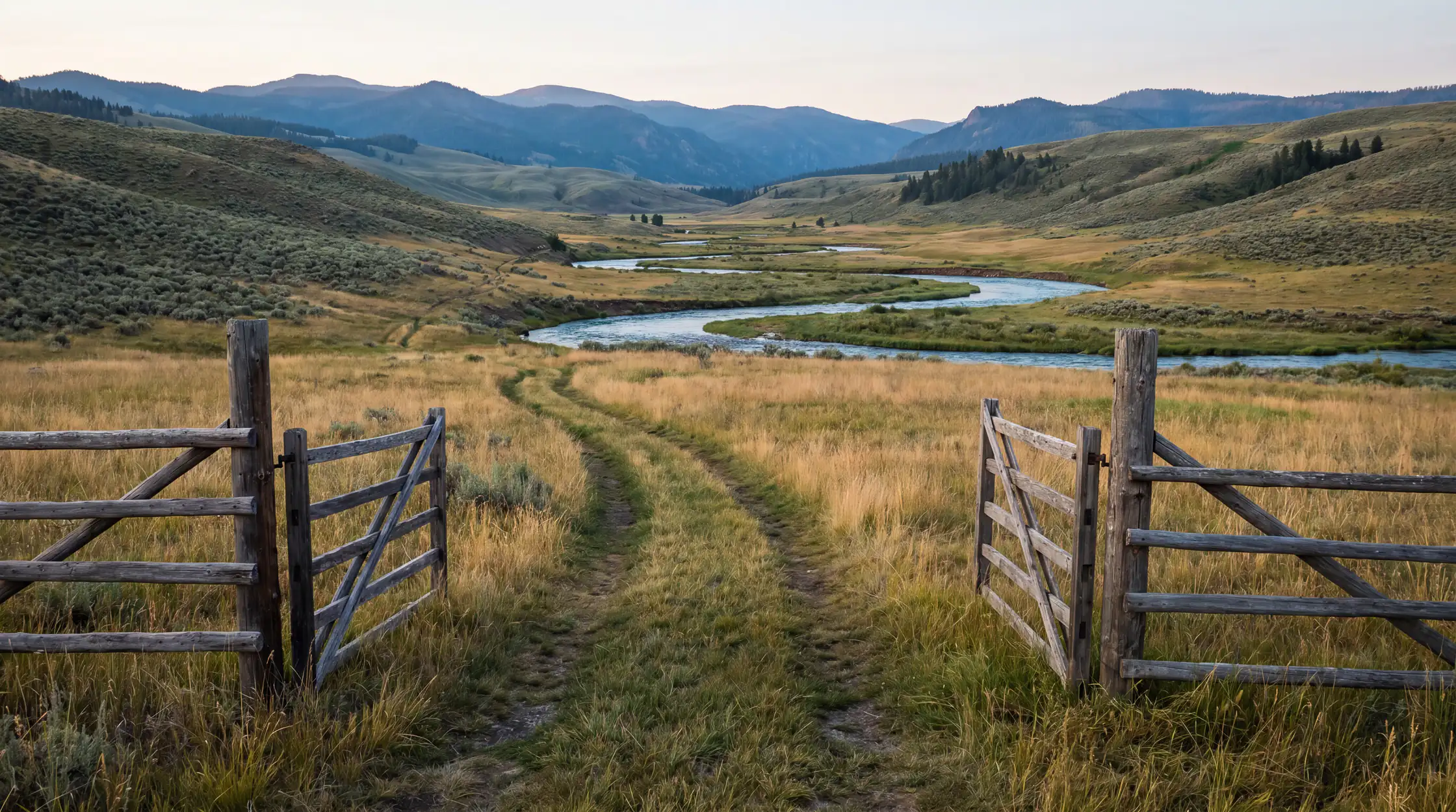
Handle gates correctly. The universal rule: leave every gate exactly as you found it. Closed when you arrived, close it behind you. Open when you arrived, leave it open. Livestock management depends on gate positions, and getting this wrong is one of the fastest ways to damage a landowner relationship.
Stay on designated access routes. Walk the paths you were told to walk. Do not take shortcuts through fields, cross fences at unmarked points, or explore areas beyond your assigned water.
On the Water
Once you are fishing, the etiquette is straightforward but worth reviewing for your first visit.
Fish your assigned water. If you were booked on a specific beat or stretch, stay within those boundaries. Wandering onto adjacent water — even if it looks fishier — violates the access agreement and can affect other anglers who are booked on that stretch.
Handle fish with care. Wet your hands before touching any fish. Keep the fish in the water as much as possible during hook removal. If you want a photo, have your camera ready before you lift the fish and limit air exposure to a few seconds. Support the fish gently in the current until it swims away under its own power.
If you encounter the landowner or ranch staff, be friendly, brief, and respectful. A simple greeting and a thank-you for the access go a long way. Do not overstay the conversation — they are likely working — but do not ignore them either.
If you encounter other anglers, give them space. On private water, the expectation for distance between anglers is generous. If you can see someone fishing, you are close enough. A quick conversation about who is fishing which direction prevents conflicts for the rest of the day.
Leaving the Property
How you leave is as important as how you arrive.
Pack out everything. Every piece of tippet, every fly wrapper, every food container. Check the areas where you sat down for breaks — that is where trash gets left behind. Carry a small bag for waste and use it.
Return gates to their original position. Check each gate you passed through on the way in.
Leave on time. If your booking ends at a specific hour, be off the property by that time. Overstaying is disrespectful to the landowner and potentially to the next angler who has the water booked after you.
Send a thank-you. A brief message to the club manager or your host after the trip is a small gesture that makes a real impression. Mention something specific about the experience. If you noticed any property issues — a downed fence, a washed-out section of trail, a broken signpost — report them. Landowners and clubs value anglers who treat the property as their own.
The Mindset That Matters
Your first private water trip is the beginning of a relationship, not a transaction. The landowner, the club, and the other members are all watching — not with suspicion, but with the reasonable hope that you will be someone they are glad to share water with.
Approach the day as a guest, not a customer. Follow every rule without exception. Leave the property better than you found it. And enjoy the fishing — because lightly pressured water, well-managed habitat, and the quiet of a private stream are exactly the reasons people pursue private water access in the first place.