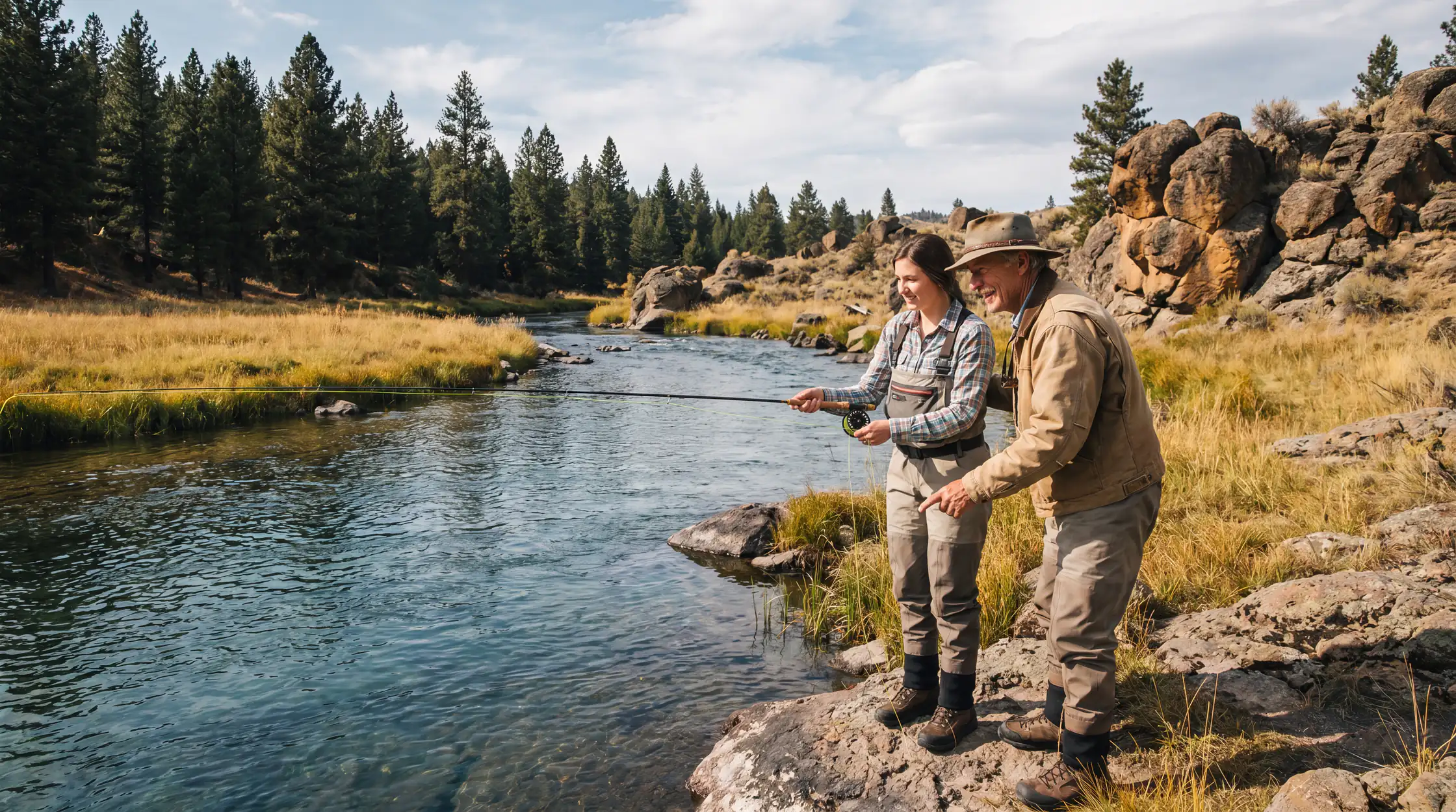
What a Guide Actually Does
If you have never fished with a guide, you might picture someone who rows a boat and points at the water. The reality is far more involved. A good fly fishing guide is part teacher, part naturalist, part logistics manager, and part therapist.
Before you arrive, the guide has already scouted the water, checked conditions, selected the beats they plan to fish based on recent reports, rigged rods with flies they believe will work, and prepared a plan for the day that accounts for weather, water temperature, hatch timing, and your skill level. By the time you shake hands at the meeting point, hours of preparation have already happened.
On the water, the guide is constantly reading conditions and adjusting. They are watching the surface for rising fish, turning over rocks to check insect activity, monitoring your casting for corrections, managing the drift boat or positioning you in the right water, tying knots, changing flies, netting fish, and coaching you through every stage of the process. The best guides make this look effortless. It is not.
Before the Trip: What to Communicate
The single most important thing you can do before a guided trip is be honest about your skill level. Guides are not impressed by exaggeration, and they are not judgmental about inexperience. What they need is accurate information so they can plan a day that matches your ability.
If you have never cast a fly rod, say so. The guide will adjust the plan to include instruction time and choose water that is forgiving for beginners. If you are an experienced angler who wants to target specific species or techniques, say that too. The more the guide knows in advance, the better they can tailor the experience.
Other useful things to communicate before your trip:
- Any physical limitations that affect wading, hiking, or standing for long periods
- Whether you are fishing solo or with a partner, and both skill levels if applicable
- Whether you have your own equipment or need the guide to provide gear
- Any specific goals for the day — learning to cast, catching your first trout on a dry fly, photographing wildlife, or simply being outdoors
Most guides will send you pre-trip information covering meeting time and location, what to wear, and what to bring. Read it. If they do not send it, ask.
What to Bring
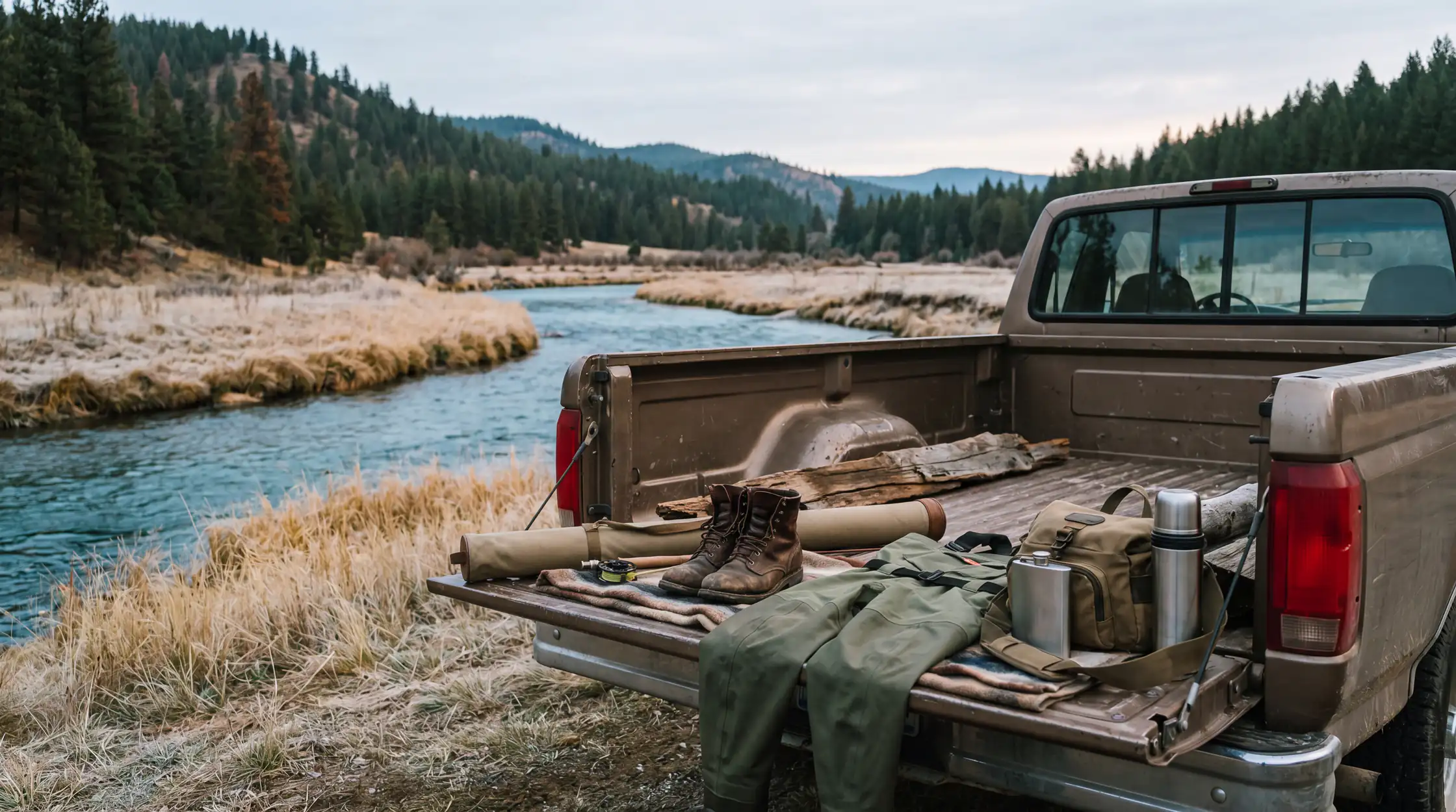
Guides typically provide rods, reels, flies, leaders, and tippet. Many also provide lunch or snacks, water, and a net. What they usually expect you to bring:
- Appropriate clothing: Layers are essential. Mornings on the water are often cold even in summer, and afternoons can be warm. Quick-drying pants or waders depending on the type of trip. A rain jacket regardless of the forecast.
- Sun protection: Hat with a brim, polarized sunglasses (essential for seeing fish and protecting your eyes from errant flies), and sunscreen.
- Footwear: If wading, bring wading boots or ask the guide if they provide them. For float trips, shoes that can get wet and have good traction.
- Personal items: Water bottle, any medications, a camera if you want photos.
- Your fishing license: The guide cannot fish for you, and they cannot provide your license. Purchase it before the trip. Many states offer online licenses that you can buy the night before.
Do not bring a cooler full of beer for the boat unless the guide has said that is welcome. Some guides are fine with it. Others are not, especially on technical water where focus matters. Ask.
The Morning: Meeting and Setup
Most guided trips start early. Expect to meet between 6:00 and 8:00 AM depending on the season and the water. Arrive on time — not early enough to be awkward, not late enough to cut into fishing time.
The guide will spend the first few minutes going over the plan for the day, rigging rods, and assessing your casting. This assessment is not a test. The guide is calibrating their coaching to your level. A few practice casts on the lawn or at the boat ramp tell the guide everything they need to know about where to focus their instruction.
If you are fishing private water, the guide will also cover property-specific rules: where you can go, gate protocols, catch-and-release expectations, and any areas that are off-limits. Listen carefully. On private water, the guide's reputation depends on their clients following the rules.
On the Water: How to Get the Most Out of It
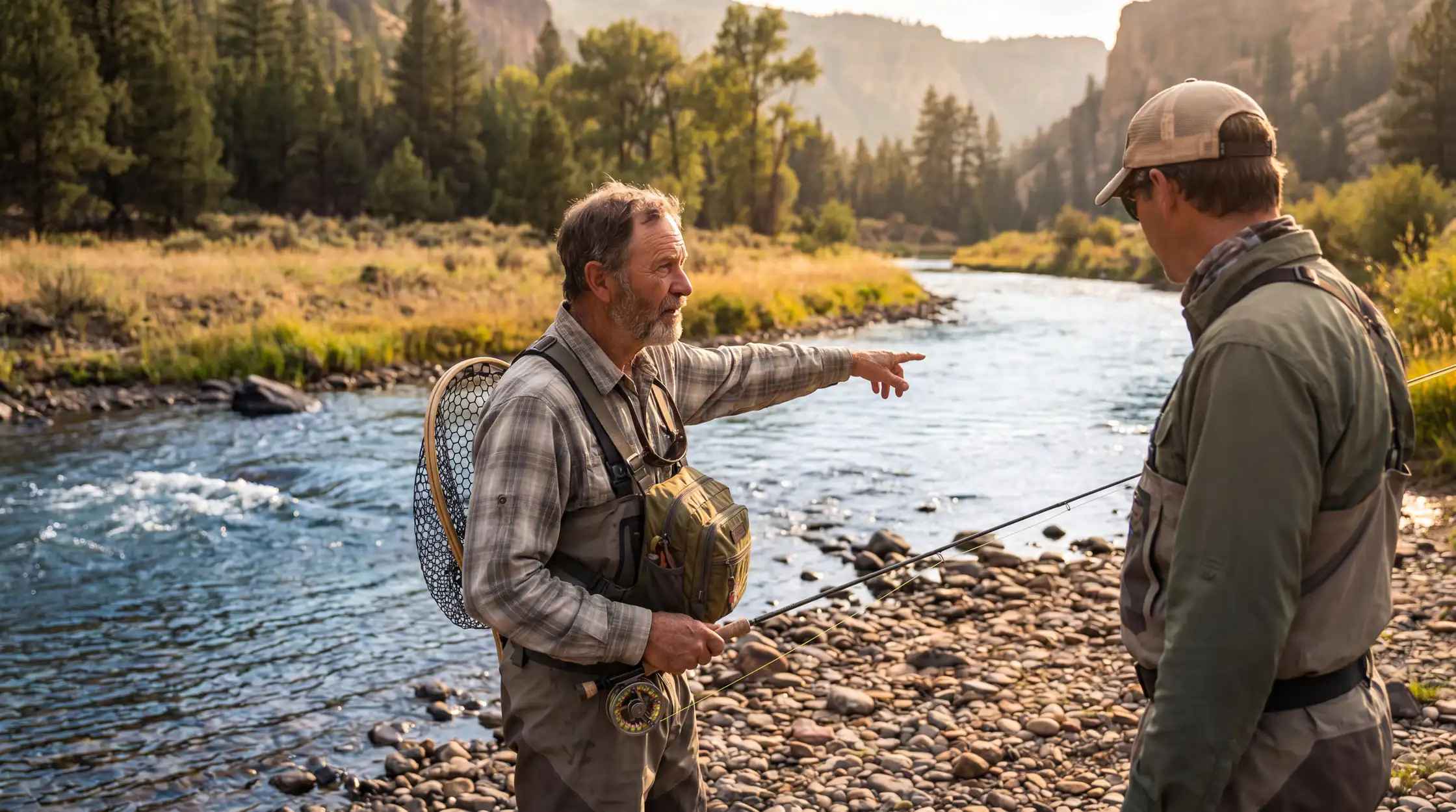
Listen more than you talk. The guide is reading the water constantly and giving you instructions based on what they see. When they say "cast to two o'clock, about thirty feet," they are not making a suggestion. They have spotted a fish or identified a feeding lane, and they are putting you in the best position to succeed.
Ask questions. Good guides love teaching. If you do not understand why they chose a particular fly, ask. If you want to know why the fish are holding in that seam and not the one upstream, ask. The knowledge transfer is a significant part of what you are paying for, and it is the part that stays with you long after the trip is over.
Do not apologize for bad casts. Every angler makes bad casts, including the guide. Constant apologizing creates an awkward dynamic and wastes time that could be spent fishing. Cast, adjust, cast again.
Be patient with slow periods. Fly fishing is not constant action. There will be stretches where nothing is happening. The guide is not failing — they are reading conditions, adjusting the plan, and waiting for the right moment. Trust the process.
Communicate your energy level. If you need a break, say so. If you are getting frustrated, say so. If you are having the time of your life and want to skip lunch to keep fishing, say that too. Guides appreciate clients who communicate openly.
Fish Handling
Your guide will show you how to handle fish properly, but here are the basics so you are prepared:
- Wet your hands before touching any fish
- Keep the fish in or near the water during hook removal
- If the guide nets the fish, let them handle the unhooking unless they invite you to
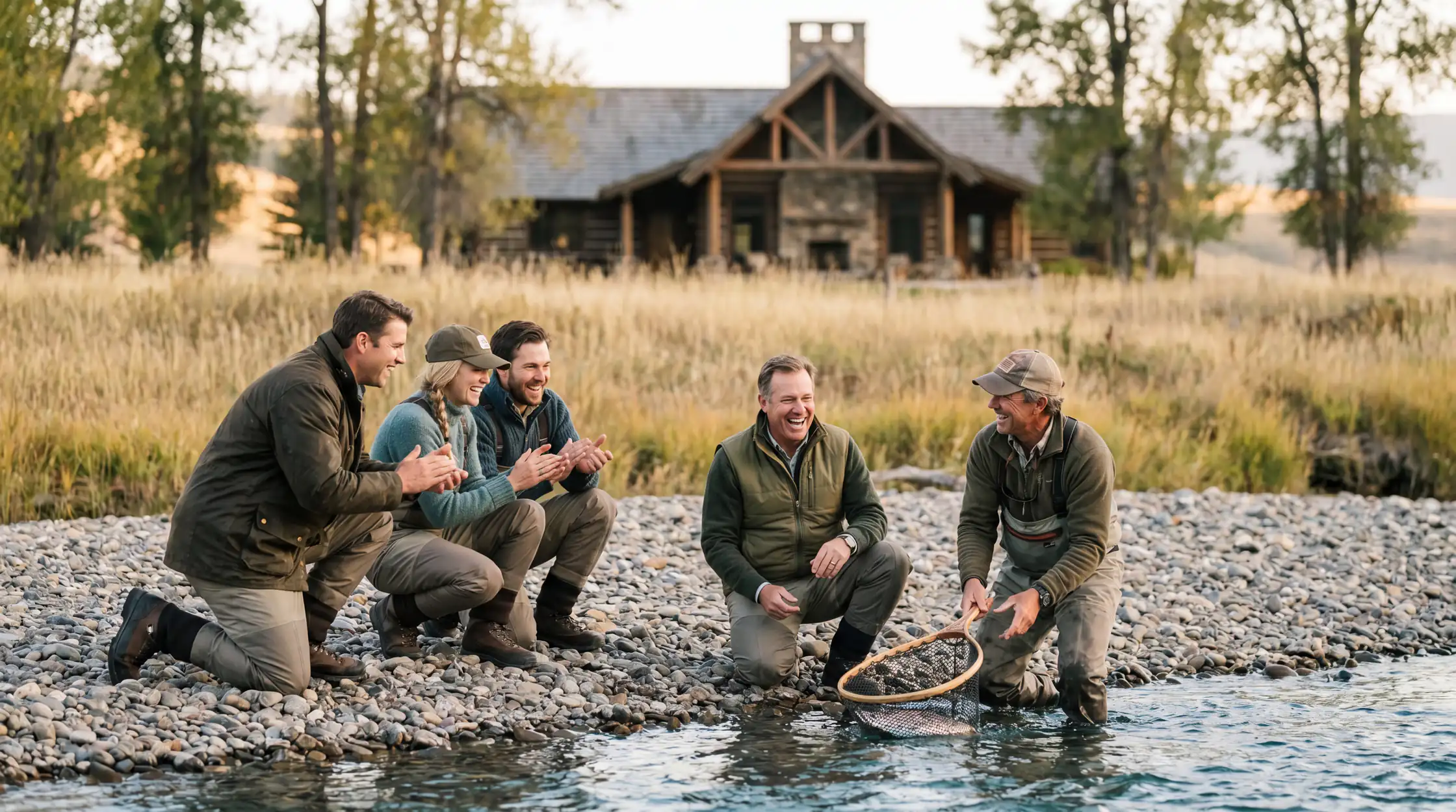
- For photos, have your camera ready before the fish is lifted, keep the fish over the water (not the bank), and limit air exposure to a few seconds
- Support the fish gently in the current until it swims away on its own
On private water and on any well-guided trip, catch-and-release is the standard. Even if regulations technically allow harvest, follow the guide's lead. They know the fishery and what it can sustain.
The Guide-Client Relationship
The best guided days happen when the guide and client develop a comfortable working rhythm. The guide leads, the angler follows, and there is a natural back-and-forth of instruction, adjustment, and execution.
A few things that help build that rhythm:
- Respect the guide's expertise. They fish this water regularly and know it far better than any research you did the night before. If they suggest a fly change or a different approach, go with it.
- Do not backseat guide. If you are an experienced angler fishing with a guide for the first time, resist the urge to direct the day. You hired expertise — let it work.
- Be flexible. The plan may change based on conditions. The guide might move you to different water, switch techniques, or adjust the timeline. This is them doing their job well, not a sign that something went wrong.
- Enjoy the surroundings. Some of the best moments on a guided trip have nothing to do with catching fish. The guide often knows the natural history of the area, the wildlife patterns, and the stories behind the landscape. Let the experience be about more than the catch count.
Tipping
Tipping your guide is customary in the fly fishing industry. It is not legally required, but it is a meaningful part of a guide's income, and it is the standard way to acknowledge good service.
The customary range for a guided fly fishing trip is typically 15 to 20 percent of the trip cost. For a full-day trip, this usually works out to $75 to $150 or more depending on the trip price and the quality of the experience. Some anglers tip more for exceptional days or for guides who went above and beyond — staying late because the evening hatch was worth it, handling a difficult weather situation gracefully, or providing instruction that genuinely improved their casting.
Tip in cash at the end of the trip. If you booked through an outfitter, the tip goes to the guide directly, not the outfitter. If you booked through a platform like AnglerPass, the same applies.
If the trip was poor and the guide was the reason — unprepared, dismissive, or unprofessional — you are not obligated to tip at the same rate. But distinguish between a bad day of fishing (which happens regardless of guide quality) and a bad guide (which is rare among reputable operations).
After the Trip
A brief thank-you message to the guide after the trip is always appreciated. If you fished through a club or platform, leaving a review helps other anglers make informed decisions and helps good guides build their reputation.
If the guide made specific recommendations — a fly pattern that worked, a technique to practice, a stretch of water to try on your own — write them down. The advice you receive on a guided day is worth more than most anglers realize, and it fades quickly from memory.
Is a Guided Trip Worth It?
For your first time on new water — especially private water — a guided trip is almost always worth the investment. You learn the water faster, catch more fish, and avoid the trial-and-error that can turn an expensive day into an expensive blank.
Beyond the fishing, a good guide compresses years of learning into a single day. The casting corrections, the fly selection logic, the approach to reading water — these lessons carry forward to every day you fish afterward. That education is the most valuable thing a guide provides, and it is the reason experienced anglers continue to hire guides even when they are perfectly capable of fishing on their own.