The Standard Corporate Retreat Problem
Somewhere in a conference room, someone has decided that this year's executive retreat should be a fly fishing trip. The idea is appealing. Fly fishing is aspirational, photogenic, and suggests the kind of refined outdoor culture that looks good in a company newsletter. The planning gets handed to an executive assistant or event coordinator who has never organized a fishing trip.
What follows is a predictable sequence: an outfitter is booked based on a web search, dates are chosen to fit the corporate calendar rather than the fishing calendar, participants are told to show up with no preparation, and the group arrives at a river expecting an experience somewhere between a golf outing and a spa day.
The result, more often than not, is frustration. Half the group has never held a fly rod. The guides are spread too thin. The water is crowded because public access was the only option on short notice. The CEO catches nothing and the CFO hooks the back of a guide's hat. The trip is declared a success in the company Slack channel and quietly never repeated.
It does not have to go this way.
Mistake One: Treating It Like Entertainment
The fundamental error in most corporate fly fishing retreats is treating fly fishing as a passive entertainment experience — something that happens to the participants rather than something they actively engage with.
Fly fishing has a learning curve. Even basic casting requires instruction and practice. Reading water, managing drift, selecting flies, and handling fish are skills that develop over time. A corporate group that arrives at the river expecting to pick it up in five minutes will spend most of the day frustrated rather than fishing.
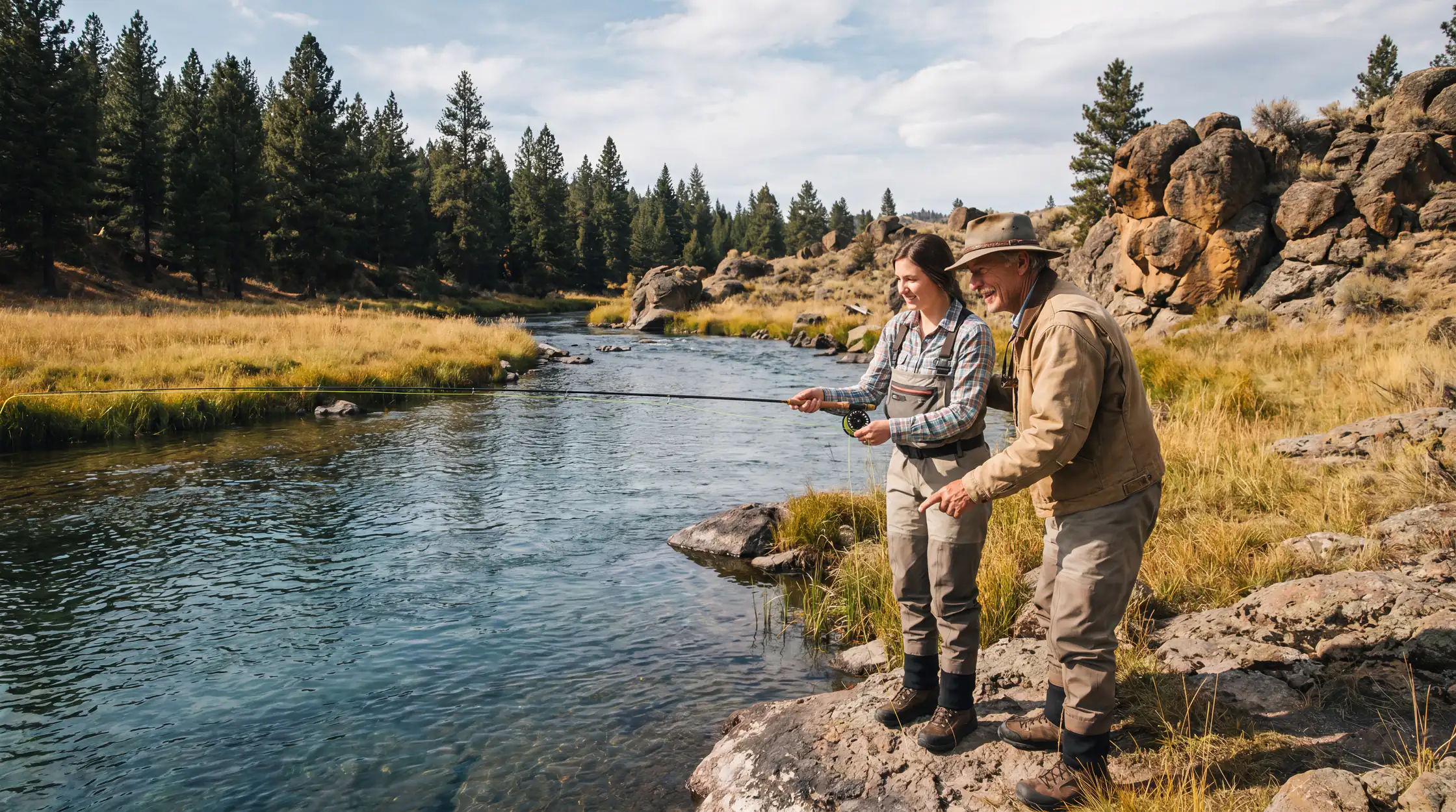
The fix is to build instruction into the schedule, not as an afterthought but as a featured part of the experience. Dedicate the first morning to casting instruction on a lawn or pond before anyone approaches a river. Let participants develop basic competence in a low-pressure environment where failure is expected and funny rather than embarrassing.
Groups that spend two hours on instruction before fishing consistently report higher satisfaction than groups that skip straight to the river. The casting session also serves as a natural icebreaker — people bond over shared incompetence more readily than shared expertise.
Mistake Two: Not Enough Guides
On a standard guided fishing trip, the typical ratio is one guide per two anglers. This ratio works because both anglers usually have some experience and can fish independently for stretches while the guide rotates attention.
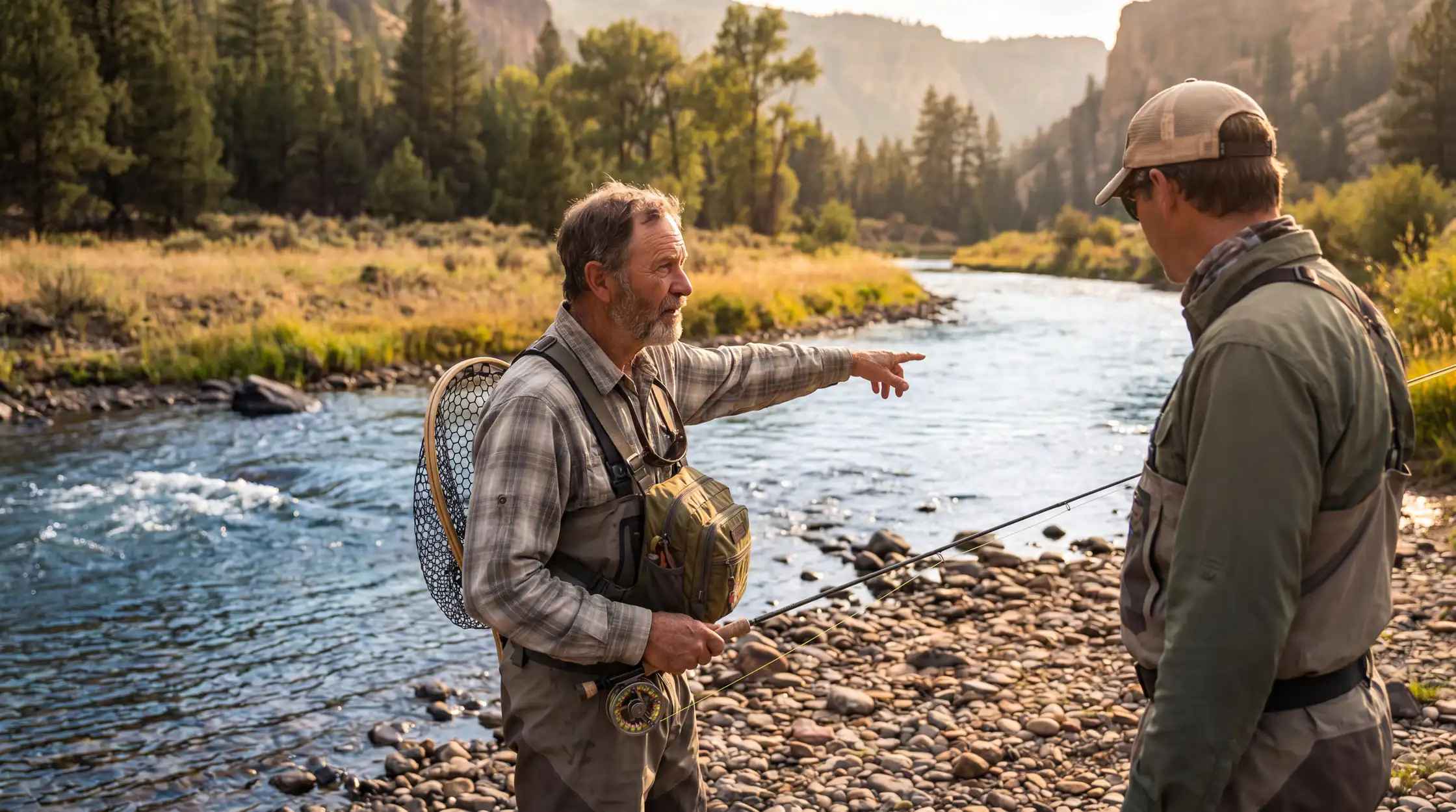
Corporate groups are different. Most participants are beginners or have fished once or twice in their lives. They need hands-on instruction, constant coaching, help with tangles and knots, and someone to net their fish when they finally hook one. A one-to-two ratio is the absolute minimum for a corporate group, and one-to-one is significantly better for true beginners.
The cost difference between hiring three guides and hiring six is real, but it is a fraction of the total retreat budget and has an outsized impact on the experience. A participant who spends the day with attentive guide support will come away energized and wanting to fish again. A participant who spends the day untangling their line while the guide helps someone else will come away thinking fly fishing is tedious.
When booking guides for a corporate retreat, communicate the group's experience level honestly. Guides who specialize in teaching beginners have a different skill set than guides who specialize in putting experienced anglers on trophy fish. Both are valuable. The wrong match produces a bad day for everyone.
Mistake Three: Public Water for a Private Experience
Corporate retreat organizers often default to public water because it is easier to book and does not require the relationships or lead time that private water access demands. This is a false economy.
Public water on a popular river during peak season means sharing the resource with every other angler, outfitter, and float trip in the area. A group of eight corporate executives standing in a line on a crowded tailwater does not feel exclusive, relaxing, or special. It feels like standing in line.
Private water solves this problem entirely. A corporate group on a well-managed private property has the water to themselves. There are no other anglers to navigate around, no competition for productive runs, and no audience for the inevitable beginner mishaps that are part of the learning process.
Private water also provides a controlled environment where guides can manage the group more effectively. They know exactly what water is available, where the fish hold, and how to position beginners for success. The logistics are simpler, the experience is calmer, and the fish are less pressured.
Clubs and platforms like AnglerPass that manage private water access can accommodate corporate groups through their booking systems. Some clubs offer corporate day-use packages that include guided access, equipment, and catering. The per-person cost is typically higher than a public water float trip, but the experience is in a different category entirely.
Mistake Four: Wrong Time of Year
Corporate calendars and fishing calendars rarely align. The Q3 offsite that lands in mid-August might be convenient for scheduling, but it is often the worst time to fish for trout. High water temperatures, low flows, and stressed fish make for difficult fishing even for experienced anglers. For beginners, it is a recipe for a blank day.
The best corporate fishing retreats are planned around the fishing, not around the fiscal quarter. Spring and fall generally offer the most forgiving conditions for beginners: moderate water temperatures, active fish, and comfortable weather. If the dates are fixed by the corporate calendar, choose water and species that match the season. Warm-water species like bass and carp can be excellent alternatives during summer months when trout fishing is challenging.
Discuss timing with your guides or outfitter early in the planning process. They know when the fishing on their water is most likely to produce a good experience for a mixed-skill group, and that input is worth more than any amount of web research.
Mistake Five: No Pre-Trip Preparation
Sending a group of executives to a fly fishing retreat with no preparation is like sending them to a wine tasting without telling them it is a wine tasting. They show up in the wrong clothes, with the wrong expectations, and spend the first hour orienting themselves rather than engaging with the experience.
A brief pre-trip communication — even just an email — dramatically improves the experience. Cover the basics:
- What to wear (layers, sun protection, footwear that can get wet)
- What the schedule looks like (instruction, lunch, fishing, debrief)
- What skill level to expect (no experience needed, guides will teach everything)
- What the goals are (learning a new skill, enjoying the outdoors, spending time together — not catching a personal best)
- What private water etiquette looks like (leave no trace, follow guide instructions, respect the property)
This communication sets realistic expectations and reduces the anxiety that many people feel about trying a new outdoor activity in front of their colleagues. It also signals that the organizer has put genuine thought into the experience.
What a Great Corporate Retreat Looks Like
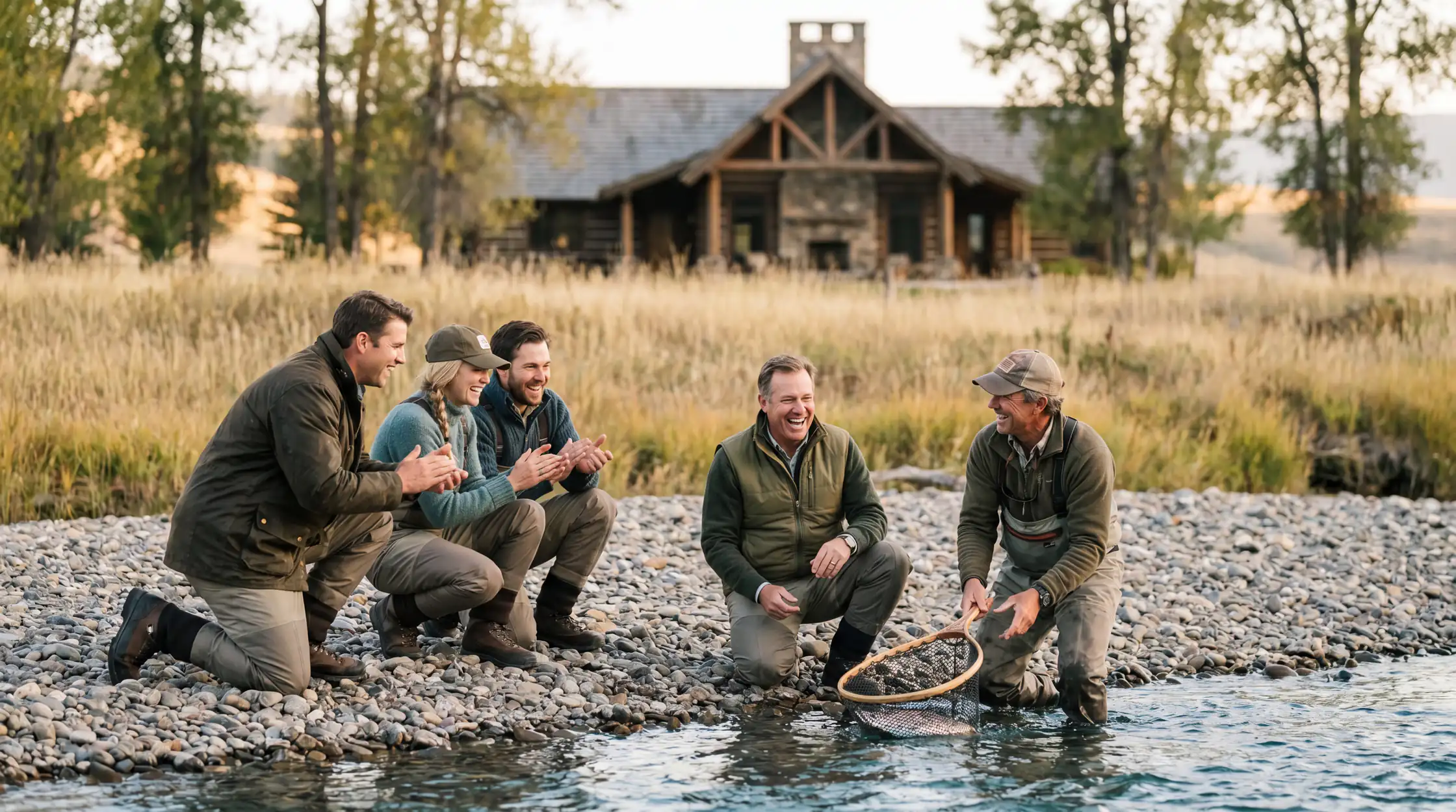
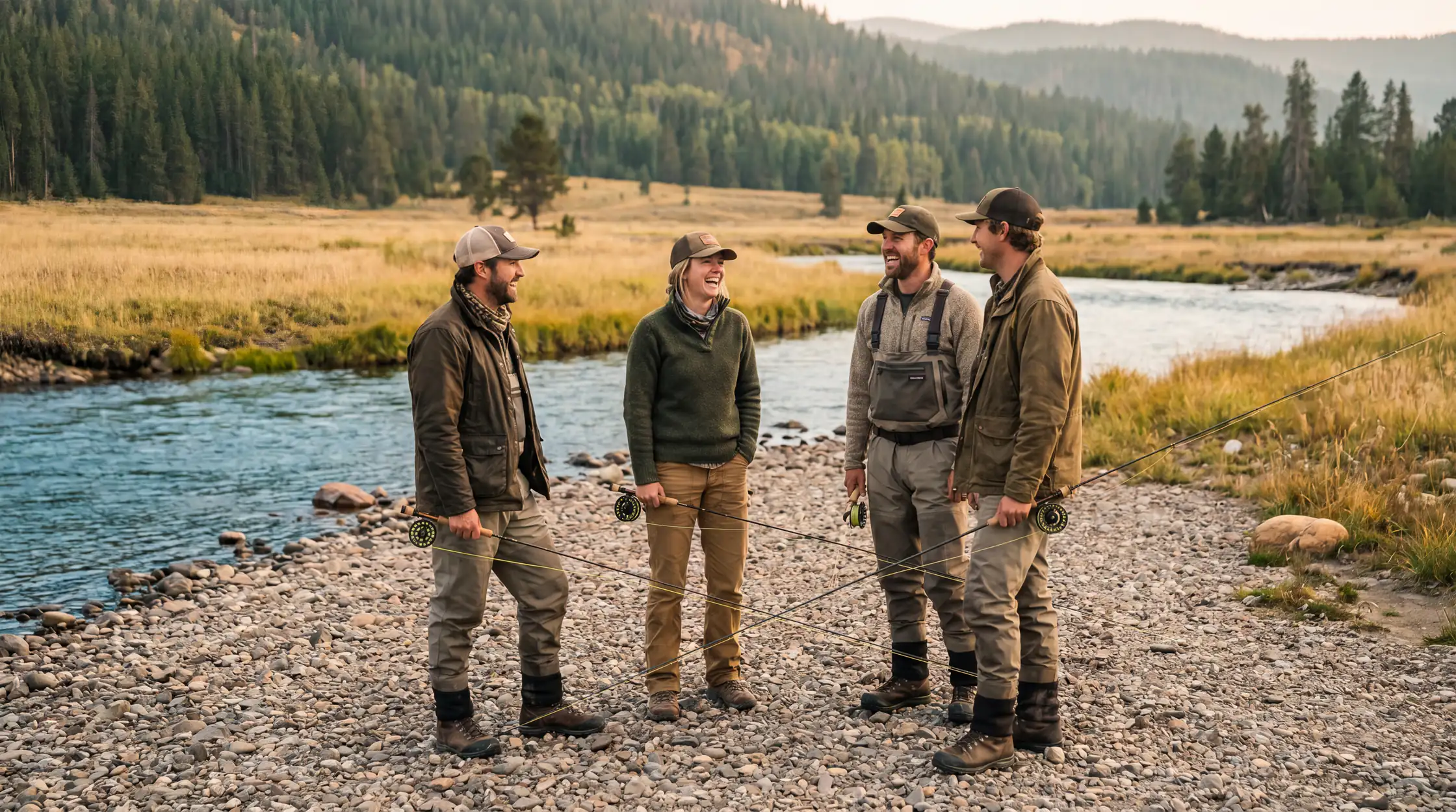
The best corporate fly fishing retreats share a common structure. They start with instruction and end with fishing, building confidence throughout the day. They take place on private water where the group has space and privacy. They have enough guides to ensure that every participant gets personal attention. And they frame the experience around learning and enjoyment rather than competition and catch counts.
A well-structured one-day retreat for a group of eight might look like this:
- Morning: Arrive at the property, meet guides, coffee and orientation
- Mid-morning: Casting instruction on a lawn or still-water pond, two hours with breaks
- Lunch: Streamside meal, casual conversation about what comes next
- Afternoon: Three hours of guided fishing in pairs, rotating through different water
- Late afternoon: Regroup, share stories, debrief on the experience
Multi-day retreats can build on this foundation with progressive instruction: day one covers casting and basic fishing, day two introduces more advanced techniques and longer sessions on the water, and day three lets participants fish with minimal guidance and apply what they have learned.
The Business Case for Doing It Right
Corporate retreats are expensive. Between travel, lodging, meals, activities, and the opportunity cost of taking a team out of the office, even a modest retreat represents a significant investment. The marginal cost of upgrading from a mediocre fishing experience to an excellent one is relatively small in the context of the total budget.
Hiring two additional guides, booking private water instead of public, and adding a half-day of instruction might add $2,000 to $5,000 to the total cost. For a company spending $15,000 to $30,000 on a retreat, that upgrade is the difference between an experience people forget by the following Monday and one they talk about for years.
More importantly, a well-executed fly fishing retreat accomplishes something that ropes courses and escape rooms cannot: it puts people in an environment where vulnerability is natural, patience is required, and success depends on paying attention to something other than a screen. The conversations that happen between casts on a quiet stretch of private water are often more valuable than anything that happens in a conference room.
Getting Started
If you are planning a corporate fly fishing retreat, start by talking to guides and outfitters who have experience with corporate groups. Ask specifically about private water access, beginner instruction, and their recommended group-to-guide ratio. Get references from past corporate clients.
Platforms like AnglerPass can connect you with clubs that offer corporate access packages on managed private water. The platform handles booking, waivers, and property logistics, which simplifies the planning process for corporate event organizers who are coordinating many moving parts.
Give yourself lead time. The best private water and the best guides book well in advance, especially during prime seasons. Starting the planning process at least three months ahead gives you the best selection and allows time for pre-trip preparation that makes the experience noticeably better.