Private Water Is a Different Business
Most fly fishing guides build their careers on public water. They learn the rivers, develop relationships with outfitters, and build client bases around well-known fisheries. Public water guiding is straightforward in one important way: the water is open to everyone, and the guide's value comes from knowledge, skill, and the ability to put clients on fish.
Private water changes the equation. The water itself becomes part of the value proposition. Clients are not just paying for a guide's expertise — they are paying for access to water that most anglers cannot reach. That access comes with responsibilities that go well beyond knowing where the fish hold.
For guides willing to invest in the relationships and standards that private water demands, the payoff is significant. Lower fishing pressure means more fish, bigger fish, and more consistent days. Clients notice the difference immediately, and guides who can reliably deliver private water experiences build reputations that command premium rates.
Understanding the Access Chain
On public water, a guide needs a license and a drift boat. On private water, access flows through a chain of relationships that the guide must understand and respect.
The landowner owns the property and the water rights. They have agreed — usually through a club or access platform — to allow fishing on their land under specific conditions. The club or platform manages that access, sets rules, vets participants, and maintains the landowner relationship. The guide operates within the framework that the club and landowner have established.
This means the guide is never the primary relationship holder. The club or platform has spent years building trust with the landowner. A single bad experience with a guided client can damage that relationship in ways that affect every other angler who fishes the property. Guides who understand this dynamic and operate accordingly are the ones who maintain and expand their private water access over time.
What Clubs Expect from Guides
Clubs that allow guided trips on their water typically have explicit expectations. These vary by club, but common requirements include:
- Current guide license and CPR/first aid certification
- Proof of commercial general liability insurance (typically $1 million minimum)
- Agreement to follow all property-specific rules without exception
- Pre-trip communication with the club about client count and timing
- Post-trip reporting on catch numbers, conditions, and any property issues
- No social media posts that identify the specific property or location
Some clubs require guides to complete an orientation trip before they can bring clients. This is not a test of fishing ability — it is an opportunity for the guide to learn the property's specific access points, boundaries, sensitive areas, and rules. Treat this as the professional investment it is.
Clubs also expect guides to be the enforcement mechanism for property rules. If a client wants to wade in a restricted area or keep a fish on catch-and-release water, it is the guide's job to prevent that from happening. The club is trusting the guide to maintain standards that the club cannot monitor in real time.
Preparing Clients for Private Water
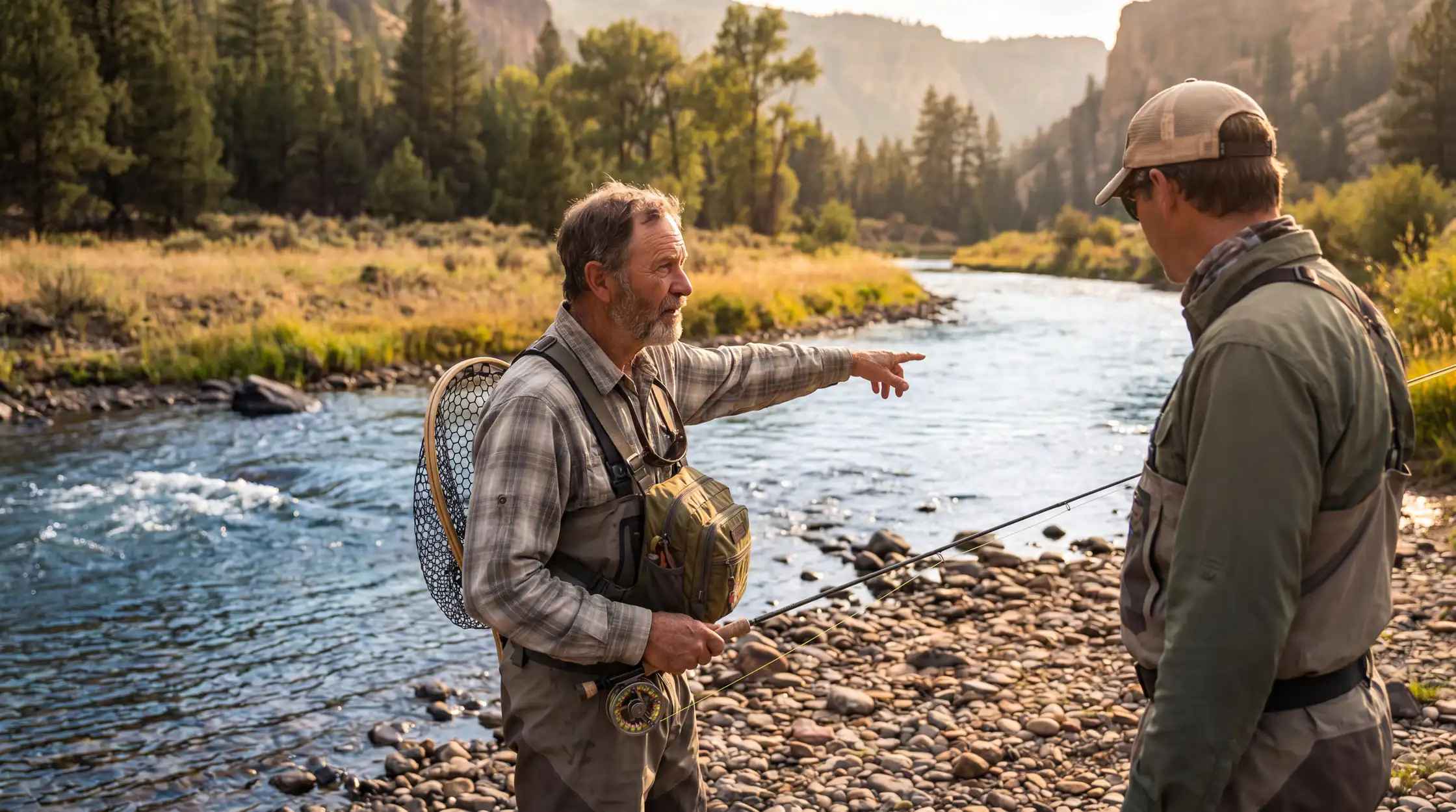
Many clients who book guided private water trips have limited experience with the etiquette and expectations involved. The guide's job starts well before the first cast.
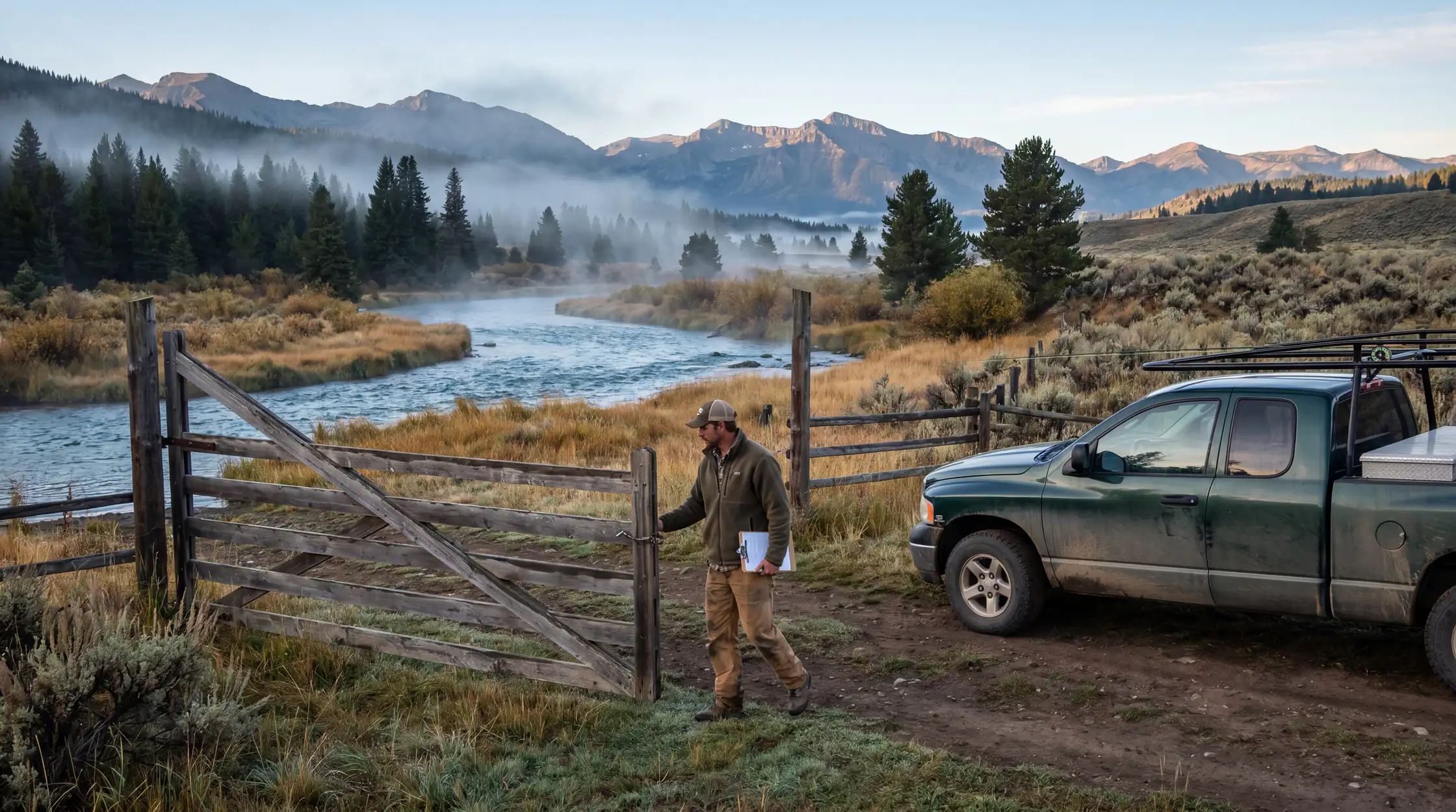
Send clients a pre-trip briefing that covers the specific rules of the property they will be fishing. Include practical details: where to park, how gates work, what to do with trash, whether wading is allowed, and what catch-and-release practices are expected. Clients who arrive informed are clients who have a better day and leave a better impression on the property.
Set expectations about what private water fishing is and is not. It is not a guarantee of large fish on every cast. It is access to water with lower pressure, healthier fish populations, and a more controlled environment. Clients who understand this enjoy the experience far more than those who arrive expecting a fish-per-minute ratio.
Brief clients on the social dynamics as well. They may encounter the landowner or ranch staff. A friendly greeting and respectful distance go a long way. If the landowner stops to chat, the client should be warm but not overstay. These small interactions shape whether the landowner continues to welcome guided trips.
Liability and Insurance Considerations
Guiding on private water introduces liability questions that do not exist on public water. The guide is bringing paying clients onto someone else's property, which creates potential exposure for the guide, the landowner, and the club.
At minimum, guides should carry commercial general liability insurance that covers guided fishing activities on private land. Many insurance providers offer policies specifically designed for fishing guides, and the cost is modest relative to the protection it provides. Some clubs require guides to name the club or landowner as additional insured on their policy.
Beyond insurance, guides should have clients sign waivers that acknowledge the inherent risks of fishing on private land, including uneven terrain, wildlife encounters, and water hazards. Platforms like AnglerPass handle digital waivers as part of the booking process, but guides working outside a platform should have their own waiver reviewed by an attorney.
Keep a clean safety record. Carry a first aid kit appropriate for remote settings. Know the nearest hospital and have cell service information for the property. Private water is often more remote than public access points, and response times for emergencies can be longer.
Building Landowner Relationships
The best private water guides do not treat landowner relationships as transactional. They invest in them.
After a guided trip, send the landowner a brief note thanking them for the access. Report any property issues you noticed — a downed fence section, a washed-out bank, an irrigation gate that looked off. This kind of attentiveness costs nothing and signals that you see yourself as a steward of the property, not just a consumer of it.
Some guides go further. They volunteer for annual cleanup days, help with riparian restoration projects, or offer the landowner a complimentary guided day on their own water. These investments build the kind of trust that leads to expanded access and long-term partnerships.
Never approach a landowner directly to request access without going through the club or platform that manages the property. Even if you have a personal relationship with the landowner, circumventing the established access structure undermines the system that makes private water access sustainable.
The Economics of Private Water Guiding
Guided private water trips typically command higher rates than public water trips. Clients understand that they are paying for exclusivity, lower pressure, and a premium experience. Guides who deliver on that promise can charge accordingly.
The economics work differently on the cost side as well. Most clubs charge a rod fee or guide access fee for each guided day. This fee compensates the landowner and supports property management. Factor this into your pricing rather than absorbing it — clients who value private water access expect to pay for it.
Some clubs offer guide partnership programs with reduced fees in exchange for a minimum number of booked days per season. These arrangements benefit both parties: the club gets consistent, professional use of the water, and the guide gets predictable access at a better rate.
Track your private water days carefully. Record catch rates, client satisfaction, and any feedback from the club or landowner. This data helps you demonstrate your value when negotiating access agreements and helps you market private water trips to future clients with honest, verifiable results.
How Platforms Are Changing Guide Access
Traditionally, guides gained private water access through personal networks. You knew someone who knew a rancher, or you had a club member who could get you in. This model works, but it limits access to guides who happen to have the right connections in the right geography.
Platforms like AnglerPass are changing this by creating structured pathways for guides to access private water. Verified guides can list their services alongside club properties, and anglers can book guided trips through the platform with all the logistics — waivers, property rules, rod fees, scheduling — handled digitally.
This model benefits guides in several ways. It removes the cold-outreach barrier of building landowner relationships from scratch. It provides a professional framework that reassures landowners and clubs about guide quality. And it handles the administrative overhead of booking, payment, and liability documentation that otherwise falls on the guide.
For guides who want to build or expand a private water practice, platform-based access is a practical starting point. It does not replace the value of deep, personal relationships with landowners and clubs. But it provides a foundation that new guides can build on and experienced guides can use to extend their reach into new regions.
The Standard You Set
Every guided day on private water either strengthens or weakens the case for continued guide access. Landowners and clubs are watching — not with suspicion, but with the reasonable expectation that professionals will uphold professional standards.
The guides who thrive on private water are the ones who treat every trip as a reflection of their reputation. They arrive early, leave the property cleaner than they found it, follow every rule without complaint, and make sure their clients do the same. They communicate proactively with clubs and respond to feedback with action rather than defensiveness.
Private water guiding is not for every guide. It requires patience, relationship management, and a willingness to operate within someone else's framework. But for guides who embrace those requirements, it opens doors to the kind of fishing experiences that define careers and keep clients coming back season after season.