Access Is a Conservation Tool
Conservation conversations in fly fishing tend to focus on habitat restoration, water rights, and species protection. These are critically important. But there is a conservation tool that receives far less attention despite being deployed every day on private water across the country: access management.
How many anglers fish a stretch of water, how often, and under what rules are among the most significant factors determining the health of a fishery. A mile of trout stream that sees 200 angler-days per year will produce a fundamentally different fishery than the same mile seeing 2,000 angler-days. Managed access — the kind that clubs and platforms provide — is the mechanism that controls that pressure, and controlling pressure is one of the most effective conservation strategies available.
The Pressure Problem
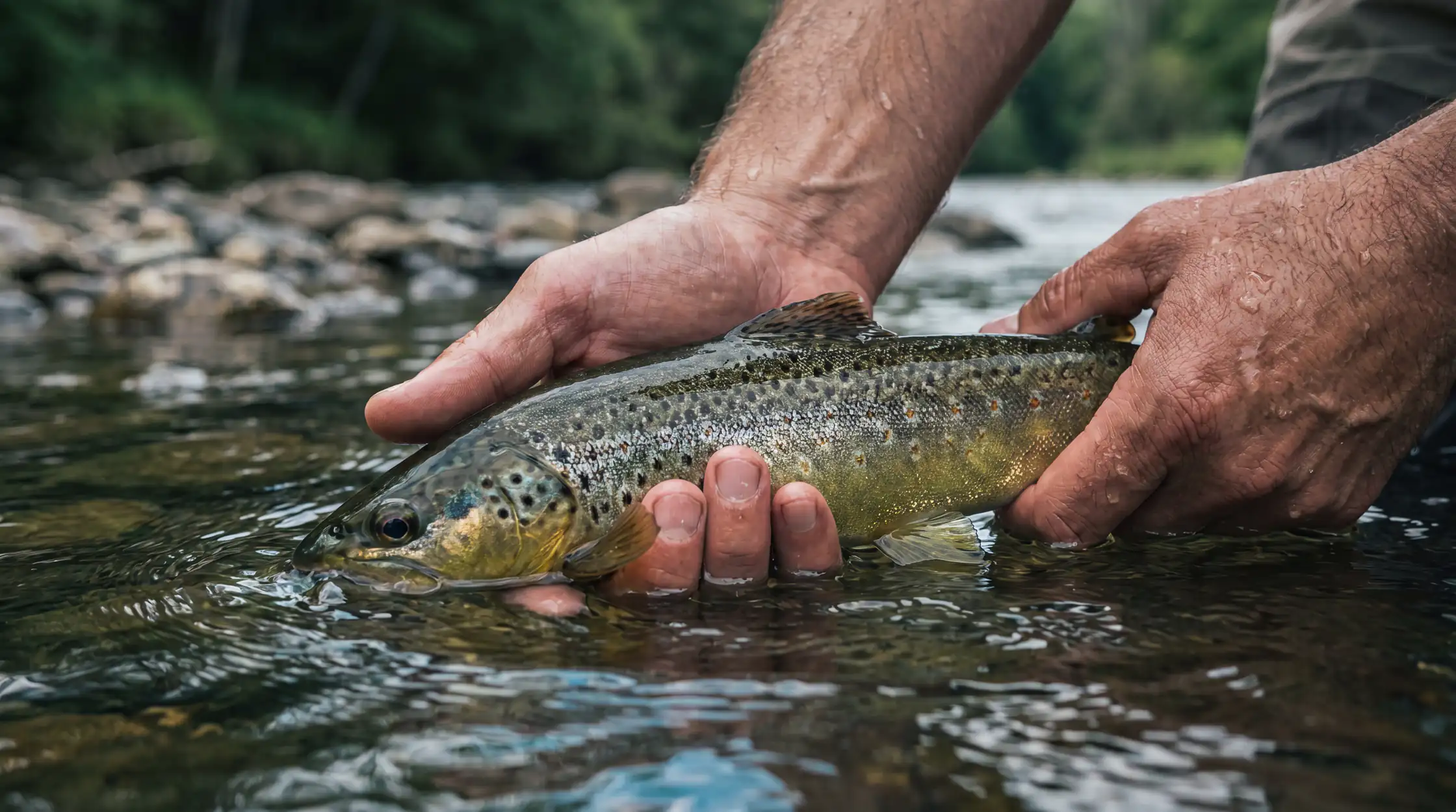
Angling pressure affects fish populations in ways that go beyond direct mortality. Even on catch-and-release water, every encounter with an angler creates physiological stress for the fish. Elevated cortisol levels, lactic acid buildup from fighting, and energy expenditure during evasion all have cumulative effects.
On lightly pressured water, individual fish may be caught a handful of times per season. The stress of each encounter is manageable, and recovery between events is complete. On heavily pressured water, the same fish may be caught dozens of times. The cumulative stress affects growth rates, reproductive success, and overall fitness.
Beyond the fish themselves, heavy angling pressure degrades habitat. Streambank erosion from foot traffic, trampled riparian vegetation, and disturbed spawning gravel are all consequences of unmanaged access. These effects are gradual and easy to overlook in any single season, but they compound over years into measurable habitat loss.
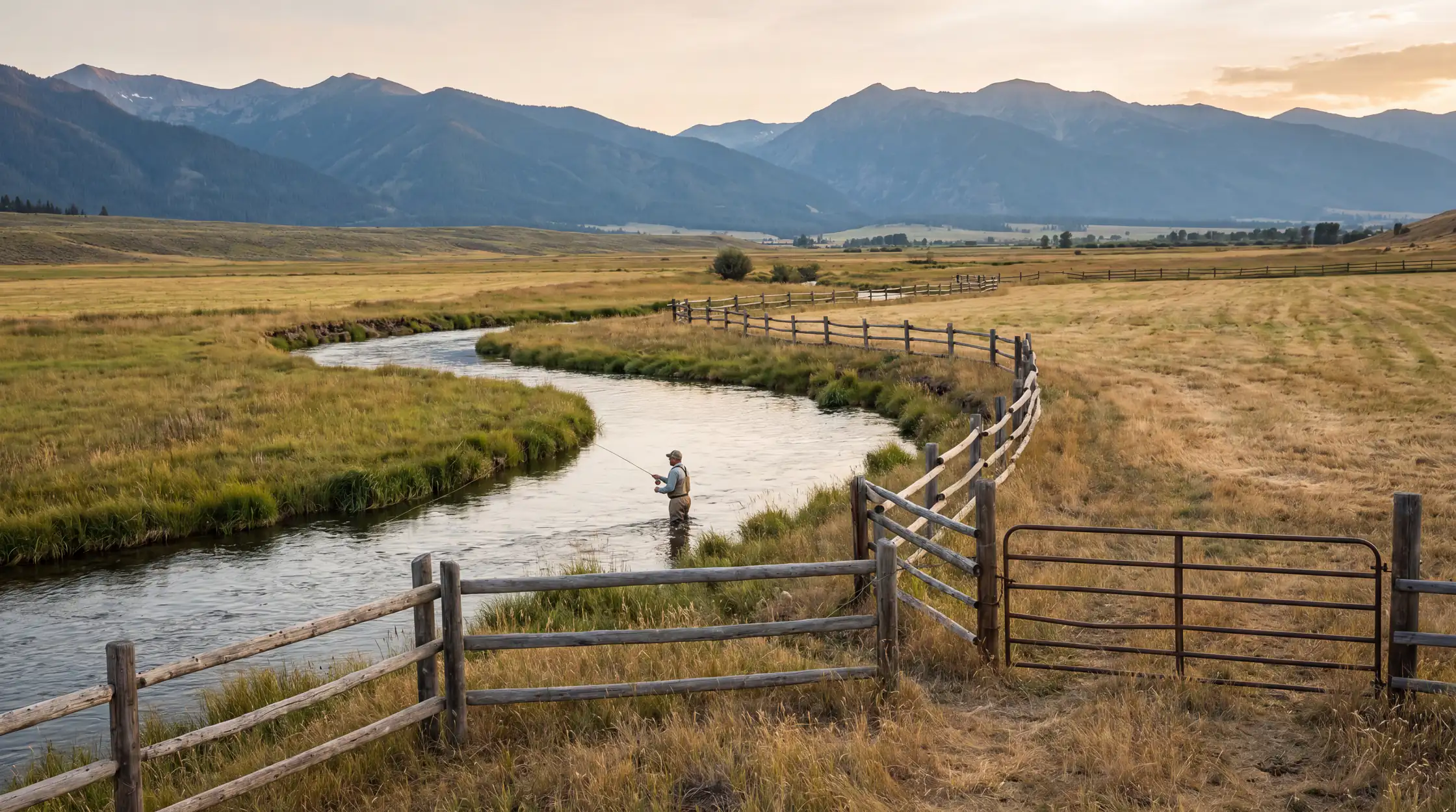
Managed access addresses pressure directly. By limiting the number of anglers per day on a given stretch of water, clubs ensure that the fishery operates within its carrying capacity. The rod limits that clubs set — typically two to four anglers per beat per day — are not arbitrary. They reflect an understanding of how much fishing a stretch of water can absorb while maintaining the quality that makes it worth protecting.
Rules as Conservation Policy
State fishing regulations set a minimum standard. Managed access sets a higher one. The rules that clubs enforce on their water function as localized conservation policy, tailored to the specific needs of each fishery.
Barbless hook requirements reduce handling time and tissue damage during release. Single-fly restrictions limit the number of fish hooked per hour, which reduces cumulative stress on the population. Seasonal closures during spawning periods protect the reproductive cycle. Temperature-based closures during summer prevent catch-and-release mortality that spikes when water temperatures exceed safe thresholds.
These rules work because they are enforced. State regulations apply to everyone but are enforced by a limited number of wardens covering vast territories. A club's rules are enforced by the club itself, through a community of members who understand why the rules exist and hold each other accountable. A member who fishes barbed hooks on barbless-only water faces consequences from the club — and those consequences matter because they affect future access.
This enforcement model creates a feedback loop. Anglers who fish managed water develop better handling practices, internalize conservation values, and carry those practices to every water they fish. The culture of careful stewardship that managed access cultivates extends its benefits far beyond the specific properties where it is enforced.
Catch Data and Adaptive Management
One of the most underappreciated benefits of managed access is the data it generates. When a club tracks who fishes, when, and what they catch, it builds a dataset that enables informed management decisions.
Catch logs on managed water typically record species, estimated size, location on the property, time of day, fly pattern, and water conditions. Over multiple seasons, this data reveals trends that would be invisible without systematic collection. A declining average size might indicate overpressure on a specific beat. A shift in species composition might signal habitat changes that need attention. A drop in catch rates during a specific month might correlate with water temperature patterns that warrant adjusted fishing schedules.
Public water rarely generates this kind of granular data. Creel surveys — where state agencies interview anglers at access points — provide useful snapshots but are conducted infrequently and cover only a fraction of the fishing activity. Managed access, by contrast, can produce continuous data across an entire season, year after year.
Some clubs share their catch data with state fisheries biologists, contributing to a broader understanding of fish populations and habitat conditions in their watersheds. This collaboration benefits both the private water and the public water downstream, since fisheries do not respect property boundaries.
Habitat Stewardship as Organized Activity
Conservation on managed water is not limited to fishing rules. Clubs and landowners who work together on habitat stewardship create lasting improvements to the fishery that benefit fish populations regardless of whether anyone is fishing.
Common stewardship activities on managed water include:
- Installing woody debris structures that create holding water, break current, and provide cover for trout
- Planting and maintaining riparian vegetation that stabilizes banks, shades the stream, and provides terrestrial insect habitat
- Managing invasive plant species that outcompete native riparian vegetation
- Removing fish passage barriers like deteriorated culverts or dilapidated low-head dams
- Monitoring and managing water temperatures through shade restoration and flow management where possible
- Controlling livestock access to prevent streambank degradation and nutrient loading
These projects require organization, funding, and sustained commitment. Clubs provide all three. Annual work days mobilize member labor. Dues and special assessments fund materials and professional services. The club's long-term presence on the property ensures that projects are maintained over years rather than completed once and forgotten.
Ad hoc access arrangements rarely produce this kind of stewardship. Individual anglers who fish a property a few times per year have neither the incentive nor the organizational structure to invest in habitat improvement. The club model transforms anglers from visitors into stakeholders who benefit directly from the health of the habitat and therefore invest in maintaining it.
Accountability and the Social Contract
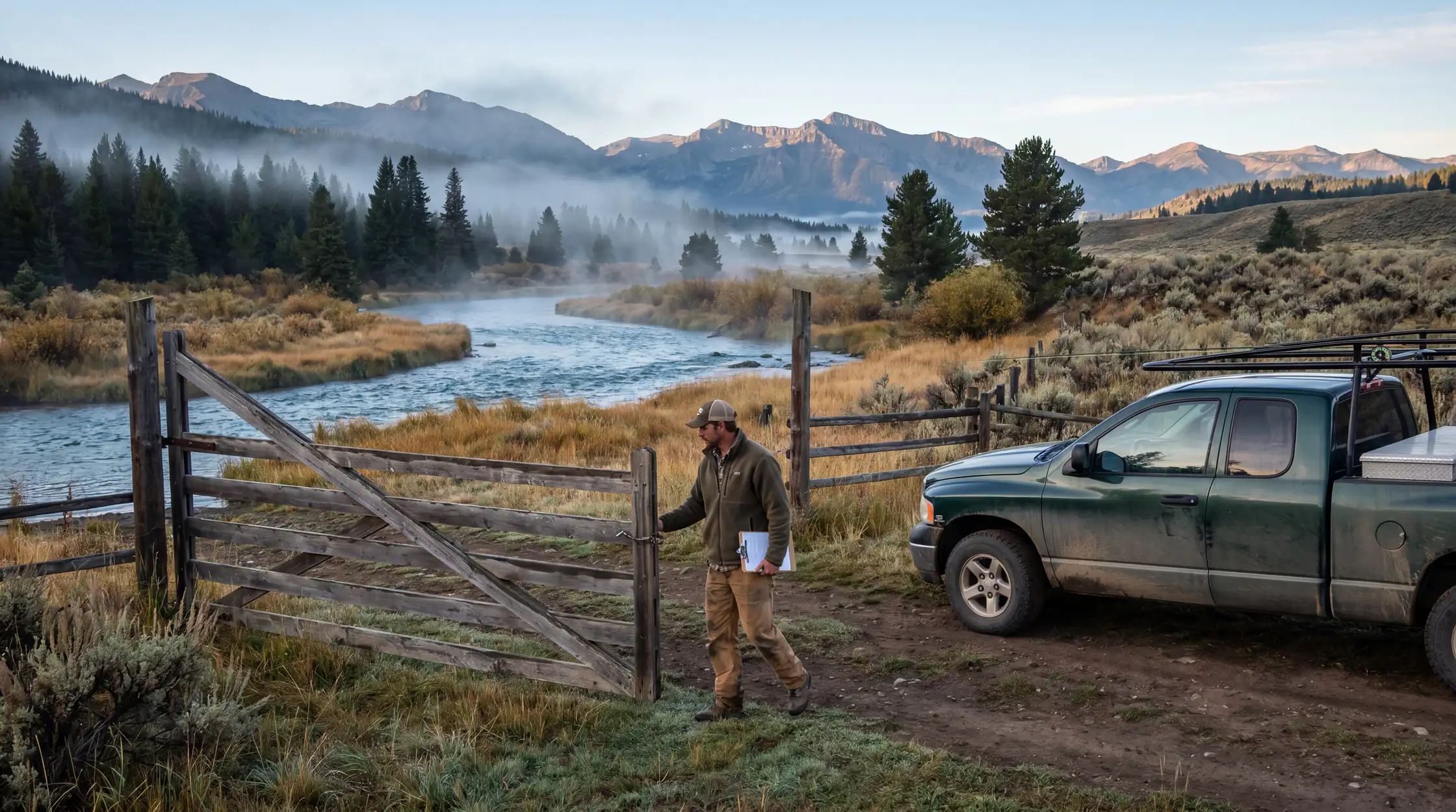
Managed access creates accountability at a scale that public water cannot match. Every angler on a managed property is known to the club. Their access is tied to their membership, which depends on their behavior. This creates a social contract that is qualitatively different from the anonymous access that characterizes public water.
On public water, an angler who mishandles fish, leaves litter, or violates regulations faces only the remote possibility of being observed by a warden. On managed water, that same behavior faces immediate social consequences. Other members report violations. The club investigates. Access can be suspended or revoked. The angler's reputation within the community is at stake.
This accountability is not punitive by design. Most managed access communities are collegial and supportive. But the knowledge that behavior has consequences creates a baseline standard that elevates the entire experience. Anglers on managed water handle fish more carefully, follow rules more consistently, and treat the environment with more respect — not because they fear punishment, but because the social context makes conservation feel like a shared responsibility rather than an individual burden.
The Network Effect
When individual clubs and properties are connected through a platform like AnglerPass, the conservation benefits scale. Standards that one club develops and proves effective can spread across the network. Data from multiple properties in the same watershed can be aggregated to reveal basin-wide trends. Best practices for habitat stewardship can be shared between clubs managing similar water types.
The cross-club access model also distributes angling pressure more evenly. When anglers have access to a network of properties rather than a single club's water, the temptation to fish the same popular stretch repeatedly is reduced. Anglers explore new water, distributing their impact across a broader area and reducing the concentrated pressure that degrades any single fishery.
This is access management operating as infrastructure — not a one-time intervention but an ongoing system that continuously regulates the relationship between anglers and the resource.
Conservation That Pays for Itself
The financial model of managed access creates a self-sustaining conservation engine. Anglers pay for access. That revenue funds landowner compensation, insurance, and operations. A portion funds conservation work. Better conservation produces better fishing. Better fishing attracts and retains members. Membership revenue funds more conservation.
This cycle does not depend on grants, donations, or government funding, though many clubs supplement their budgets with all three. The core model is self-sustaining because it aligns the financial interests of anglers, clubs, and landowners with the ecological interests of the fishery.
Public water conservation relies heavily on license revenue and tax-funded agency budgets, both of which are subject to political and economic pressures that fisheries cannot control. Managed private water adds a parallel conservation funding stream that is driven by the people who use the resource and directly motivated by its health.
The Bigger Picture
Managed access is not a replacement for public water conservation. It is a complement. The most productive conservation strategy for any watershed involves healthy public water managed by competent state agencies and healthy private water managed by committed clubs and landowners, working together.
What managed access demonstrates is that access control is itself a conservation tool — one that is available to any landowner, any club, and any angler who chooses to participate. Every rod limit that is honored, every barbless hook that is used, every catch log that is recorded, and every stream improvement project that is completed adds up. The infrastructure is not concrete and steel. It is the systems, standards, and relationships that make sustainable fishing possible.