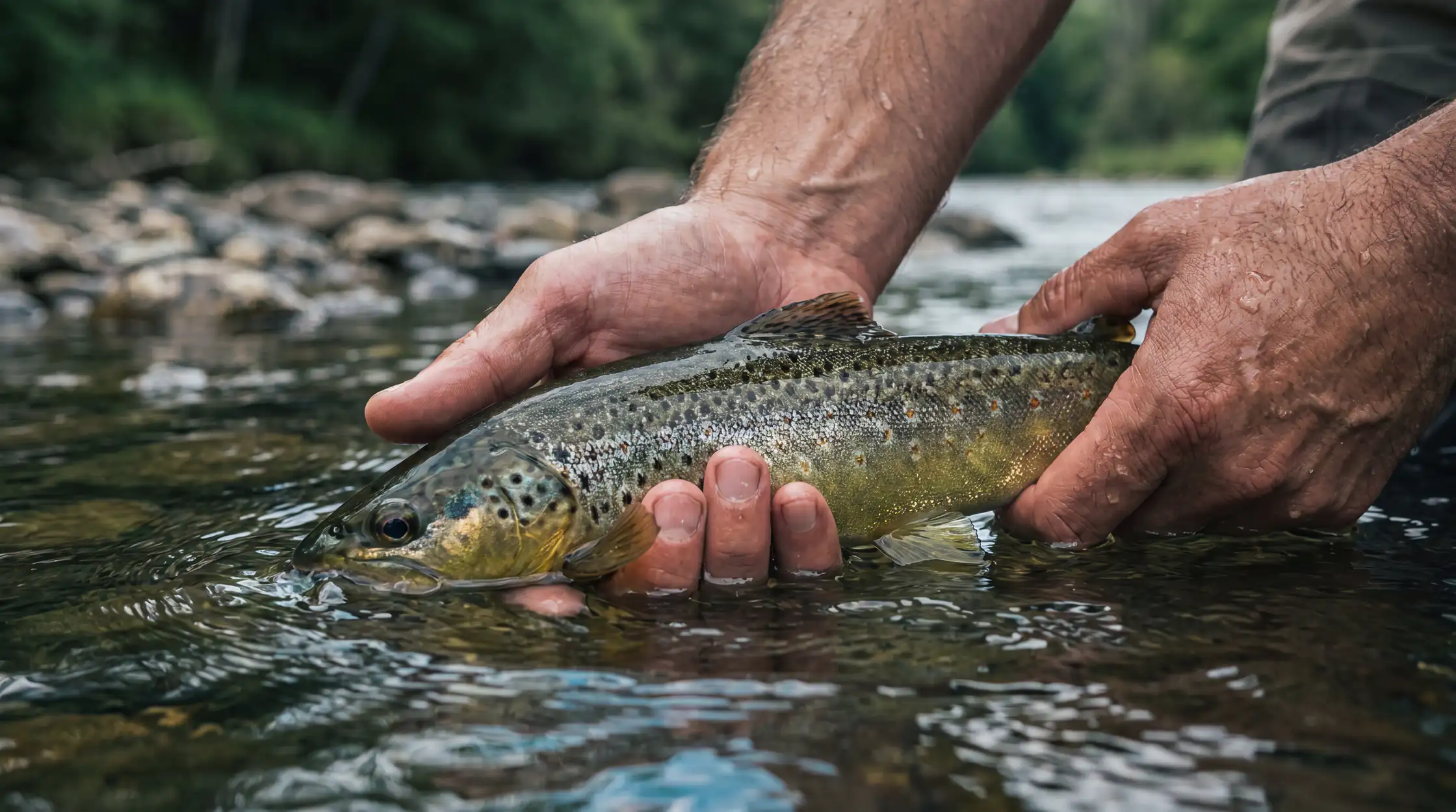
A Smaller System with Higher Stakes
Public rivers and large tailwaters support enormous fish populations spread across miles of water and shared among thousands of anglers. On these fisheries, the impact of any single angler's handling practices is diluted by the sheer scale of the system. A fish that does not survive release is one among tens of thousands.
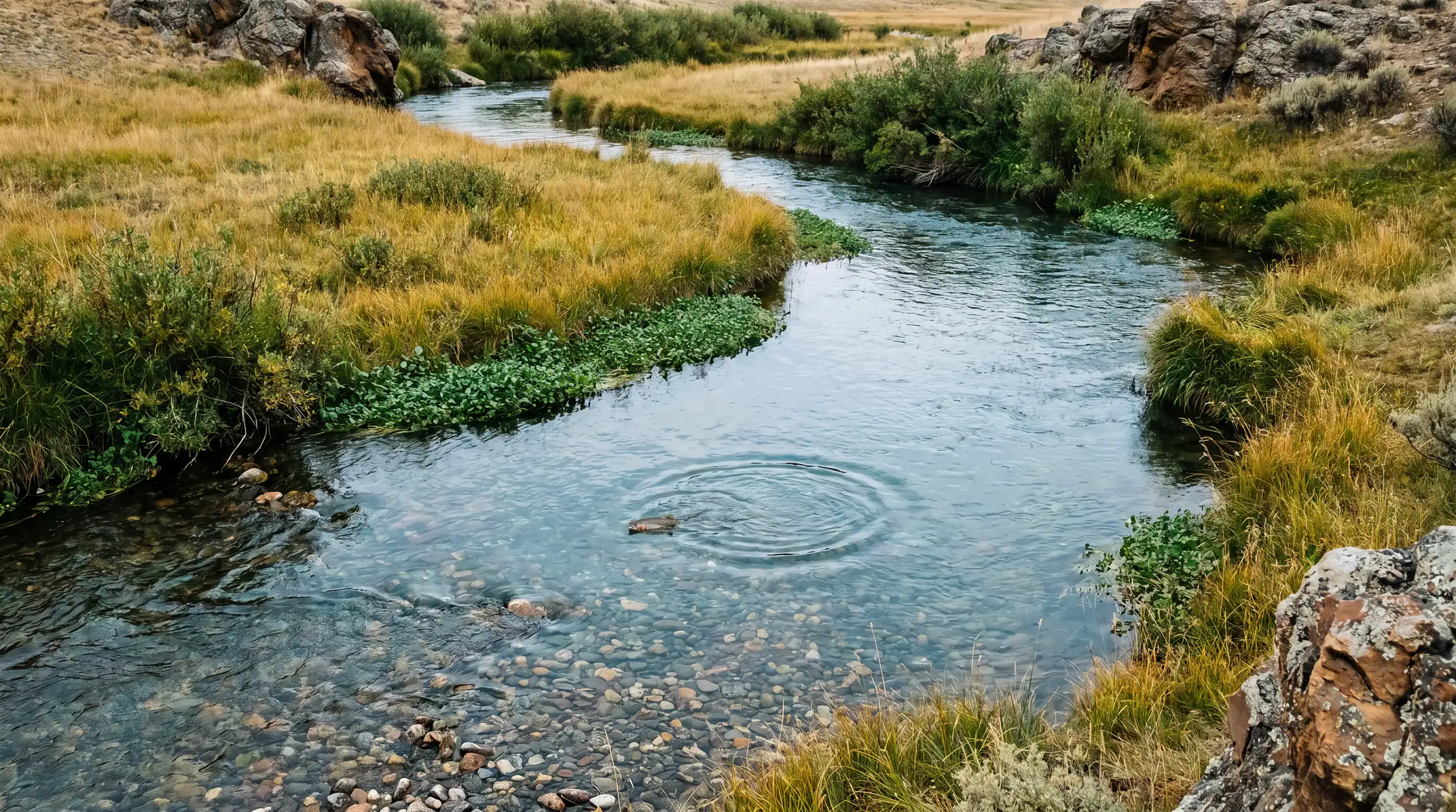
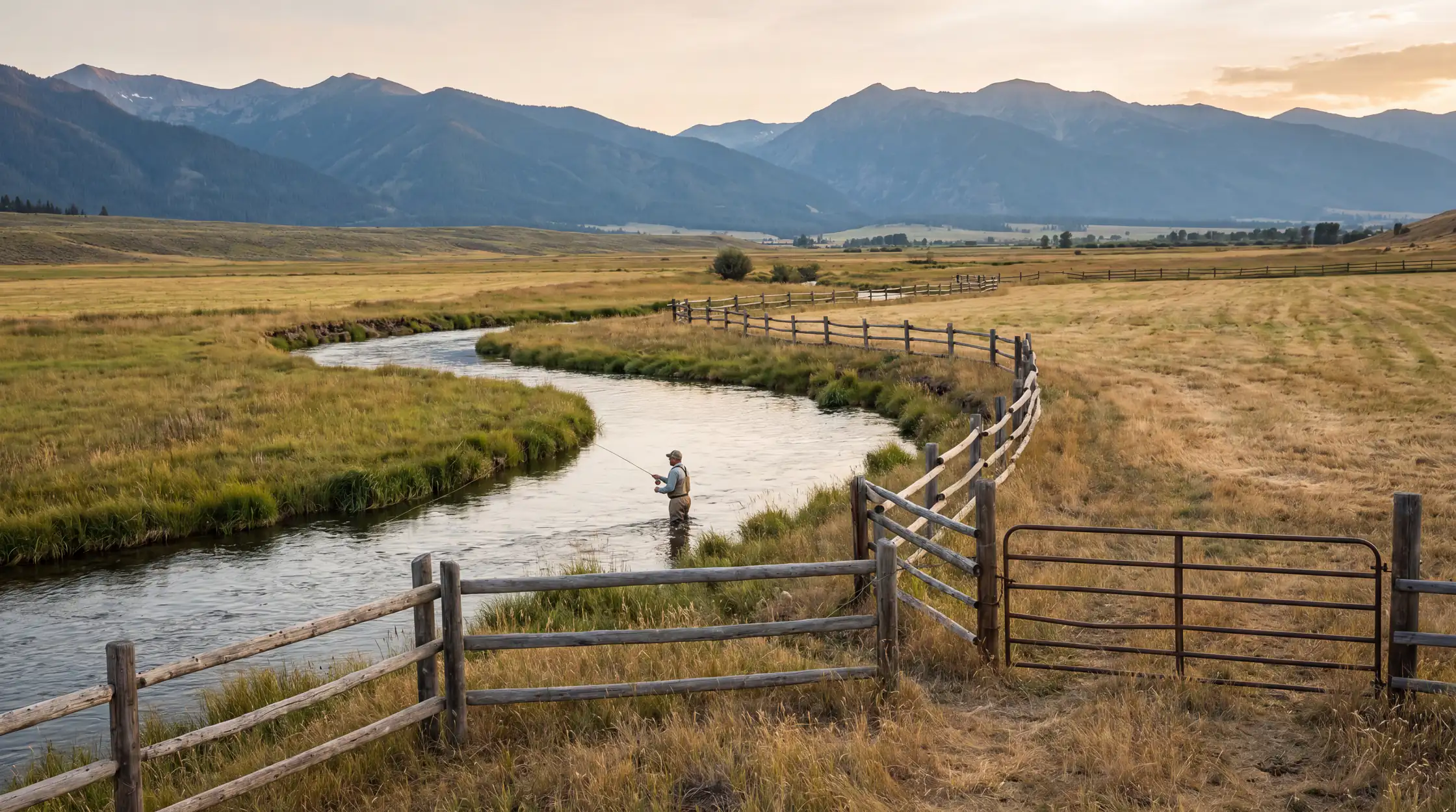
Private water operates on a fundamentally different scale. A managed spring creek might hold a few hundred trout across a mile of stream. A private lake might support a population of several thousand fish that took years to establish. When an angler on this water mishandles a release and a fish dies, the impact is measurable. Do it a few times across a season of guided trips and club outings, and the fishery noticeably declines.
This is why nearly every private water property enforces catch-and-release, and why the expectations around how you release fish are far stricter than what you might practice on public water. The math is simple: fewer fish, fewer anglers, and every individual fish represents a larger percentage of the population.
What Actually Kills Released Fish
Catch-and-release is not a guarantee of survival. Research across multiple species and environments consistently shows that released fish experience mortality rates that vary dramatically based on how they are handled.
The primary causes of post-release mortality in trout are:
- Extended fight times that cause exhaustion and lactic acid buildup
- Air exposure that damages gill tissue and reduces oxygen transfer
- Handling with dry hands that removes the protective mucus layer
- Deep hooking that causes internal bleeding
- Release during high water temperatures when dissolved oxygen is already low
- Squeezing the fish, which can damage internal organs
Studies on trout catch-and-release mortality show that under good conditions with proper technique, mortality rates can be as low as two to five percent. Under poor conditions — warm water, long fights, extended air exposure — mortality can exceed thirty percent. On a small private stream, that difference is the difference between a healthy fishery and a declining one.
Barbless Hooks Are Not Optional
Most private water properties require barbless hooks, and there is a reason this is the single most common rule across managed fisheries. Barbless hooks reduce handling time, the most controllable factor in post-release survival.
A barbless hook can often be removed while the fish is still in the water, with a simple twist of the wrist. The fish never leaves the stream, never contacts dry hands or a net bag, and never experiences air exposure. The entire interaction — from hookset to release — can take under thirty seconds.
A barbed hook, by contrast, often requires forceps, extended handling, and the angler lifting the fish out of the water to get a good angle for removal. Even experienced anglers add thirty to sixty seconds of handling time with barbed hooks. On a warm afternoon when water temperatures are approaching stress thresholds, that additional minute can be the difference between a fish that swims away and one that rolls over downstream.
Crushing barbs with hemostats is an acceptable alternative to purchasing barbless hooks, but check your flies before you fish. A hastily crushed barb can leave a sharp edge that causes more tissue damage than a properly manufactured barbless point.
Water Temperature and the Afternoon Decision
Water temperature is the single biggest factor that most anglers underestimate. Trout are cold-water species, and their physiology is poorly equipped to handle the combined stress of being caught and elevated water temperatures.
As water temperature rises above sixty-five degrees Fahrenheit, dissolved oxygen levels drop and trout metabolism increases. A fish that is caught, fought, and handled in sixty-eight-degree water is already operating near its physiological limits. The additional stress of capture can push it past the point of recovery, even if the angler does everything else right.
Many private water properties have temperature-based fishing closures. When water temperatures hit a specified threshold — typically sixty-seven to seventy degrees — fishing stops for the day, regardless of how many hours remain on the booking. This is not arbitrary caution. It is based on decades of fisheries management data showing that catch-and-release mortality spikes sharply above these temperatures.
On properties without formal temperature closures, responsible anglers make the call themselves. Carry a stream thermometer. Check water temperature in the afternoon, especially during July and August. If the water is warm, fish the mornings and give the fish the afternoon off. The best private water anglers view this not as a limitation but as a sign of respect for the resource.
The Photo Problem
Fish photography is one of the most common sources of unnecessary stress on released fish. The desire for a good photo leads anglers to hold fish out of water for far longer than the fish can tolerate.
Research on air exposure in trout shows that even brief periods out of water cause measurable physiological stress. After thirty seconds of air exposure, blood oxygen levels drop significantly. After sixty seconds, recovery times increase dramatically. After ninety seconds, post-release mortality rates begin to climb regardless of other handling factors.
The practical solution is straightforward. Have your camera ready before you land the fish. If fishing with a partner, communicate before the fish is netted so the photographer is in position. Lift the fish, take two or three photos in under ten seconds, and return it to the water. If the photo does not work out, let the fish recover rather than lifting it again.
Many experienced private water anglers have stopped lifting fish entirely. They photograph trout in the net, partially submerged, or cradled at the waterline. These photos are arguably more beautiful than the traditional grip-and-grin, and they result in zero air exposure.
Fighting Fish Efficiently
The length of the fight matters. A trout that is played for three minutes experiences significantly less physiological stress than one fought for eight minutes. On private water, efficient fish fighting is an expectation, not a suggestion.
This does not mean horsing fish in on heavy tippet. It means using appropriate tackle for the water and the fish. If the property holds large trout, fish with tippet that can handle them. A four-pound trout on seven-x tippet might make for an exciting fight, but the extended battle time puts the fish at unnecessary risk.
Use the rod to control the fish rather than letting it make repeated long runs. Guide the fish to the net with steady pressure. Once netted, keep the fish in the water while you remove the hook. The goal is to minimize the total time from hookset to release while avoiding the kind of sudden, forceful pressure that causes hook pulls into sensitive tissue.
Net Choice and Handling
Rubber mesh nets are standard on private water for good reason. Traditional knotted nylon nets strip the protective mucus coating from a trout's skin far more aggressively than rubber mesh. That mucus layer is the fish's primary defense against fungal infections and parasites. Damaging it is one of the most common causes of delayed mortality — the fish swims away looking fine but develops infections days later.
When handling a fish that must be touched — for hook removal or a quick photo — wet your hands first. Dry skin against a trout's body removes mucus just as effectively as a nylon net. Wet hands slide over the mucus layer with minimal disruption.
Never squeeze a fish around the midsection. The internal organs of a trout are not protected by a rigid skeletal structure the way a mammal's are. Moderate hand pressure can cause internal bleeding that is invisible to the angler but fatal to the fish. Support the fish with an open palm under the belly and a light grip near the tail.
Why It Matters Beyond the Individual Fish
The conservation case for careful catch-and-release on private water extends beyond individual fish survival. Managed private water fisheries are, in many cases, living laboratories for sustainable fishing practices.
When a private water fishery maintains a healthy, self-sustaining population of wild trout through catch-and-release management, it demonstrates that recreational fishing and conservation can coexist. These fisheries produce data — catch rates, growth rates, population surveys — that informs management decisions on public water as well.
Private water also serves as a refuge for genetic diversity. Many private spring creeks and tributaries support populations of native trout that have been displaced from larger public rivers by stocking, habitat degradation, or competition with non-native species. Protecting these populations through careful catch-and-release practices preserves genetic lineages that may be critical for the long-term resilience of the species.
The Culture of Stewardship
On the best private water, catch-and-release is not experienced as a rule to follow but as a value to embody. Anglers who fish managed water regularly develop an instinctive awareness of how their actions affect the fishery. They check water temperature without being told. They switch to heavier tippet when they see large fish. They put the camera away when conditions are marginal.
This culture of stewardship is one of the most valuable things about private water fly fishing. It creates a community of anglers who hold each other to high standards, not through enforcement but through shared commitment to the resource.
Clubs and platforms like AnglerPass reinforce this culture by making catch-and-release expectations explicit in booking terms, providing educational resources, and creating accountability through membership systems. But the foundation is always individual anglers choosing to do the right thing, even when no one is watching.
The fish you release today is the fish someone else catches next month. On private water, that connection is not abstract. It is visible, immediate, and personal. That is why catch-and-release matters more here than anywhere else.