The Complexity Behind the Access
From the outside, a fly fishing club looks simple: pay dues, book a day, go fish. From the inside, managing private water access is a surprisingly complex operation that requires balancing the interests of landowners, members, fish populations, and the long-term health of the resource.
Clubs that do this well create something genuinely valuable. Clubs that do it poorly lose landowner trust, burn through members, and eventually collapse. Understanding how the best clubs operate reveals why the club model has endured for over a century.
Landowner Relationship Management
Everything starts with the landowner. Without their consent, there is no access. Building and maintaining landowner relationships is the single most important function of a fly fishing club.
Successful clubs approach landowners as partners, not vendors. The relationship typically involves:
- Lease or access agreements that clearly define boundaries, allowed activities, access schedules, and compensation
- Liability insurance that names the landowner as an additional insured, protecting them from lawsuits related to angler activity
- Regular communication about any issues, upcoming seasons, and property conditions
- Conservation commitments such as stream improvement projects, weed management, or fence repair that benefit the property
- Prompt response to problems including trespassing beyond boundaries, litter, gate issues, or member misconduct
Landowners who partner with well-run clubs often describe the relationship as mutually beneficial. They receive income from their water, gain a team of stewards who care about the property, and avoid the headaches of managing individual angler access themselves.
On AnglerPass, clubs can manage multiple landowner relationships through a single platform, with property listings, booking calendars, and payment processing that keep everything organized and transparent.
Member Vetting and Standards
The club's credibility with landowners depends entirely on the quality of its members. One bad actor can destroy a relationship that took years to build. This is why serious clubs invest heavily in member vetting.
Vetting processes vary but typically include:
- Application review with questions about fishing experience, conservation values, and references
- Probationary periods where new members fish with established members before receiving solo access
- Clear codes of conduct that spell out expectations around catch-and-release practices, barbless hooks, quiet hours, gate protocols, and interactions with landowners
- Enforcement mechanisms including warnings, suspensions, and expulsion for rule violations
This vetting function is precisely why AnglerPass is built around clubs rather than connecting individual anglers directly with landowners. The club serves as a trust layer that landowners rely on to ensure quality control.
Booking and Scheduling
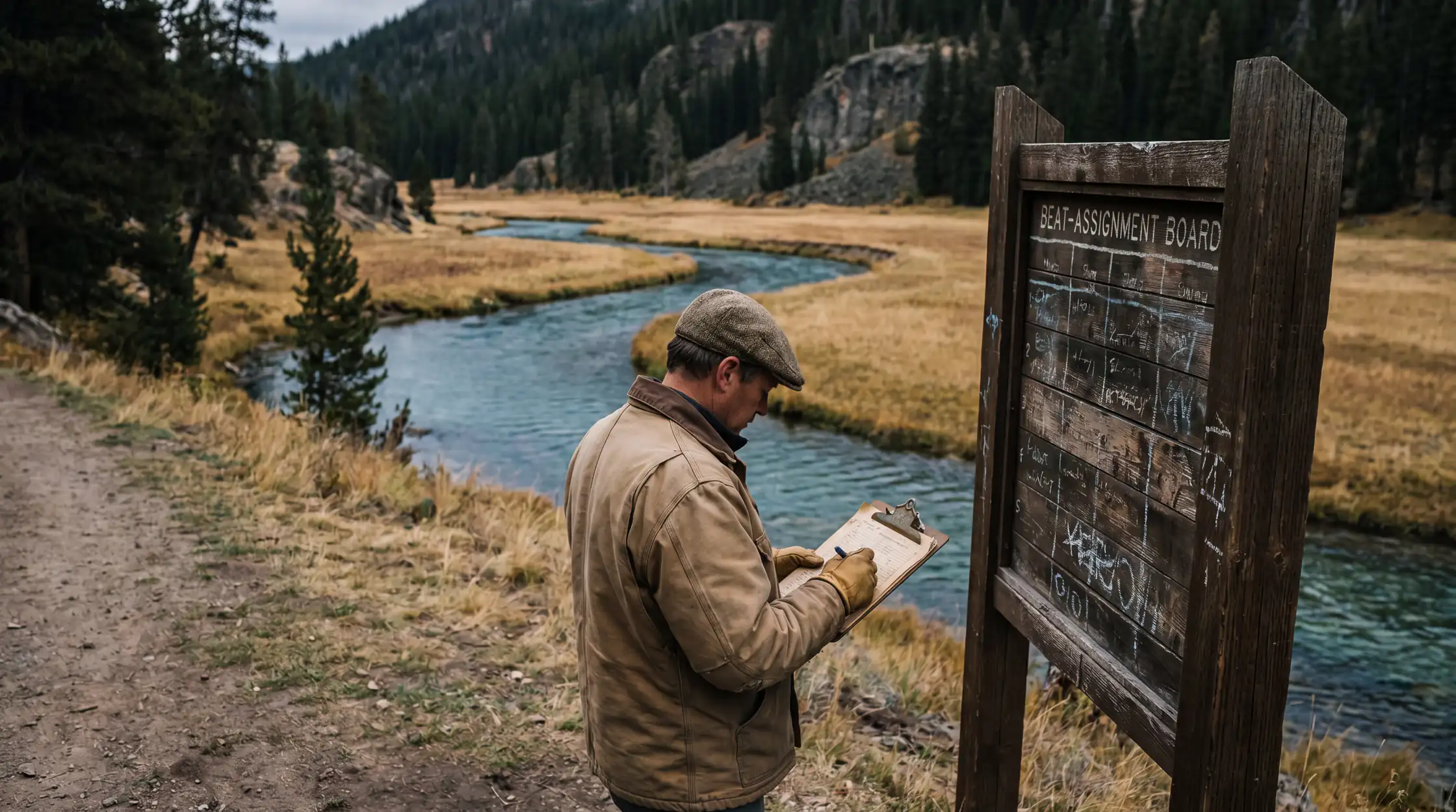
Managing who fishes where and when is an ongoing operational challenge. Clubs must balance member demand against carrying capacity to ensure low pressure on every stretch of water.
Common booking approaches include:
- Calendar-based reservation systems where members book specific beats or stretches on specific dates
- Rotation systems that cycle members through different water to distribute pressure evenly
- Rod limits that cap the number of anglers on a given stretch per day, typically two to four depending on river size
- Blackout dates for spawning seasons, high water events, or landowner requests
Traditionally, clubs managed bookings through spreadsheets, email threads, or phone calls. This worked for small clubs but became unwieldy as membership grew. AnglerPass replaces these manual systems with a digital booking calendar that shows real-time availability, enforces rod limits automatically, and sends confirmation details including access instructions and GPS coordinates.
Financial Operations
Clubs handle money flowing in multiple directions: dues from members, lease payments to landowners, insurance premiums, maintenance costs, and event expenses. Keeping these finances organized and transparent builds trust with both members and landowners.
On AnglerPass, clubs can process membership dues through the platform with a 3.5% processing fee. Booking fees are collected automatically, and the platform handles the 15% platform fee transparently so members always know what they are paying and why.
Club subscription tiers on AnglerPass are structured at $79, $199, and $499 per month depending on the club's size and needs, covering the platform tools for property management, member management, and booking operations.
Conservation and Enforcement
The best clubs view themselves as stewards first and access providers second. Conservation practices that clubs commonly manage include:
- Catch-and-release enforcement with specific handling guidelines (wet hands, barbless hooks, minimal air exposure)
- Seasonal closures during spawning periods, typically October through December for brown trout and March through May for rainbow trout
- Habitat monitoring through regular stream surveys, water temperature logging, and insect population tracking
- Stream improvement projects such as installing woody debris structures, planting riparian vegetation, and removing fish passage barriers
These conservation efforts directly improve the fishing and demonstrate to landowners that the club takes long-term stewardship seriously. It is a virtuous cycle: better stewardship leads to better fishing, which leads to higher member satisfaction, which funds more stewardship.
The Modern Club
The fundamentals of club management have not changed, but the tools have. Modern clubs that thrive are the ones that pair traditional relationship-building with efficient operations. A club that manages its bookings digitally, processes payments cleanly, communicates reliably with landowners, and enforces its standards consistently will outperform a club that relies on informal systems and goodwill alone.