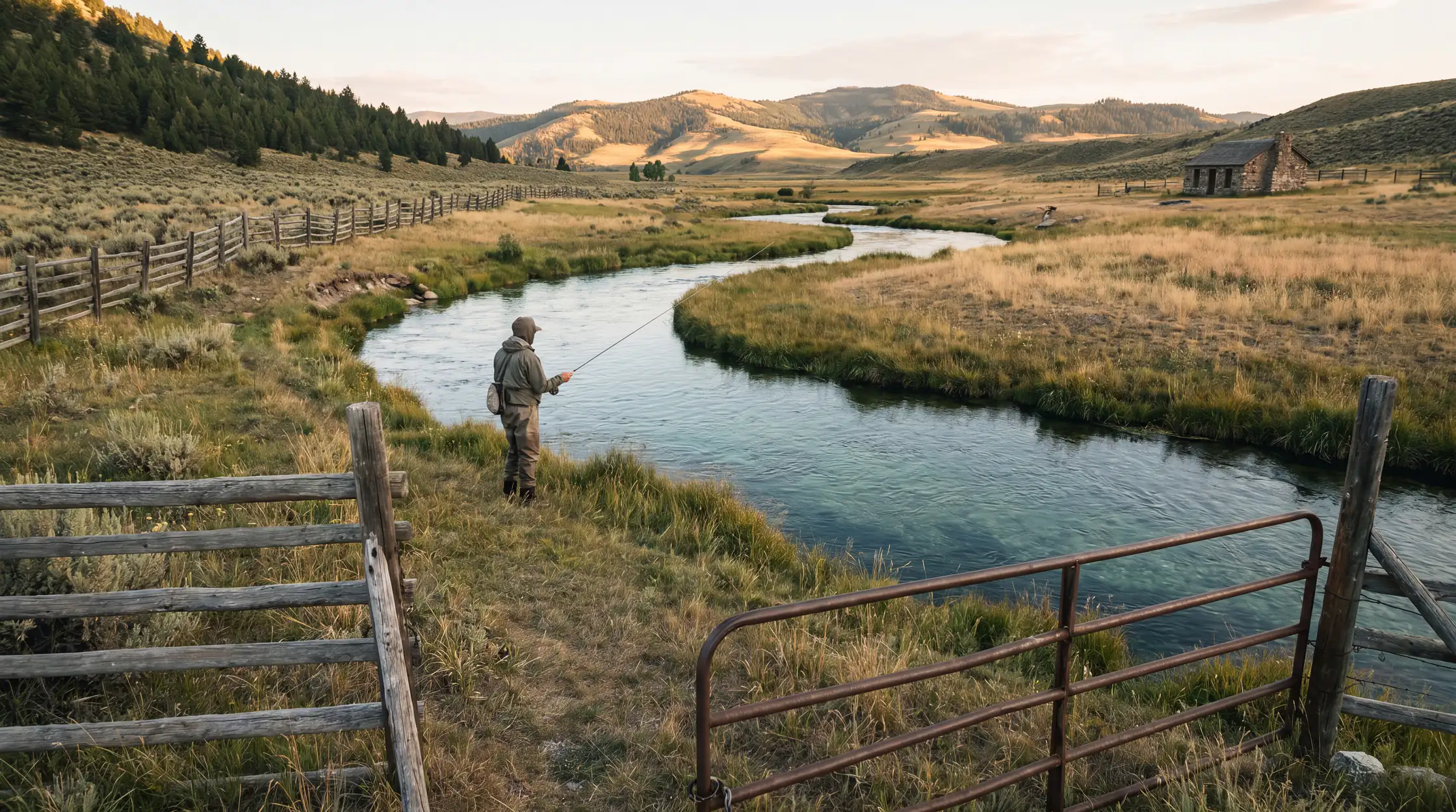
The Core Distinction
The difference between private and public water fly fishing comes down to access control. Public water is open to anyone with a valid fishing license. Private water is controlled by a landowner who grants or restricts access, typically through a club, outfitter, or lease arrangement. This single distinction ripples through every aspect of the fishing experience.
Angling Pressure
Pressure is the most significant practical difference between private and public water. Popular public tailwaters like the San Juan River in New Mexico, the South Platte below Cheesman Canyon, or the Missouri River near Craig, Montana can see dozens of anglers per mile on peak days. Trout in these waters become highly educated, requiring smaller flies, finer tippets, and more precise presentations.
Private water, by contrast, limits the number of rods per day. A well-managed club might allow two to four anglers on a given stretch at any time. The result is trout that feed more naturally, respond to a wider range of fly patterns, and grow larger because they spend more energy eating and less energy fleeing.
Studies from state wildlife agencies have consistently shown that catch rates on lightly pressured water can be three to five times higher than on heavily fished public stretches of the same river system.
Fish Quality and Size
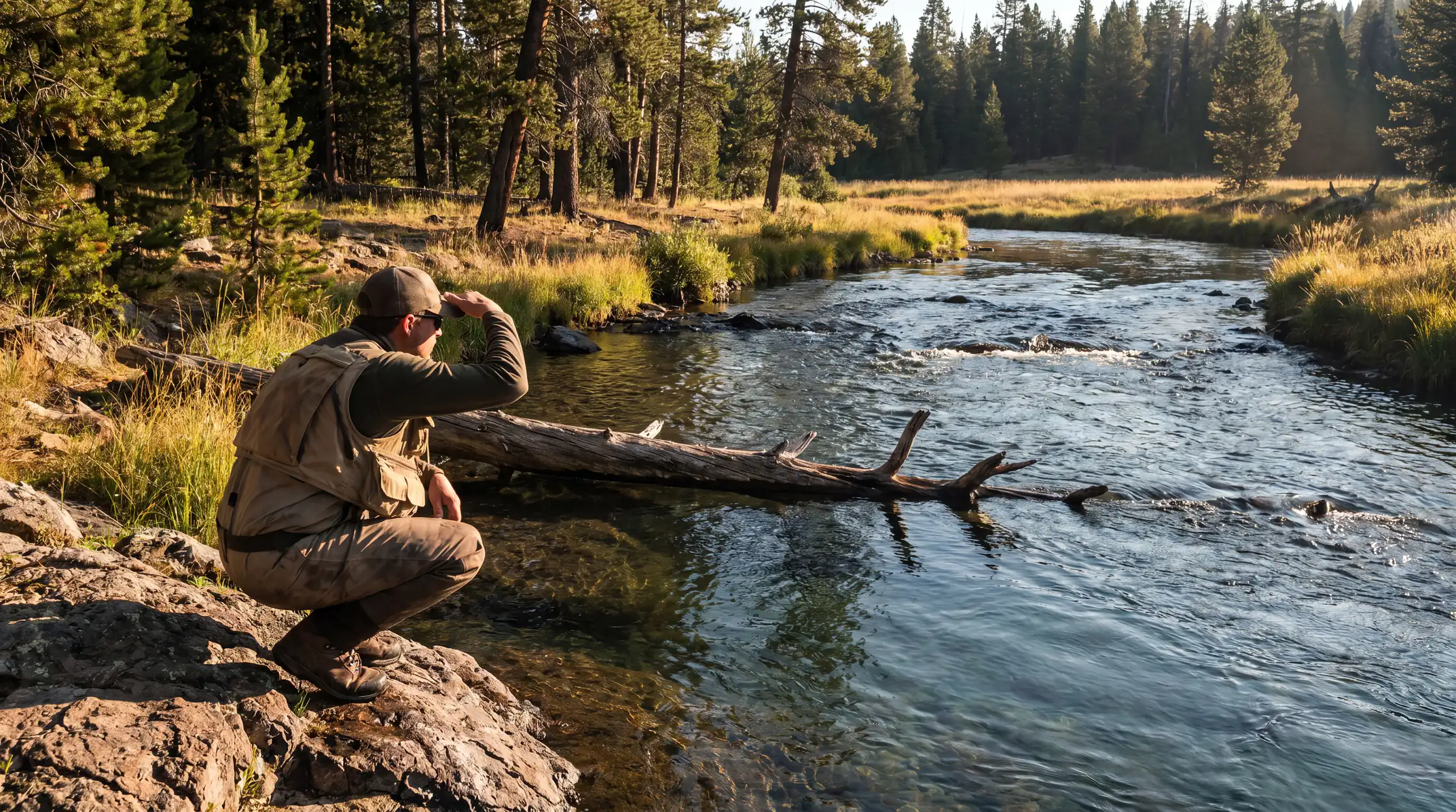
Lower pressure directly translates to better fish. Trout on private water tend to be larger on average because they face fewer disruptions to their feeding cycles. A brown trout on a private spring creek in Montana's Paradise Valley might see two or three anglers per week instead of two or three per hour. That fish has more opportunity to feed, less metabolic stress from repeated catch-and-release encounters, and a longer lifespan.
Many private water managers also invest in habitat improvement: installing log structures, maintaining riparian buffers, controlling invasive species, and managing flows where possible. These investments compound over time, creating fisheries that outperform nearby public water by a significant margin.
The Experience
Beyond the fishing itself, private water offers a fundamentally different experience. There is no competition for runs. You do not need to arrive at dawn to claim a parking spot. You can fish at your own pace, take long breaks, experiment with techniques, and enjoy the landscape without feeling rushed by the angler behind you waiting for your spot.
Public water has its own appeal, of course. The camaraderie of a busy river, the shared excitement of a prolific hatch, and the democratic nature of open access are all genuinely valuable. Many experienced anglers fish both private and public water depending on their mood and objectives.
Cost Comparison
Public water requires only a state fishing license, which ranges from $15 to $100 depending on the state and residency status. Some special regulation areas charge additional access fees, typically $5 to $20 per day.
Private water access costs more but varies widely:
- Guided trips on private water: $500 to $800 per day, plus tip
- Club membership: $200 to $5,000 per year depending on the club's water portfolio
- Direct leasing: $5,000 to $50,000+ per year for exclusive rights to a stretch of river
- Platform-based access through AnglerPass: Club dues plus a 15% booking fee per outing, with a $25/rod fee for cross-club water
The per-day cost of club membership drops quickly with frequency. An angler who fishes 30 days per year through a $1,500 club membership is paying $50 per day for access to water that would cost $600 with an outfitter.
Regulations and Rules
Public water is governed by state fish and wildlife regulations: season dates, creel limits, gear restrictions, and slot limits. These rules apply equally to everyone.
Private water is subject to those same state regulations but often adds stricter rules on top. Most fly fishing clubs mandate catch-and-release only, barbless hooks, and single-fly rigs. Some restrict wading to prevent streambed disruption. Others enforce quiet hours or limit the number of fish that can be played per day to reduce stress on the population.
These additional rules are part of what makes private water productive. They reflect a conservation ethic that goes beyond minimum legal requirements.
Access Logistics
Public water is straightforward: drive to the access point, park, and fish. The tradeoff is that everyone else can do the same thing.
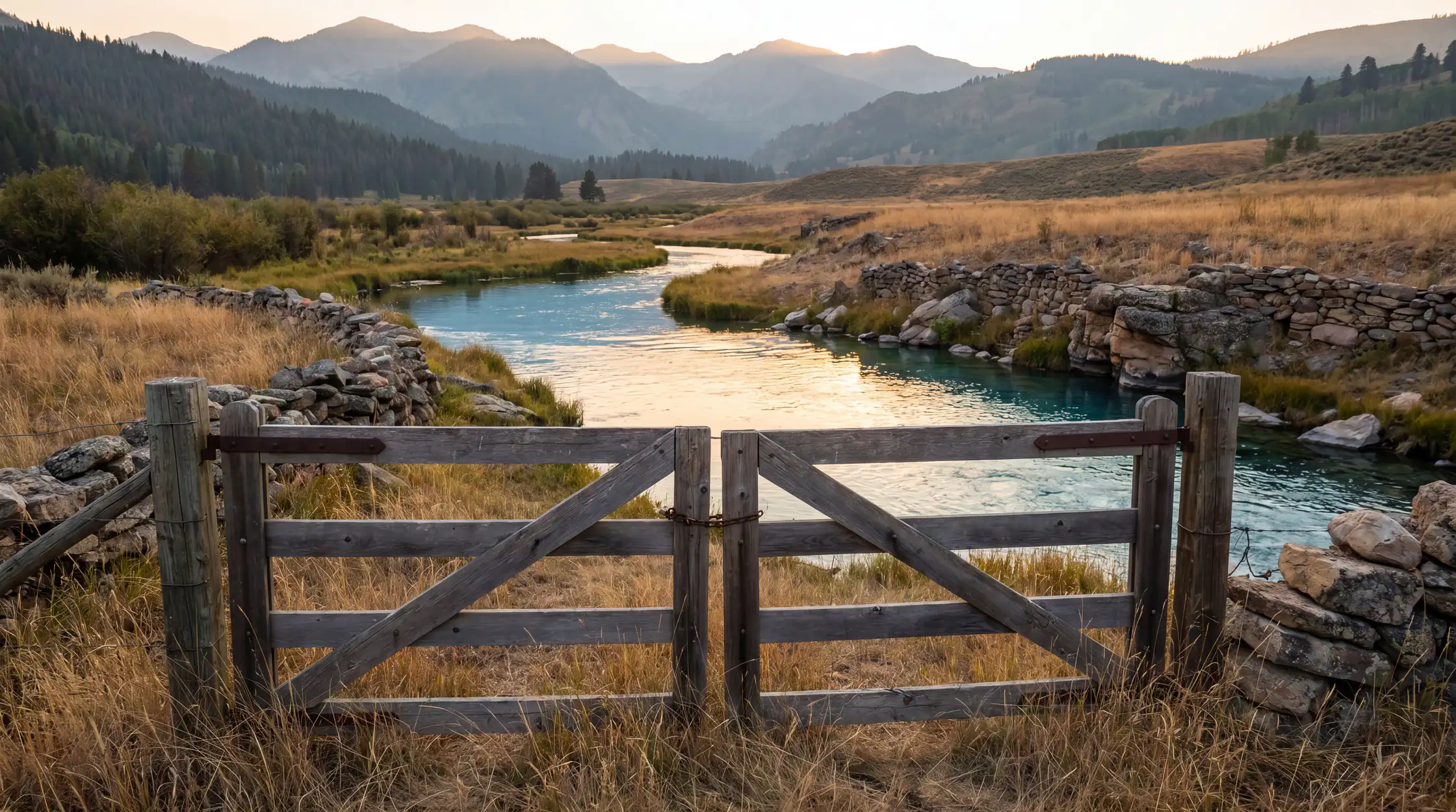
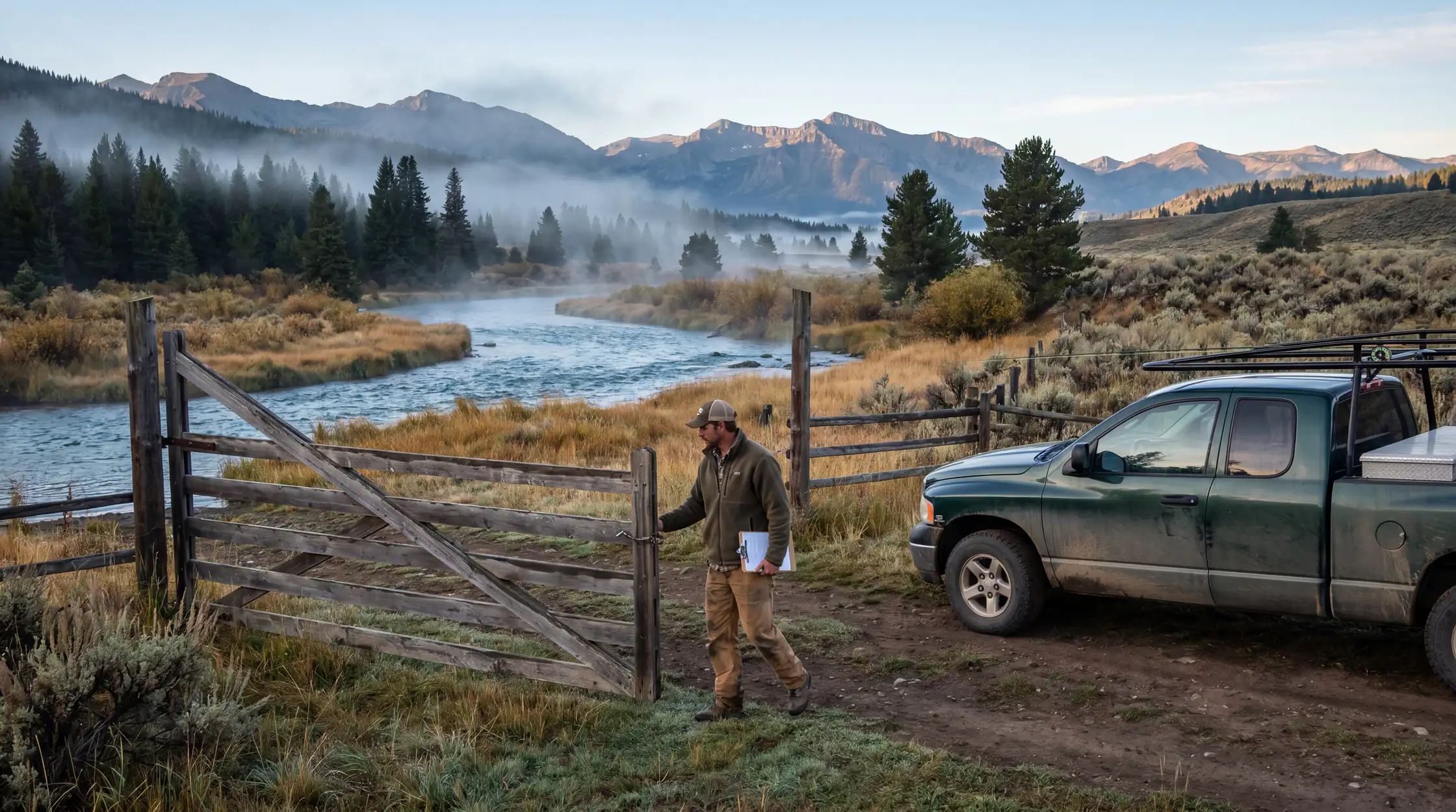
Private water requires more planning. You typically need to book your day in advance, follow specific access instructions (which gate to use, where to park, which boundaries to respect), and check in or out with the property manager. Platforms like AnglerPass streamline this process with digital booking calendars, GPS-tagged access points, and automated notifications to landowners.
Which Is Right for You?
Most serious fly anglers end up fishing a mix of both. Public water is ideal for spontaneous outings, exploring new areas, and fishing with friends who are not club members. Private water is where you go when you want the best possible fishing experience with minimal hassle.
If you find yourself consistently frustrated by crowding on public water, or if you are traveling to a destination and want to guarantee quality fishing, private water through a club or platform like AnglerPass is worth exploring. The investment pays for itself in fish quality, solitude, and the simple pleasure of having a world-class stream largely to yourself.