The Quiet Infrastructure of Trout Country
The productive trout water in America exists today because of decades of work that most anglers do not see. The riparian buffers, the protected spawning gravels, the cleaned-up tailwaters, the restored meadow streams, the watersheds that survived suburban expansion or industrial agriculture — these are all the output of organizations that have been doing unglamorous habitat and policy work in the background for years. The names are familiar. Trout Unlimited. Western Native Trout Initiative. The Nature Conservancy. Hundreds of regional and local land trusts. Native fish coalitions for specific species and watersheds.
The better fly fishing clubs operating on private water know this. They know the water they fish is the output of partnerships that started long before the club existed. And they know that the long-term health of their access model depends on staying in those partnerships, contributing to them, and treating the relationship as central to what the club exists to do.
This post is about how that partnership actually works on the ground. It is not abstract. It is a description of the specific layers of collaboration that produce the conservation outcomes the access model depends on.
What Trout Unlimited Does
Trout Unlimited is the largest cold-water conservation organization in North America. It works at three levels at once. At the national level, it does advocacy on federal policy — clean water rules, public land management, dam removals, water rights. At the state and regional level, it leads habitat restoration projects with technical expertise that local groups would not have on their own. At the chapter level, it organizes local volunteers to do the on-the-ground work — stream cleanups, monitoring, education, fundraising.
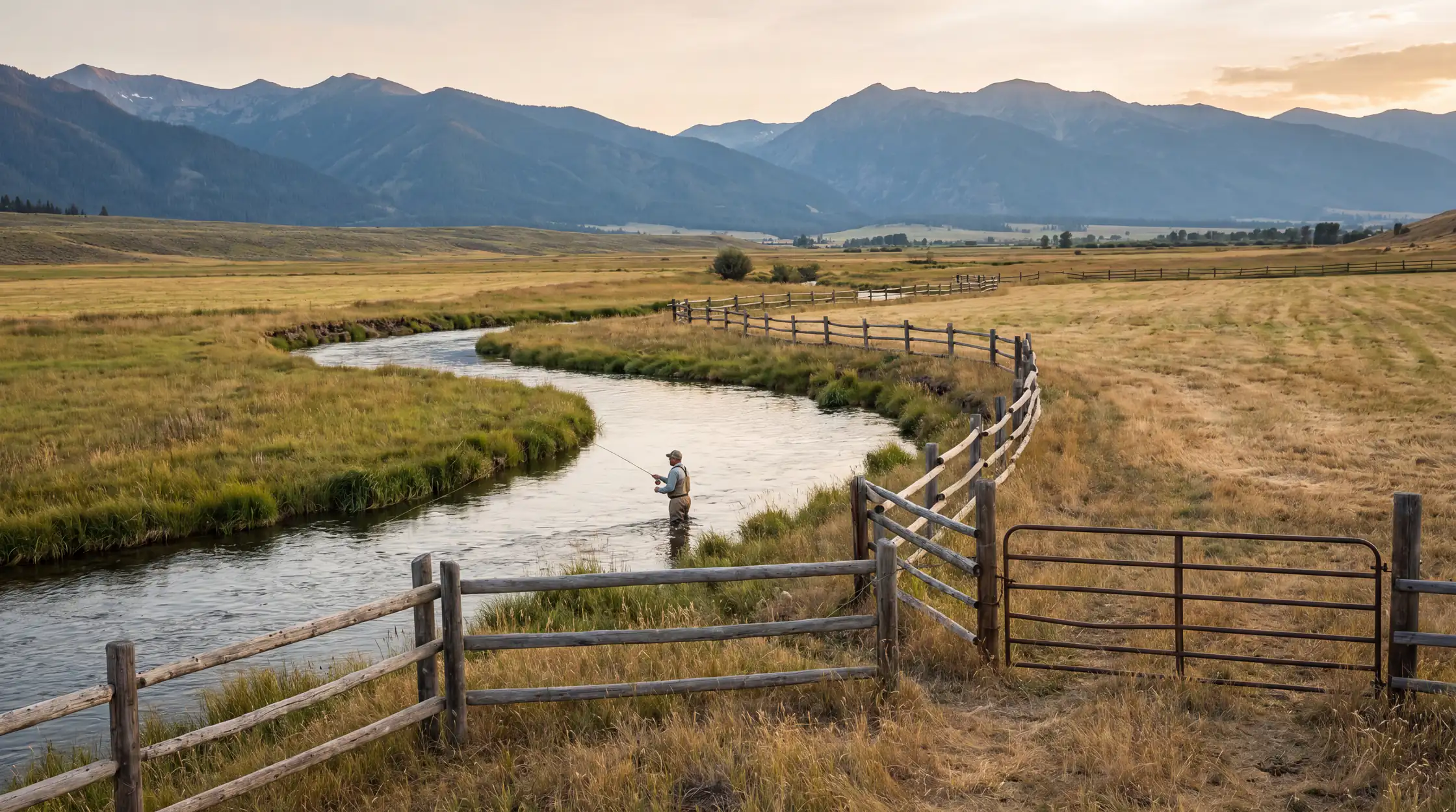
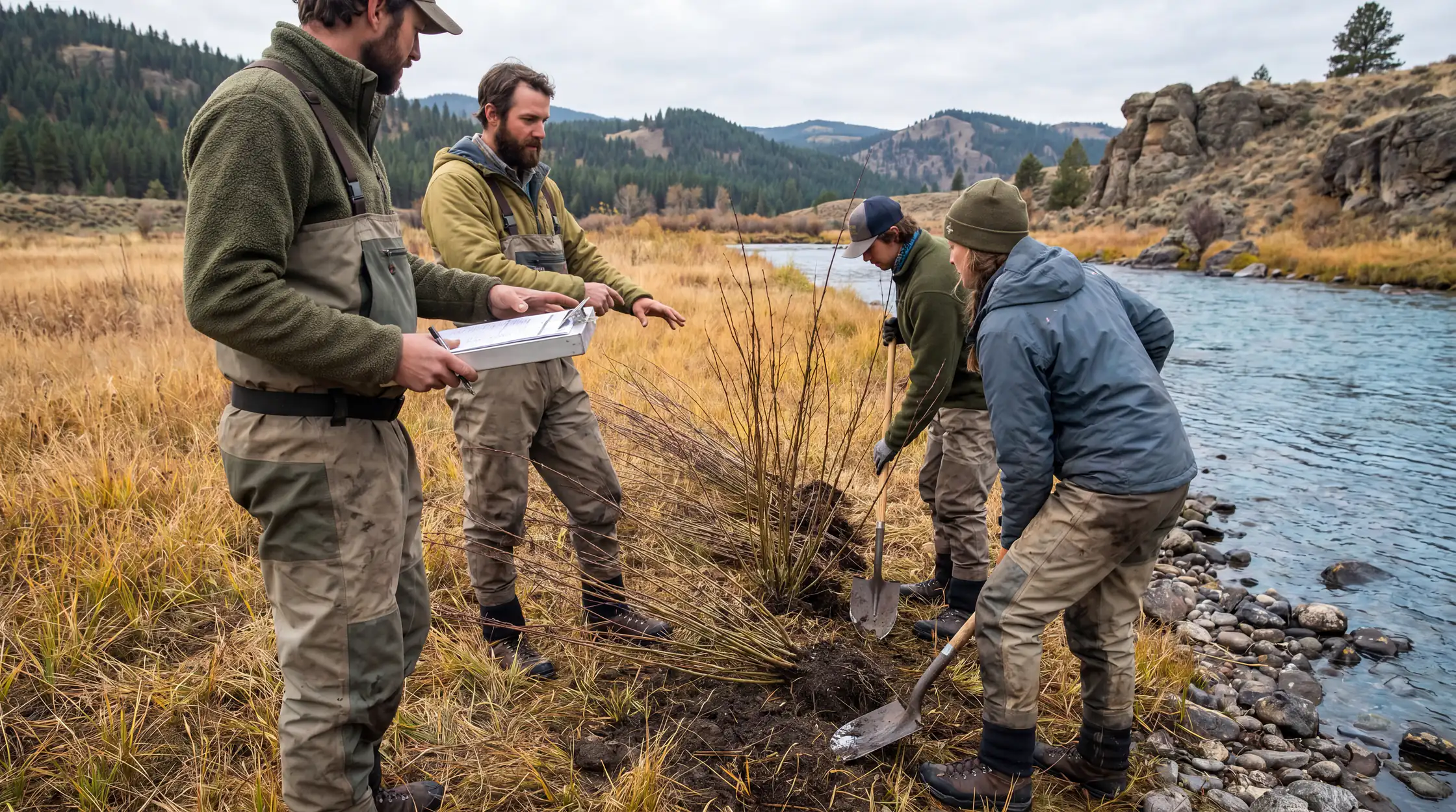
For private water clubs, the most useful partnership level is usually the regional and chapter level. The regional staff has the science and the project management capacity. The chapter has the volunteer base. Together they can take on habitat work — riparian planting, sediment management, fence projects to keep cattle out of sensitive sections, the small-scale stream restoration that compounds across years — that no individual landowner or club would attempt alone.
The better clubs contribute to these projects in two ways. They write checks. And they put their members on the projects. The annual stream cleanup that the local chapter runs on the river that flows past their club's property is a project the club shows up for in force. The members are the volunteers. The club is the funder. The chapter has the technical leadership. The work gets done.
What Land Trusts Do
Land trusts hold the conservation easements that protect the underlying land. This is the structural layer underneath everything else. Without land trusts, the easement infrastructure that keeps private water productive over generations does not exist.
Land trusts work property by property. A landowner who wants to put their land under permanent protection works with a land trust to define the restrictions, get the property appraised, complete the legal documentation, and record the easement. The land trust then holds the right to enforce the easement, in perpetuity, against every future owner.
For a private water club, the land trust relationship is twofold. First, many of the properties the club operates on are under easement held by a regional land trust. The land trust is the legal backstop that ensures the property remains the way it is, regardless of who owns it next. Second, when a new property is being added to the club's network, the land trust is often involved in structuring the easement that protects it. Some clubs help fund the appraisal and legal costs of getting an easement in place — recognizing that a property protected by easement is a property the club can rely on for the next generation.
The partnership with land trusts is quieter than the partnership with TU because the work is legal and financial rather than physical. But it is the layer that makes everything else possible. The riparian buffer that survives because of TU's habitat work is the buffer that exists because the land trust's easement prevented the streamside acres from being subdivided.
What Native Fish Coalitions Do
Native fish work is where the conservation partnership becomes most specific. Native species — Westslope cutthroat, Bonneville cutthroat, Colorado River cutthroat, native brook trout in the East — face threats that introduced species do not. Hybridization with rainbows and brown trout. Habitat loss in the specific watersheds where the natives still hold. Disease vectors. The slow erosion of the small populations that the species depends on.
Native fish coalitions specialize in this work. The Western Native Trout Initiative coordinates across the eight western states where most native cutthroat populations exist. The state-level groups — Idaho's Westslope coalition, Montana's native trout work, Utah's Bonneville cutthroat program — operate at the watershed level. They monitor populations. They run hatchery-side genetics programs to maintain pure native stocks. They coordinate with state agencies on stocking decisions and fishing regulations.
For a private water club whose properties include native trout populations, the relationship with the native fish coalition is operational. The club agrees to fishing regulations that protect the native populations — single-barbless hooks, catch-and-release on the specific stretches where natives hold, sometimes seasonal closures during spawning. The club's members participate in monitoring programs. The coalition contributes expertise on habitat management decisions that affect the natives.
This is the kind of partnership that is invisible from the angler's perspective but central to the property's identity. A club property that holds a genetically pure Westslope cutthroat population is a property that exists because someone has been doing the work to keep it that way for the past two decades.
What the Club Contributes
The contribution that private water clubs make to conservation partnerships goes beyond funding and volunteer labor. The clubs bring something the conservation organizations cannot easily build on their own — a vocal, organized user community that cares about the water and is willing to advocate for it.
This matters at the policy level. When a state legislature is considering legislation that affects water rights, instream flow protections, or trespass law, the conservation organizations need user voices. They need anglers who can show up at hearings, write letters, and explain why the policy matters from the perspective of the people who actually use the water. The clubs provide that constituency. The members are the voices. The chapter or organization provides the policy framing.
The clubs also bring data. Properties that are systematically monitored — fish counts, water temperatures, hatch records, riparian condition over time — produce data the conservation organizations can use. Some of the most useful long-term datasets on western trout populations come from private water properties where members have been keeping records for decades. The clubs share that data. The science benefits.
Finally, the clubs bring funding. Annual dues structures at the better clubs include dedicated conservation contributions — sometimes a percentage of the budget, sometimes a fixed per-member allocation that flows to the regional partners. The money is meaningful, and over time it compounds into a stable funding source the conservation organizations can count on.
How the Partnership Stays Alive
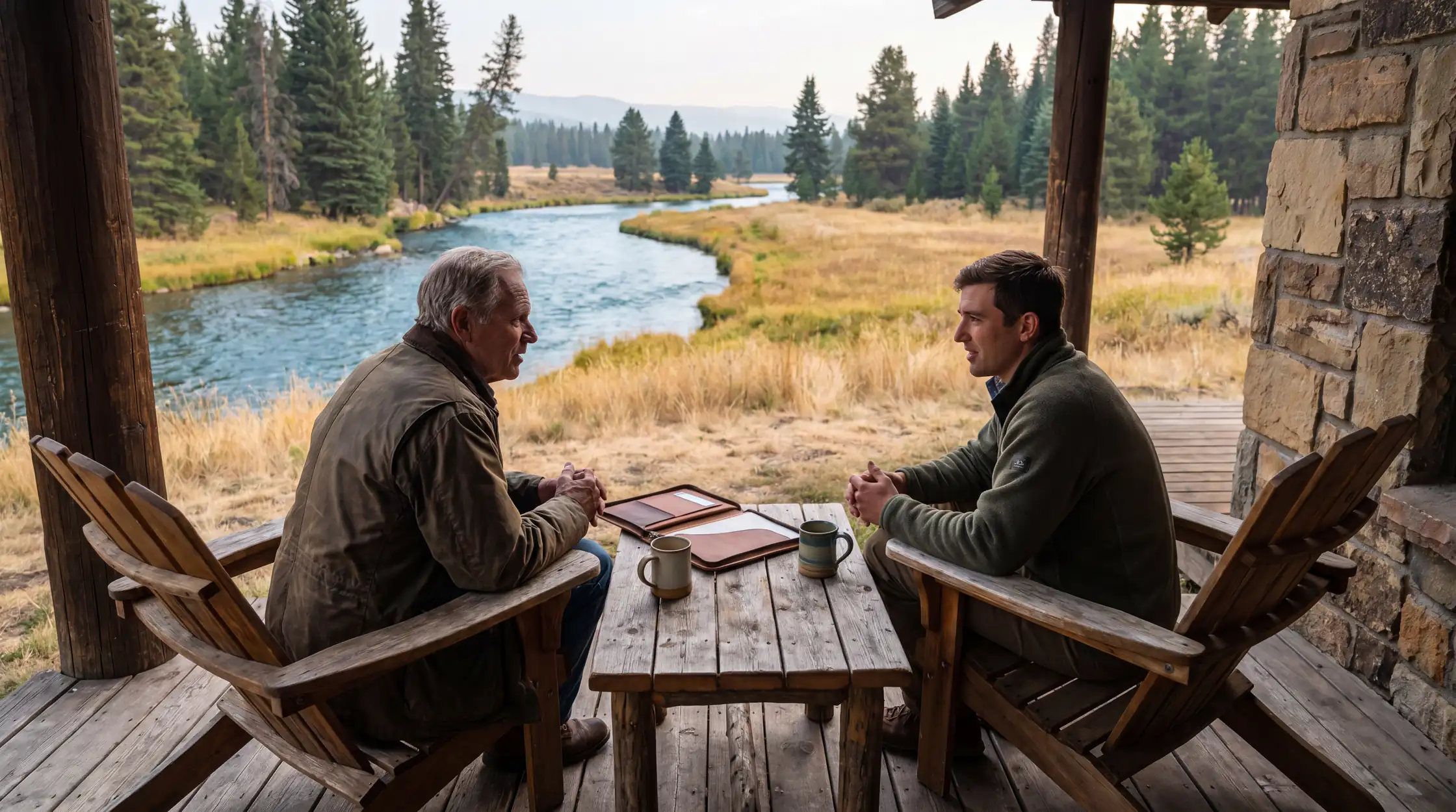
The best private water clubs treat their conservation partnerships the way they treat their landowner relationships — as ongoing, structured, and central to the club's identity rather than as a periodic donation. There is a dedicated conservation chair on the board. There is a budget line. There is a calendar of joint projects. There are member events that include the partners — the chapter director gives a talk at the annual dinner, the land trust executive joins the spring meeting, the native fish biologist leads a watershed tour for members in summer.
This is how the partnership stays alive across leadership changes, both at the club and at the partner organization. The relationship is structural. It does not depend on a single personal connection. The new club president inherits the partnership. The new chapter director arrives into a working relationship that is already in motion.
Why It Matters for Anglers
For anglers, the practical implication of these partnerships is the water itself. The river you fished last weekend on club water has been the focus of decades of partnership-driven conservation work. The riparian buffer was planted by chapter volunteers funded by club dues. The easement that prevented the neighboring acres from being subdivided was negotiated by the land trust. The native cutthroat population that still holds in the upper stretch is being monitored and protected by the coalition.
None of this is visible from the bank. All of it is what the bank is built on.
The access model depends on these partnerships continuing to work. The angler who books a day on a private property is participating in the system that funds the conservation work that protects the resource. The dues that support the club support the partnerships that protect the water that produces the fish.
This is what conservation-aware private water access actually looks like. It is not a marketing claim. It is a structural arrangement, maintained by working partnerships, that has produced the resource the access model is built on. The clubs that take this seriously are the clubs whose water will still be fishable in 2050. The ones that don't are operating on borrowed time, whether they realize it or not.