The Default Retreat Fails Quietly
Most corporate fly fishing retreats are not bad. They are just generic. The group goes to a lodge, fishes a popular river with a fleet of guides, eats catered meals, and comes home with photos that look like every other lodge retreat anyone has ever attended. Nobody complains. Nobody is changed by it. Six months later, the only person on the trip who remembers the specifics of the fishing is the one client or executive who was already a fly fisher and would have gone anyway.
This is the failure mode the better organizers learn to avoid. The cost of a corporate retreat is significant. The opportunity cost — the days of senior people's time, the social capital spent on the invitations, the implicit promise that this is going to matter — is higher. A retreat that produces a generic experience has wasted both. The retreats that get remembered are the ones designed deliberately to do something the default product cannot.
What the Group Actually Wants
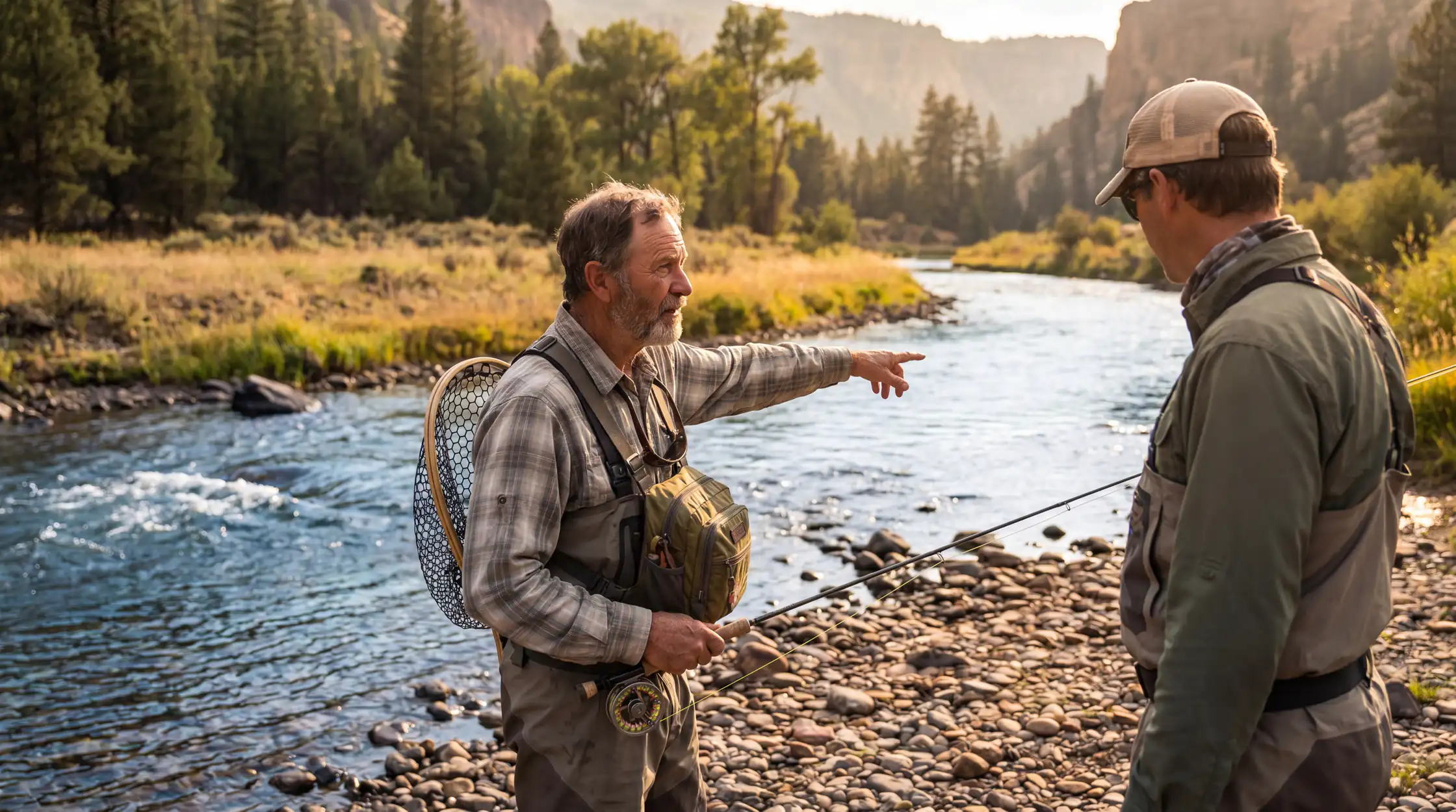
The first thing the better organizers do is stop pretending the group is uniform. A corporate retreat is almost never a group of fly fishers. It is usually a mix: two or three people who fish seriously, four or five who have done it once or twice, two or three who have never held a fly rod, and one or two who would rather be doing literally anything else but are there for relationship reasons.
A retreat designed for the median angler in this group is designed for nobody. The serious anglers are bored. The beginners are overwhelmed. The non-fishers are confused. The right design acknowledges the range and builds the trip around it.
The practical implication is that the experienced anglers need to be on water that justifies their time, the beginners need to be in a setup where they are likely to catch a fish and feel competent, and the non-fishers need a parallel experience that does not feel like a consolation prize. A great retreat handles all three at the same level of intention.
Right People, Right Pace
The pacing of a corporate retreat is the variable that separates the memorable from the merely fine. Most retreats are over-programmed. The schedule is packed because the organizer is worried that downtime will feel like inactivity. The result is a trip where nobody has the chance to settle into the place, the company, or the experience.
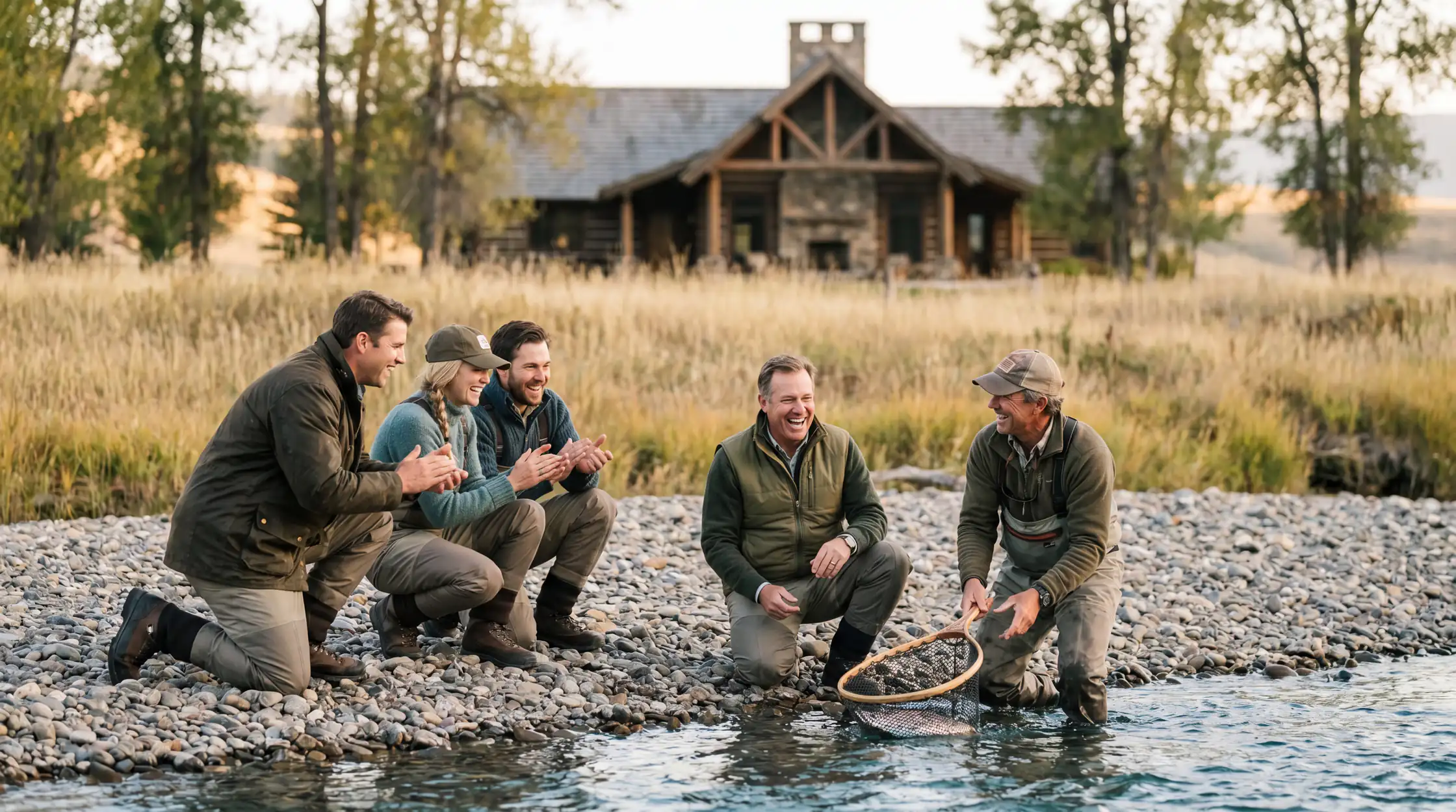
The better retreats build in genuine empty time. The morning has the fishing, but the afternoon has the river-bank lunch that turns into a long conversation. The evening has the dinner that doesn't have a fixed agenda. The second day has a half-day on the water and a half-day for people to do whatever they actually want — a hike, a quiet hour at the lodge, a second light session on the water for the serious anglers who are still hungry for it.
This is how the social part of the trip becomes real. The relationships people remember from a retreat are not formed in the structured moments. They are formed in the unstructured ones — the walk back to the car, the second cup of coffee on the porch, the conversation that starts because two people who didn't know each other are tying the same knot and one of them needs help.
The Decision Maker Who Doesn't Fish
Many corporate retreats are organized by someone who has never fished. This is not a problem. It is a fact about the situation. The decision maker is doing their best with limited information, and the success of the trip depends on the partner they choose to design it.
The best partners for these retreats are operators who have run corporate trips specifically — not just any guide service, not just any lodge, but a partner who understands that the deliverable is a memorable group experience rather than a maximum number of fish caught. These operators ask different questions during planning. They ask about the group's relationships, not just their fishing experience. They ask about the goal of the trip — relationship building, client appreciation, leadership development — and design backwards from that.
A decision maker who finds the right partner can trust them with the details. The wrong partner produces a generic trip. The right partner produces the trip that gets remembered.
The Logistics That Disappear
The other thing the better retreats do is make the logistics invisible. Gear is laid out before guests arrive. The guides know the group's names. The water is staged for the day's plan. Meals appear at the right time without anyone having to coordinate. Transportation is handled. Gate codes work.
This sounds obvious, but most corporate retreats fail here. The decision maker gets pulled into running coordination because the operator did not anticipate something. The senior executive ends up resolving a minor logistical problem because nobody else is empowered to do it. The trip becomes work for the person whose job it was supposed to feel like a break from work.
Logistics that disappear are the result of a well-organized operator running the trip with the assumption that no guest should ever have to make a logistical decision. This is a service standard that costs more to deliver — but it is the difference between a retreat that feels like a trip and one that feels like an offsite.
What Memorable Looks Like
The corporate retreats that get remembered share certain qualities. They were on water that felt earned — a private property that the group could not have accessed on their own, with the implicit message that the organizer made an effort. The fishing was real but not the entire trip — there was a sense of place, a sense of the people running the operation, a sense of the day having structure that did not feel like a schedule. The food and lodging were good but did not dominate — the trip was about being on the water, not about being at a luxury hotel that happens to be near water.
Most importantly, the retreats that get remembered produced relationships that lasted past the trip itself. The client who closed the deal the following quarter remembered the evening conversation by the river. The new executive remembered the morning they fished alongside their boss in a way that felt like getting to know each other for the first time. The team that came back from the retreat moved differently together for the rest of the year.
This is not about the rod fee or the lodge rate. It is about a trip designed to produce something specific, by an organizer who took the time to think about what specific meant.
The Practical Asks
For anyone planning a corporate retreat, the practical asks are short. Get the group composition honestly — don't assume everyone is at the same skill level. Find a partner who has run corporate trips and who treats the group as a social event rather than a fishing trip. Build in unstructured time as a design choice, not a gap. Match the water and the lodging to the relationships you are trying to build. Make the logistics disappear.
For the people who will be at the retreat, the practical asks are even shorter. Show up. Trust the operator. Let the day unfold. The retreats that get remembered are the ones where everyone — the experienced angler, the beginner, the decision maker, the guest — felt like the trip was for them. That feeling is what people carry home, and that is what justifies the rest.