The Gap That Membership Doesn't Fill
The membership club model is a powerful structure for managing private water access. It creates trust between landowners and anglers, distributes the operational work across a committed community, and produces the conservation outcomes that make the access sustainable. But it leaves a real gap.
Membership clubs work for people who fish enough to justify the membership, are at a stage in their fishing life where committing to a club makes sense, and have the social bandwidth to participate in a community. That is a real population of anglers, but it is not the whole population. There are also serious anglers who travel a few times a year, do not have the time to be a contributing member of any local club, and need on-water expertise during the days they actually fish. There are corporate groups whose decision maker has never fished and would not know where to start. There are families introducing children to fly fishing and looking for someone to handle the gear, the safety, and the patience. There are veteran anglers who want a guide because they want to be on a piece of new water with someone who knows it well, not because they can't fish it themselves.
These anglers do not fit cleanly inside a club's membership model. But they are still part of the demand for high-quality private water access. The structural question is who serves them, and the structural answer in the better networks is independent guides.
What Guides Actually Do
It is easy to think of a fly fishing guide as someone who finds fish for clients. That is part of the work, but it is the smallest part. The more important work is everything else.
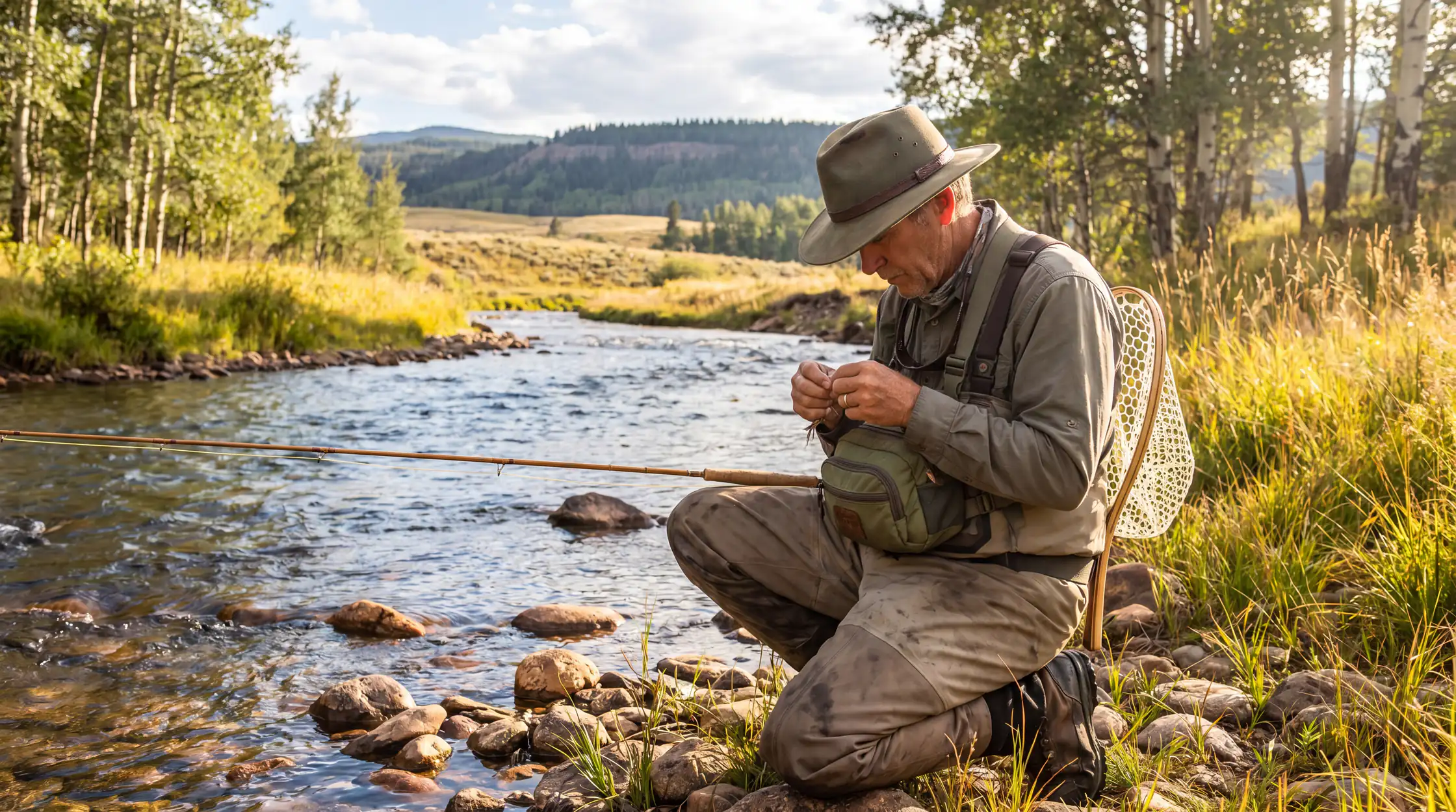
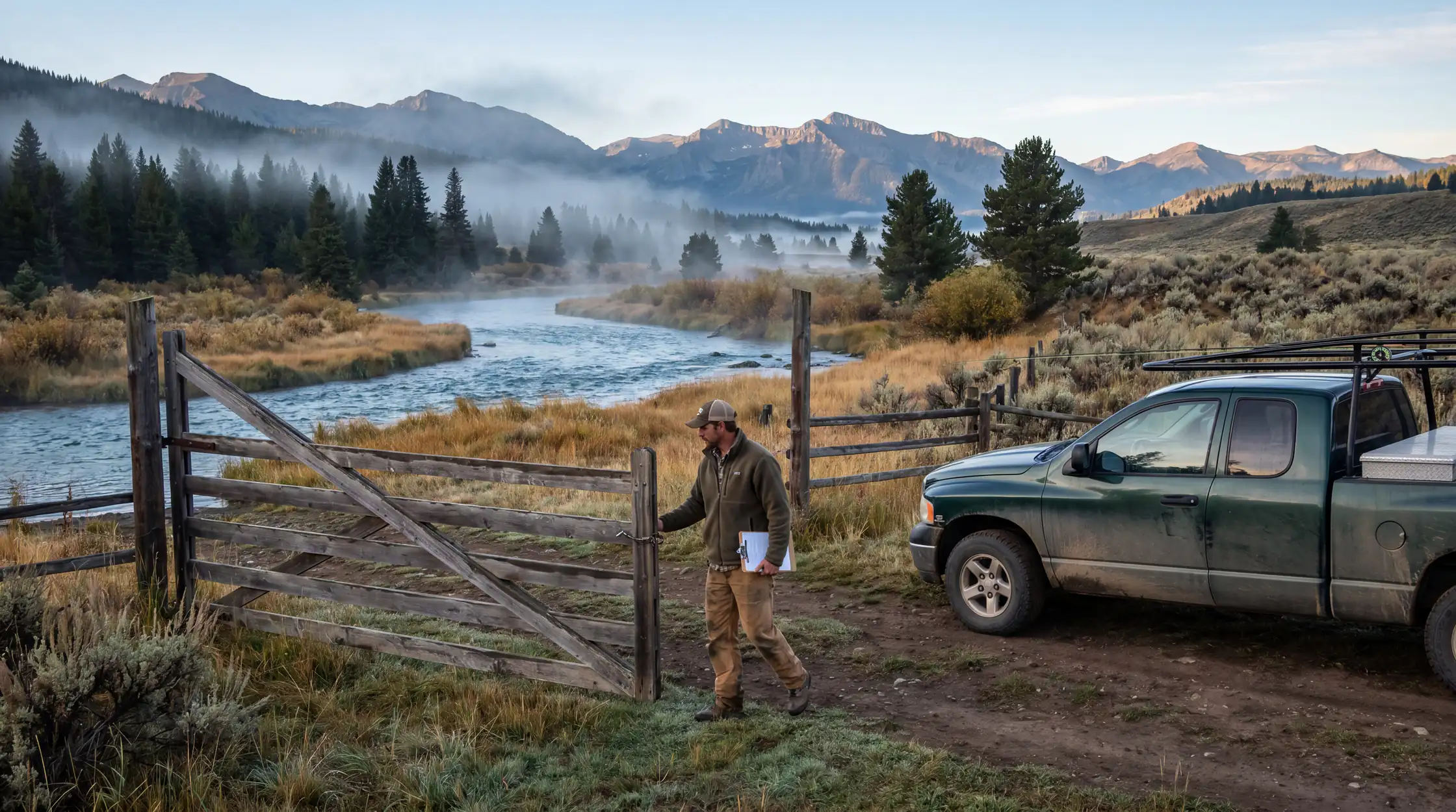
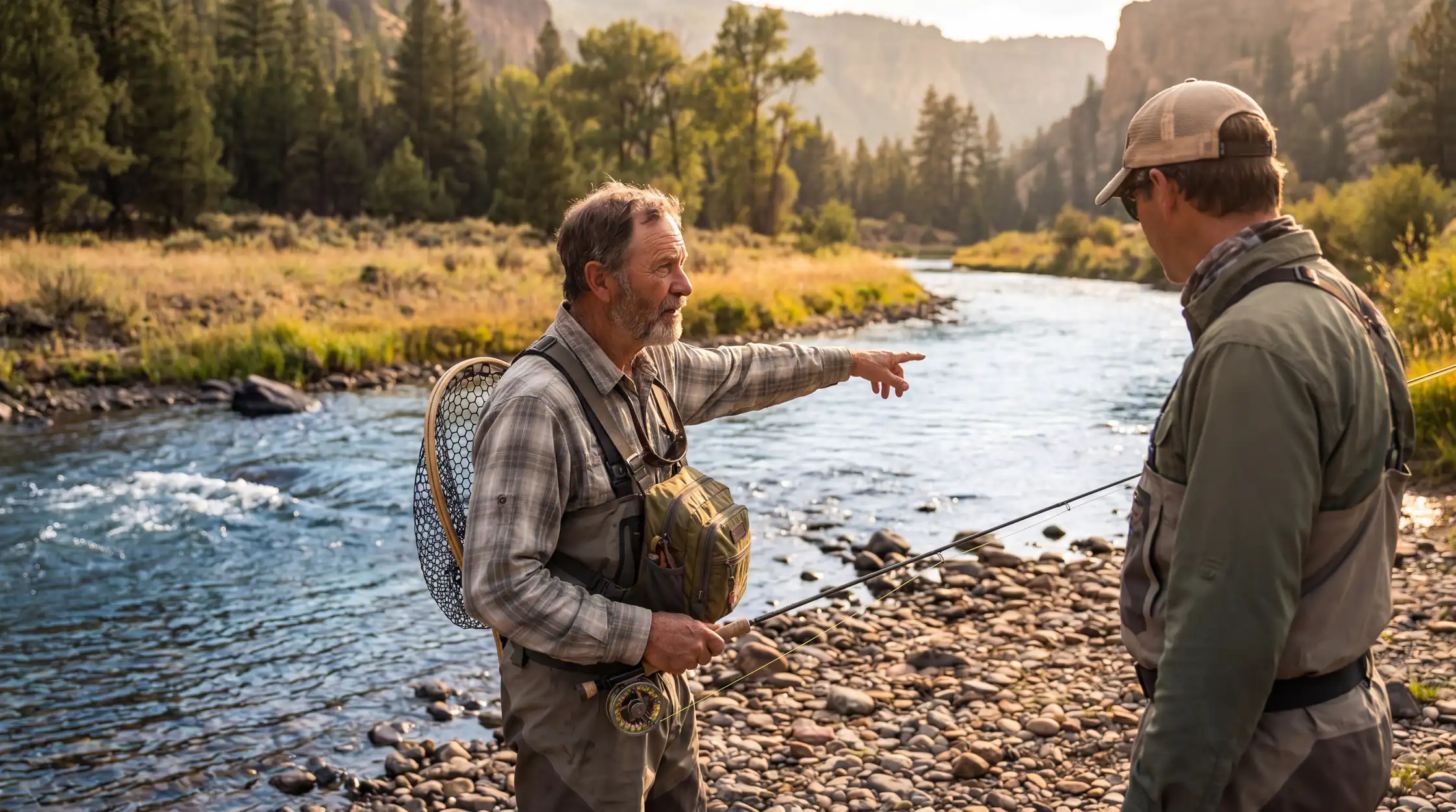
A guide who has been working private water for a decade knows which beats fish well at which times of year, which hatches happen reliably, which landowners prefer mornings over afternoons, and which clubs have which standing rules. They handle the logistics of the day — gear, food, the long walks, the safety judgment about wading and weather. They handle the angler — the cast that needs adjusting, the indicator depth that needs changing, the moment when the client is getting frustrated and needs a different piece of water. They handle the relationship — the brief conversation with the landowner on arrival, the careful walk-out that leaves the property in better shape than they found it, the post-day note to the club coordinator that flags anything worth knowing.
This is what professional facilitation looks like, and it is the layer that lets an angler with limited time fish productively on water they have never seen. For corporate retreats and family trips, the value is even higher: the guide is not just delivering a fishing experience but underwriting the whole social structure of the day. They are absorbing the friction that would otherwise fall to the host or the organizing executive.
Why Guides Are Not Competitors to Clubs
There is a recurring confusion in private water economics that treats guides and clubs as competing for the same dollar. The math does not actually work that way.
Club members and guided clients are mostly different populations of anglers, with overlap at the margins. Members fish a club's water across the season, build relationships with the community, and pay a recurring membership fee in exchange for sustained access. Guided clients fish a small number of days a year, want a high-quality experience on those specific days, and pay a daily guide rate. The two markets exist in parallel, and a well-designed network captures both.
For the landowner and the club, guided trips on the property add revenue without diluting the membership experience. Guided trips happen on a defined schedule, with a known professional running the day, and produce rod fees that compound the financial return of the property. For the guide, having reliable access to private water means they can offer a product that public water guides cannot — a quiet day on quality water, no crowding, no negotiation with other anglers about runs, predictable productivity.
The arrangement only goes wrong when the structure isn't deliberate. If guides are unvetted, the landowner relationship suffers. If guides aren't compensated fairly relative to the value they create, the best ones won't participate. If the booking system isn't clear, every party feels jerked around. Networks that work are networks where the guide layer is treated as core infrastructure, not as a marginal source of incremental revenue.
What Guides Actually Need
The guides who work consistently on private water need a small set of conditions to operate well. They need predictable access — the ability to book a date on a property and know it will be there. They need clear compensation — a transparent fee structure, fast payouts, and a sense of what the economics of the day look like before they commit to it. They need vetting infrastructure that they don't have to build themselves — verification of insurance, licensing, and clean professional history, so the landowner doesn't have to evaluate each guide independently. And they need a community of peers — other guides operating in the same network, with whom they can compare notes, refer overflow, and share information about water conditions.
The networks that retain the best guides treat these as design requirements rather than as nice-to-haves. They make the operational layer of guiding boring — which is the highest compliment you can give it. The guide focuses on the day on the water. Everything else fades into the background.
What Anglers Get
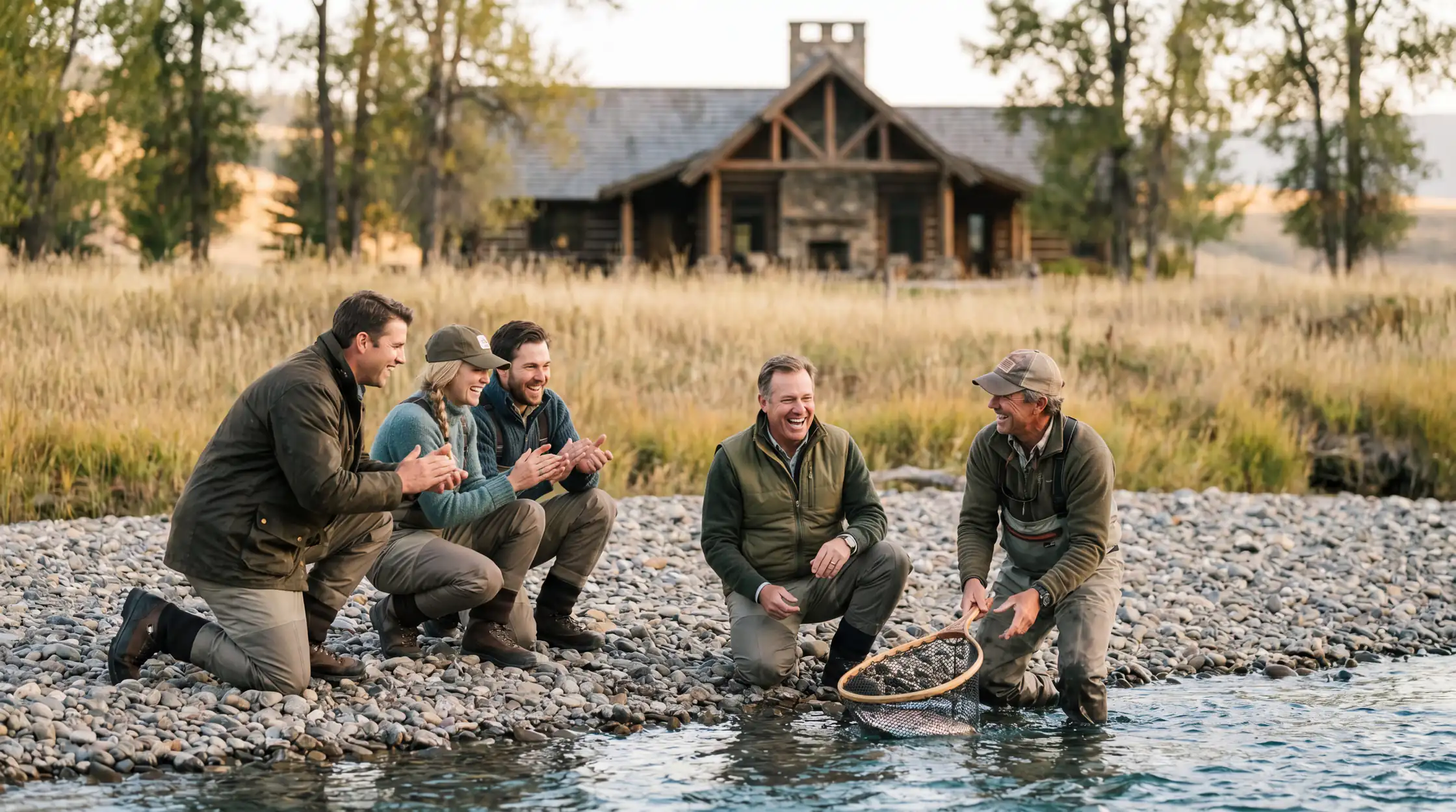
For anglers, the practical benefit of a well-integrated guide layer is that you can fish quality private water without the membership commitment, on the small number of days that justify the trip. You book the property through a guide. The guide handles the logistics, the safety, the introduction to the water, and the conservation briefing. You arrive, fish a productive day, leave with a sense of what the place is like, and either return — possibly through membership later — or move on to a different piece of water on a different trip.
This is the right entry point for many anglers. It is also the right product for situations where the member structure doesn't fit: a one-time trip with friends from out of town, a special-occasion day on a piece of water you have always wanted to see, a corporate group whose decision maker is not personally a fly fisher. The guide is the layer that makes the access usable for the moment, without requiring the angler or the host to take on the commitments of full membership.
What Clubs Get
A club with a thoughtful relationship to independent guides gets several benefits at once. The guide layer absorbs the demand from anglers who are not the right fit for membership, which keeps the application pool focused on people who are actually a fit. Guided trips on club water generate incremental revenue that goes back to the landowner and to club operations. The visiting anglers on guided trips often become future members — they come for the guided day, they fall for the water, and the conversation about membership becomes easy six months later.
The relationship also brings information into the club. A guide who is on the water regularly across multiple beats knows things the club's central office does not — what's been hatching, which sections are fishing well, which member behavior is causing friction. The guides are eyes on the property, in the best sense, and a club that treats them as colleagues rather than as vendors gets the benefit of that information stream.
The Layer in the Ecosystem
The long-term value of integrating independent guides into a private water network is structural, not transactional. The network needs the guides as much as the guides need the network. Without them, the membership model serves only the segment of anglers who can commit to membership. With them, the network serves the broader population of anglers, executive groups, family trips, and one-off visitors who otherwise have no good way to fish quality private water.
Clubs that understand this design their guide programs deliberately. Landowners that understand it welcome the additional revenue and the additional eyes on the property. Guides that understand it bring their best work to the relationships that take care of them.
The private water ecosystem is healthier when all three layers — landowners, clubs, and guides — are operating in their proper roles, with the network handling the integration so each can focus on what they do well. That is the ecosystem the better operators are building, and it is the ecosystem that makes the model sustainable across a generation.