The Hidden Production
A great day on a private spring creek looks effortless from the angler's perspective. You arrive on time, the gate is open, the parking area is obvious, someone hands you a sheet with the rules and the beat map, you walk to the water, and you fish. At the end of the day you walk out, drop your slip in the box, and drive home. Nothing about it feels operational. Nothing about it feels designed. It feels like you showed up to a piece of land and a piece of river and were left alone to do what you came to do.
This is what good operations look like. The work is invisible. The angler does not see the booking calendar, the morning-of confirmations, the gate code rotation, the weekly water-condition notes, the seasonal landowner check-in, the gear staging, the capacity decisions, the contingency planning. They see a quiet morning and a productive afternoon and a stream that still holds wild fish.
The purpose of this piece is to walk through the production, end to end, so the work that goes into the experience is visible — not because anglers need to think about it during their day, but because the people considering this kind of access deserve to know what it actually takes to deliver.
The Booking
It starts weeks before the day. An angler books a beat through their club. The booking is checked against three constraints: the property's daily capacity (how many rods it can sustain), the angler's standing with the club (current dues, good standing, no behavioral flags), and the calendar (no double-bookings, no maintenance windows, no landowner blackouts).
The system that runs this booking is doing real work. A property with a two-rod-per-day limit cannot have a third rod added because someone has more flexibility than expected. A booking made by someone whose dues lapsed has to be flagged before it goes onto the property's calendar. A landowner who is hosting a private dinner that weekend has to be able to mark a date unavailable without it requiring a phone call to the club office.
In the old way of running private water access, this was someone's part-time job. They were the gatekeeper who knew the calendar, knew the members, and held the property's reputation in their head. The modern version is a booking system that holds the same constraints explicitly, applies them automatically, and produces a confirmation that the angler can rely on.
The Day Before
The day before a booking, two checks happen. The first is conditions — flow, weather, and any landowner-side updates. If the river is running high from an unexpected storm, the angler hears about it before they make the drive. If the landowner has a contractor on the property doing fence work, the angler knows where to park. If a beat has been closed for habitat work, the booking gets redirected to a different stretch.
The second is logistics — gate code, beat map, contact number, parking instructions. These get sent to the angler the day before or the morning of. The angler is not hunting through old emails for a gate code. They have what they need on their phone.
This is the layer that most cheap-feeling experiences fail on. The booking goes through, and then nothing happens until the angler shows up confused at a locked gate. The better operators run a real day-before process — automated where possible, human where it matters — that ensures every angler arrives knowing what they need to know.
The Arrival
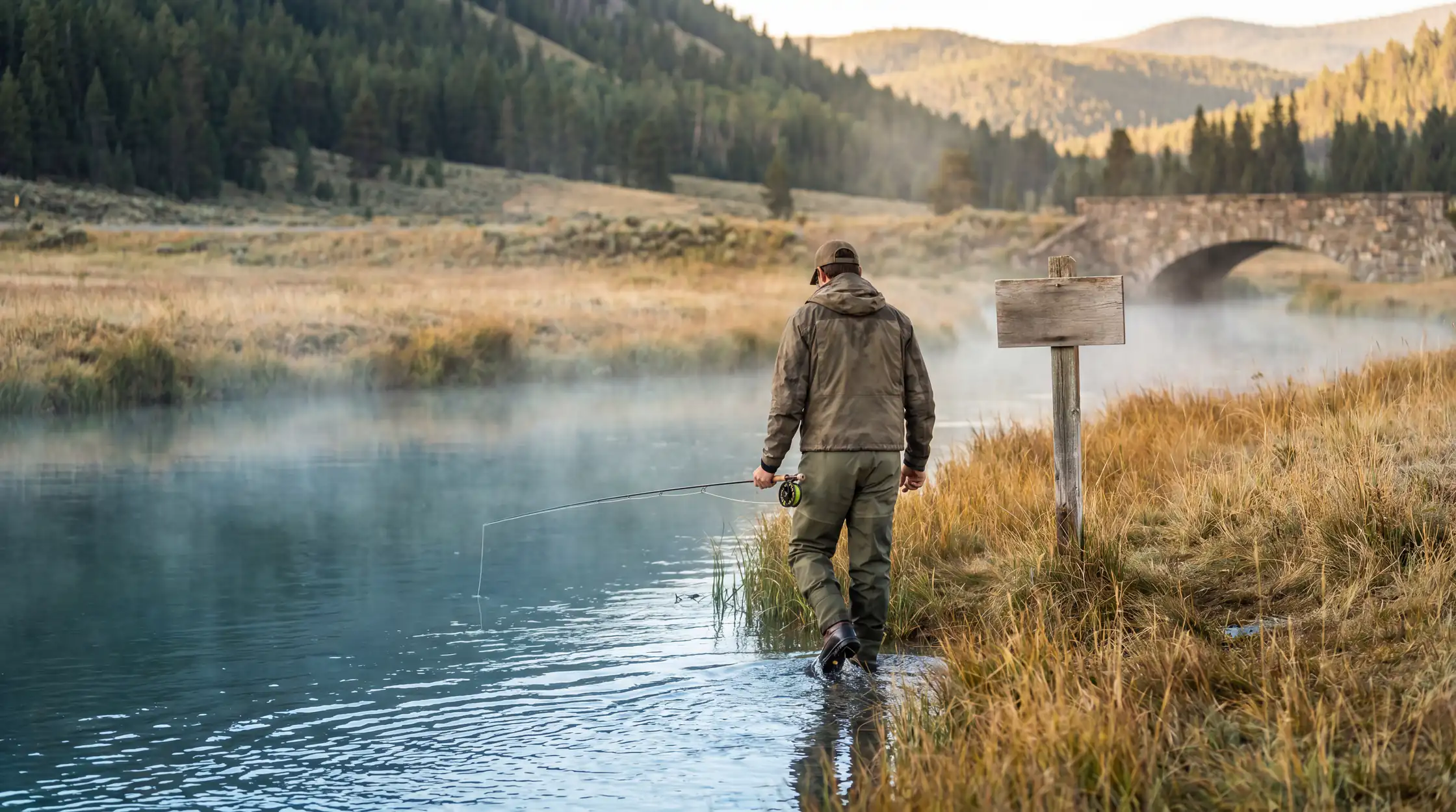
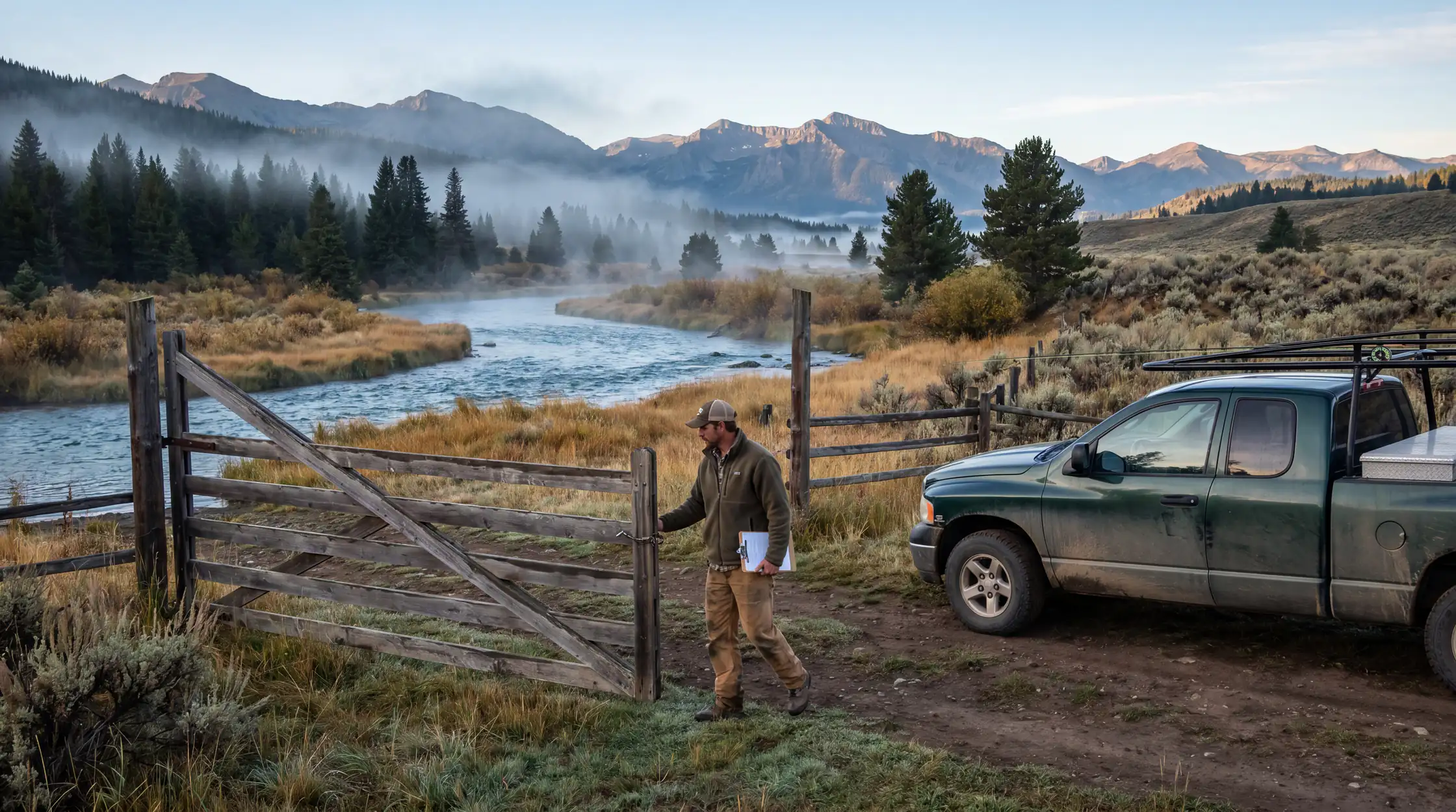
A great arrival takes about three minutes. The angler pulls into a designated parking area. They see a small kiosk or marked spot with the day's information — beat assignment, any conditions notes, a printed waiver if not signed electronically. They walk down a marked path or wade in at a marked access point. There is nobody to check in with because the system has already verified them.
What is happening behind this is that the property has been designed for unattended access by a vetted angler. The gate code rotated yesterday. The beat assignments are printed and dated. The path is mowed. The access point is groomed. The landowner has been informed who is on the property today and what time they expect to leave.
This is what "unstaffed but professional" looks like. The angler is operating on a piece of land that is being run as a business, but the business is invisible to them.
On the Water
The four to eight hours on the water are the part the angler experiences directly, but they too are the product of decisions made long before the day. The reason the river has cool water in mid-August is that landowners decades ago put the upper basin under conservation easement that prevented water diversions. The reason the riparian zone has cover is that someone maintained the willows and protected the bank from cattle access. The reason the fish are willing is that the property has been run with a capacity discipline — two rods today, four rods tomorrow, never the eight that would burn the resource down.
The angler is fishing the output of decisions that compound across years. The property they are on is the output of policy choices, ecological care, capacity decisions, and angler discipline. The fact that they catch fish today is the result of all of it operating correctly.
Good operations make this layer invisible. The angler does not see the conservation work that produced the riparian zone. They see a river bank with shade.
The Walk Out
The end of the day has its own quiet logistics. The angler walks out, returns the beat slip if there is one, closes the gate, and drives away. Behind the scenes, the day is logged. The angler's trip is recorded in their member profile. If they caught notable fish or saw anything worth flagging — a beaver dam in a new spot, a downed willow blocking a path, signs of someone who shouldn't have been on the property — the report gets routed to the right person.
The property prepares for the next day. The next angler is confirmed. The conditions are checked again. If something has changed — a sudden weather shift, an unexpected closure — the next booking gets adjusted before the angler gets in their car.
This is the operational close that keeps the system running across a season. Each day's work feeds the next day. The angler who arrives next sees the same quiet competence the angler before them saw.
What This Is Worth
The quiet logistics of a great private water day are not what the angler thinks they are paying for. They think they are paying for the access. They are also paying for the operational infrastructure that makes the access function — the booking system, the day-before checks, the unattended arrival, the staged property, the post-day logging, the seasonal landowner relationships.
This is the layer that turns a piece of land with a river on it into a property that runs. The better networks treat this layer as core infrastructure. The cheaper-feeling operations treat it as overhead and let it degrade until the experience becomes unreliable.
When the operational layer is doing its work, the angler never thinks about it. They show up, fish, and leave. The day feels effortless because someone, somewhere in the chain, has spent a great deal of time making it feel that way. That is the actual product. The fish are the bonus.