The Question Most Anglers Ask Quietly
Anyone considering their first private water day eventually arrives at the same question. The price is right there on the page — somewhere between a few hundred dollars and a meaningful chunk of money — and the angler asks themselves whether it is worth it.
The right way to answer that question is not to argue with the number. It is to understand what the number includes, what it produces, and what it costs to deliver. The price of a spring creek day looks like a single line item, but it is the result of a stack of decisions about capacity, conservation, landowner economics, and operational integrity. Once you can see the stack, the value question gets easier to think about.
What Drives the Range
The range from $250 to $750 reflects real differences in what is being offered.
At the lower end of the range, you are typically looking at a property with multiple rods per day, a managing club that has held the lease for many seasons and runs it efficiently, water that is well-known among the member base, and a tier classification (often labeled Select or its equivalent) that reflects steady quality rather than rarity. The property is excellent. The price is shaped by volume — the property hosts more rods per season, which lets the per-rod number be lower.
In the middle of the range, you find properties at the Premier tier or its equivalent. These tend to be limited-rod properties with more selective capacity — often two or three rods on a defined beat — better-than-average habitat, and water that fishes consistently well across the season. The cost reflects the lower throughput and the higher landowner share.
At the upper end of the range, you find Signature properties — limited to a single rod or a small group, often on water that has been managed for decades to remain in exceptional condition, sometimes with hatch windows that are famous in the region. These properties trade on scarcity and quality. A single rod on a Signature spring creek for a day is not competing with a guided trip on a popular river. It is its own product.
In each tier, the price reflects what the property delivers and what it costs to deliver. The math is not arbitrary.
What the Rod Fee Covers
The rod fee on a managed private property is doing more work than most anglers realize. It is paying for several different things at the same time.
A portion of the fee — typically the largest share — goes to the landowner. This is the economic basis of the entire model. Landowners are choosing to put their water in front of careful anglers rather than develop it, sell it, or close it off. The rod fee is what makes that choice sustainable. On rod-fee-split properties, the landowner share is set by tier — usually 50, 65, or 75 percent of the rod fee — and is the direct income that keeps the property in working agricultural or recreational use rather than something else.
A portion goes to the managing club. This is what funds the operational work — calendar management, angler vetting, communications, dispute resolution, and the relationship with the landowner. Clubs that run their books cleanly are not extracting margins from the property. They are covering the staff time and platform costs of running access as a serious operation.
A portion goes to the platform that handles booking, payment, insurance verification, and the technology layer underneath all of it. This is usually a small percentage — significantly less than the platform fees in other access marketplaces — and it pays for the infrastructure that lets a member book a property, see real availability, sign a waiver, and get on the water without the property owner doing the work manually.
A portion stays in reserve for the operational costs of running the property — habitat maintenance, signage, occasional landscape work, capacity-management decisions. These costs add up, and they are what make the difference between a property that holds up across a decade and a property that degrades.
The rod fee is, in other words, the entire operating budget of a small, careful private water business compressed into a single per-day number.
What You Get on the Water
The direct experience of a day on a managed private spring creek is the answer to whether the rod fee is worth it.
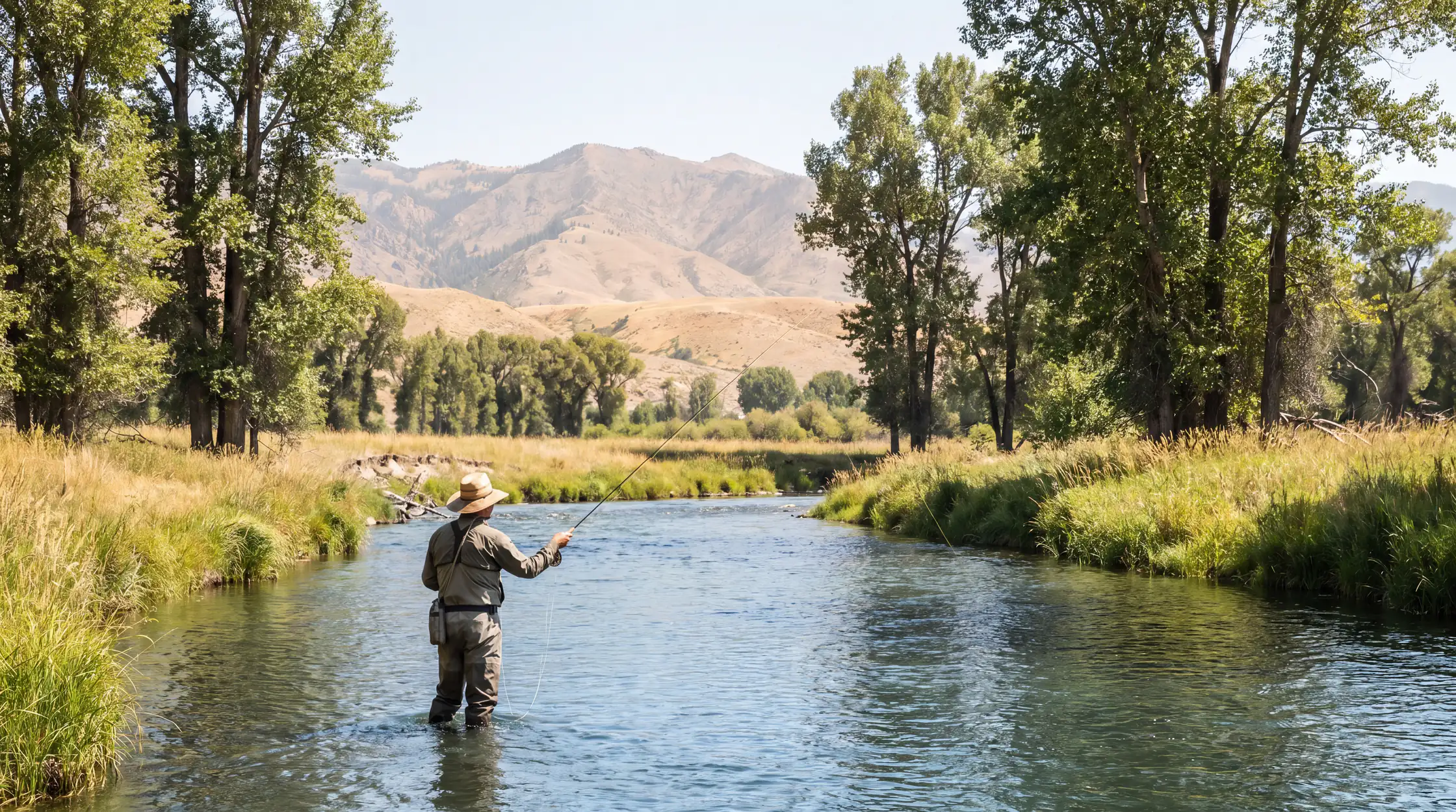
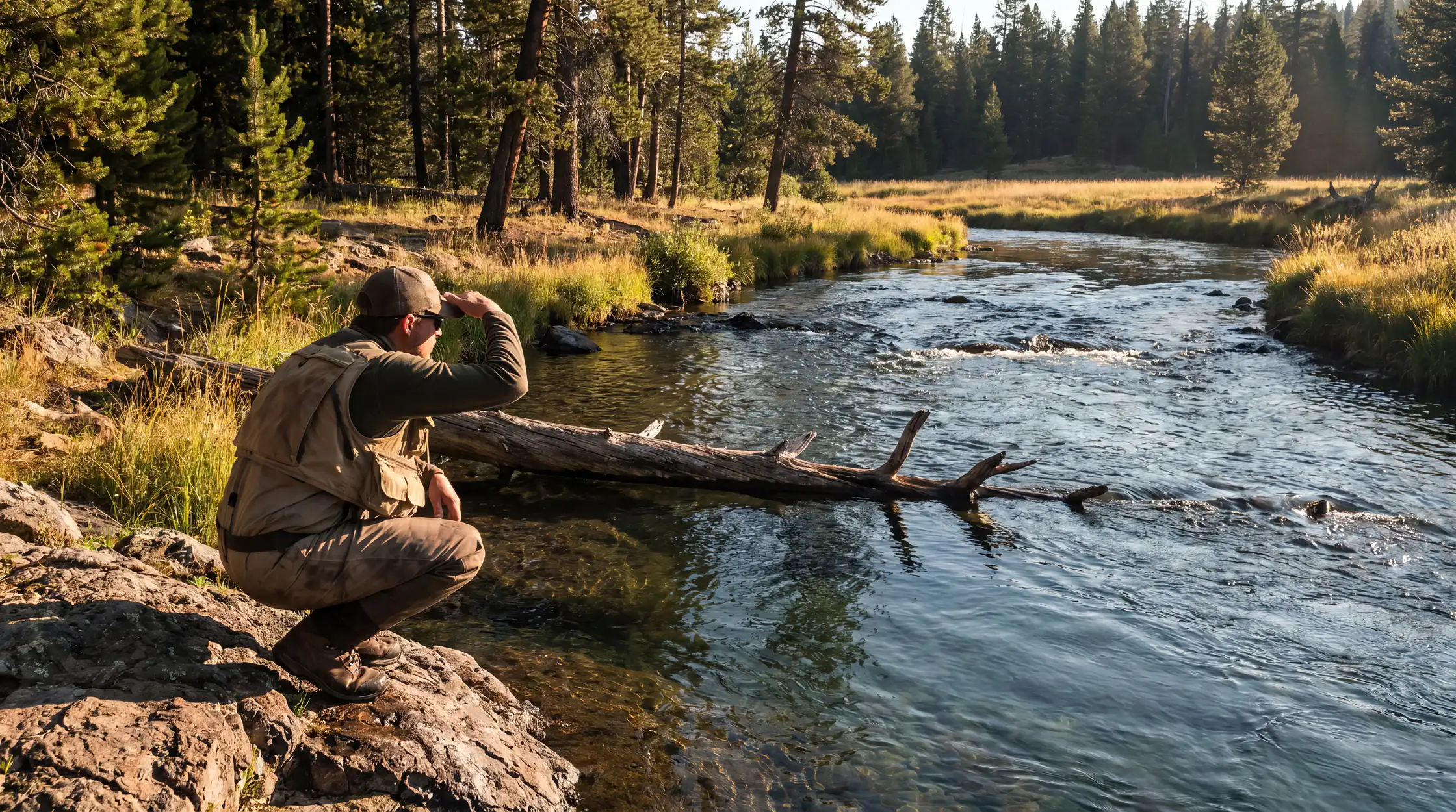
You arrive at a property where you are expected. There is no other angler in your beat. The water has been managed for the conditions you find — riparian shade, undisturbed substrate, stable flows, hatches that run on their normal rhythm because the river is not being thermally stressed. The water itself is usually within a controlled range — cool spring inflows, productive insect populations, fish that have been caught and released a manageable number of times across the season and are still willing to eat.
You fish the day at your own pace. Nobody is leapfrogging your run. Nobody is in your indicator's drift. The trout you catch are in good shape. You release them properly because the structure of the day rewards careful angling.
At the end of the day you leave a property where the relationship between the angler and the resource has been preserved. The water is in the same condition tomorrow as it was today. The landowner has been paid for the use. The club has done its work. The platform has facilitated the transaction quietly.
This is what the rod fee buys. It is not just a day of fishing. It is participation in a system that produces a specific kind of day, repeatably, sustainably, across years.
How to Think About Comparable Cost
The useful comparison is not between a private water day and a free public-water day. The right comparison is between a private water day and the realistic alternative — a guided day on quality public water during the same season.
A guided day on a popular western public river during a productive season typically runs $700 to $900 for a single boat, plus tip. That figure is for one boat, two anglers, on water that is being fished by other guides, other private parties, and a steady stream of weekend anglers. The fishing can be excellent. The crowd is real. The mid-summer constraints — temperature, pressure, hoot-owl windows — are present.
A private spring creek day at the middle of the tier range is in the same total cost neighborhood, sometimes lower, and often higher for what's delivered. The crowd is absent. The mid-summer constraints are largely absent. The water is in a different condition.
For visiting anglers, factor in the additional reality that the private water day often reduces the need for surrounding logistics — you don't need a multi-day guide booking to make the trip productive, because one day on the right water can produce the experience three days of guided public water hopes to. The total cost of a trip, not the per-day cost, is usually what the angler is actually optimizing.
The Frame That Makes Sense
The useful frame for evaluating the cost of a managed private day is not whether it is cheap in absolute terms. It is whether it is fairly priced for what it includes — and whether the value delivered in the experience and the long-term health of the resource is what you actually want.
The answer for many serious anglers is yes. The rod fee covers the operating budget of a real conservation arrangement. The day on the water is genuinely different from a comparable public day. The relationship between the angler, the land, and the resource is the relationship the model promises. And the experience holds up, year after year, in ways that the cheaper-feeling alternatives often do not.
That is the value math. The price tag is what makes it possible. The experience is what makes the price tag obvious.